


Most people assume warranties cover everything when buying power tools, but the reality is often more limited and misunderstood. When something goes wrong, many find out too late that the issue is not covered, leading to frustration and unexpected costs.
Understanding how warranties work helps avoid that situation. It allows you to make better buying decisions and reduces the risk of rejected claims when problems arise.
What a Tool Warranty Actually Is
A tool warranty is a manufacturer’s promise that the product will perform as expected under normal use. It typically covers faults caused by defects in materials or workmanship, rather than issues caused by wear, misuse, or damage.
It is important to understand that a warranty is not a general guarantee that the tool will never fail. Instead, it is a limited agreement that applies under specific conditions.
Types of Tool Warranties You Will Come Across
Different types of warranties exist, and they can vary depending on the brand and product.
Manufacturer warranty
This is the standard coverage that comes with the tool. It usually protects against defects and faults from the factory.
Extended warranty
Some brands offer longer coverage if you register the tool after purchase. This often increases the warranty period beyond the standard term.
Limited warranty
This is the most common type. It covers specific issues but excludes many others, particularly wear and accidental damage.
Lifetime warranty
This does not usually mean the tool is covered forever. It often applies only to certain parts or for the expected lifespan of the product under normal use.
What Tool Warranties Typically Cover
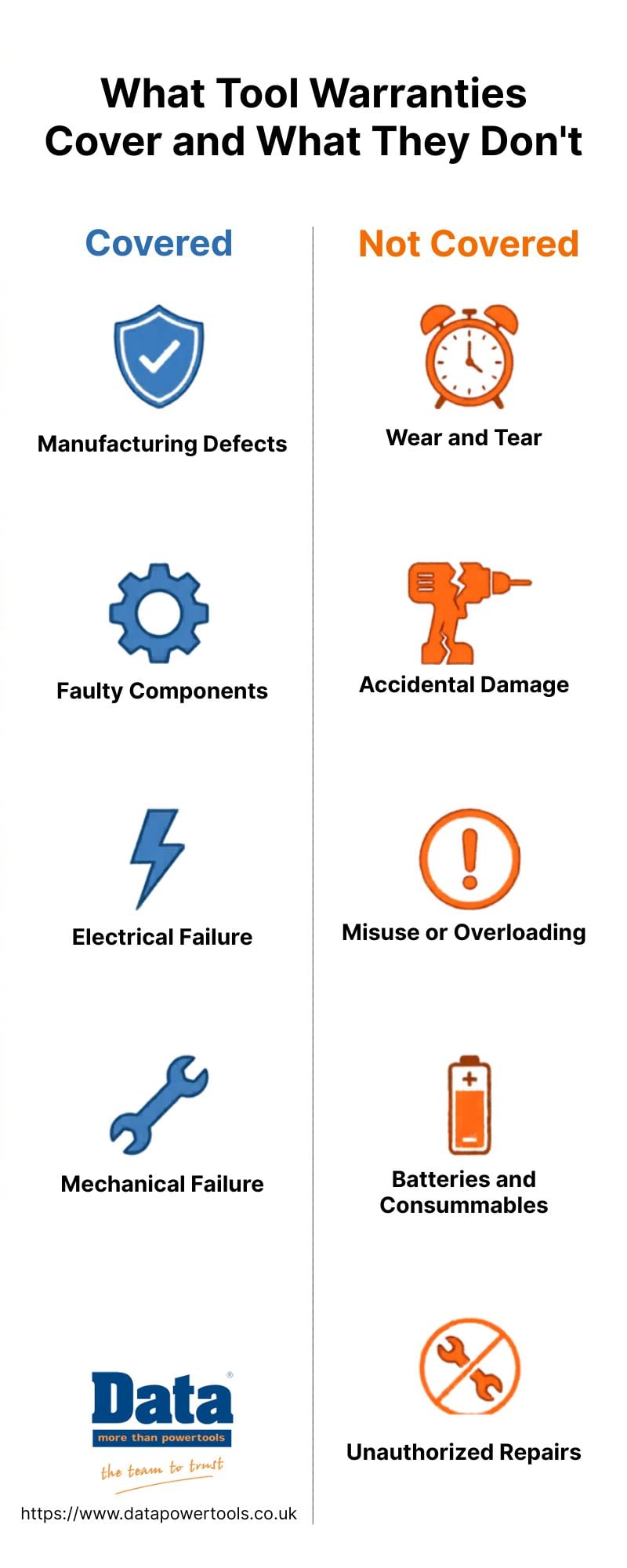
Most warranties focus on faults that are outside of the user’s control. This includes issues such as manufacturing defects, faulty internal components, or electrical and mechanical failures that occur under normal use.
The key point is that the tool must have been used correctly. If the issue results from normal operation and not external factors such as misuse or damage, it is more likely to be covered.
What Tool Warranties Do Not Cover
This is where most confusion happens. Many problems that occur during regular use are not covered by warranty.
- General wear and tear
- Accidental damage
- Misuse or overloading
- Damage caused by poor storage
- Consumable parts such as batteries, blades, or brushes
- Repairs carried out by unauthorised technicians
Understanding these exclusions is essential. A warranty is designed to cover faults, not the natural decline of parts over time.
The Difference Between Wear and Fault
Knowing the difference between wear and a fault can save time when making a claim. Wear happens gradually as a result of normal use, while a fault usually appears unexpectedly.
For example, worn brushes or reduced battery performance are expected over time and are not considered faults. On the other hand, a motor failure in a relatively new tool may indicate a defect, which could be covered under warranty.
Being able to recognise this difference helps set realistic expectations.
Warranty Periods and What to Expect
Warranty periods vary depending on the brand and type of tool. Many tools come with a standard one-year warranty, while others may offer longer coverage.
Some brands extend their warranty periods if the product is registered within a specific timeframe after purchase. Without registration, the standard warranty may still apply, but the extended coverage is often lost.
It is always worth checking the details before buying, rather than assuming all tools are covered in the same way.
Why Product Registration Matters
Registration is often required to activate extended warranties. This usually needs to be completed within a set number of days after purchase.
Failing to register the tool can mean missing out on additional coverage. It also makes it harder to prove ownership if a claim is needed later.
Keeping a record of receipts and serial numbers is just as important. Without proof of purchase, most warranty claims will not be accepted.
How to Make a Warranty Claim
Making a claim is usually straightforward if you have the right information.
- Identify the issue clearly
- Check the warranty terms
- Contact the retailer or manufacturer
- Provide proof of purchase
- Send the tool for inspection if required
Following the correct process improves the chances of a successful outcome.
Common Reasons Warranty Claims Are Rejected
Many claims are rejected due to simple issues that could have been avoided.
- No proof of purchase
- Tool not registered for extended warranty
- Damage caused by misuse
- Attempted repair by unauthorised parties
- The issue falls under normal wear and tear
Understanding these points helps avoid unnecessary delays and disappointment.
How to Protect Your Warranty
Protecting your warranty comes down to a few simple habits. Register the tool as soon as possible, keep receipts and documentation, and use the tool within its intended limits.
Proper storage also plays a role, as exposure to poor conditions can lead to damage that is not covered. Avoiding unofficial repairs is equally important, as this can void the warranty entirely.
Do More Expensive Tools Have Better Warranties
Higher-priced tools often come with longer or more structured warranties, but this is not always the case. Some brands focus on durability rather than extended coverage.
A longer warranty can be useful, but it should not be the only factor when choosing a tool. Build quality, reliability, and suitability for the job are just as important.
When a Warranty Should Influence Your Buying Decision
Warranties matter more in some situations than others. For tools used daily, longer coverage can provide peace of mind. For occasional use, the difference may be less significant.
It is worth considering the cost of the tool, how often it will be used, and how critical it is to your work. A balanced approach leads to better decisions.
Refining Your Understanding Before You Buy
A warranty should always be read carefully rather than assumed. The headline coverage rarely tells the full story.
Checking what is included, what is excluded, and what is required to maintain coverage helps avoid confusion later. A few minutes spent reviewing the details can prevent bigger problems down the line.
FAQs
Q1: What does a tool warranty usually cover?
A1: It typically covers manufacturing defects and faults that occur under normal use, rather than damage or wear over time.
Q2: Are batteries covered under warranty?
A2: Batteries may be covered for a limited period, but they are often treated as consumable items with shorter warranty terms.
Q3: Do I need to register my tool for warranty?
A3: In many cases, registration is required to activate extended warranty coverage beyond the standard period.
Q4: What voids a tool warranty?
A4: Misuse, unauthorised repairs, and failure to follow usage guidelines can all void a warranty.
Q5: Is a longer warranty always better?
A5: Not necessarily. A longer warranty can be useful, but overall tool quality and suitability are just as important.