

Tool theft is not rare. It is a routine problem across UK construction and trade sites. Vans are targeted overnight. Compounds are accessed after hours. Even daytime theft happens when tools are left unattended for short periods.
The impact goes beyond the price of replacing a drill or saw. Stolen tools mean lost working hours, delayed jobs, and disruption to clients. For small contractors and sole traders, one theft can affect an entire week’s income.
Reducing theft on site requires more than a lock on a van door. It requires planning, organisation, and consistent habits.
The True Cost of Tool Theft
When tools are stolen, the financial hit is obvious. Replacing equipment costs money. Insurance excess payments reduce the benefit of cover. Premiums may increase after claims.
Less obvious is the cost of downtime. If essential tools disappear mid project, work may stop completely. Hiring replacements at short notice adds expense. Clients may lose confidence if deadlines shift.
There is also the cost of rebuilding a loadout. Tools are rarely replaced one at a time. Sets, batteries, accessories, and storage often need replacing together.
Viewed properly, tool security is part of business protection, not just equipment management.
Common Weak Points on Site
Most thefts are opportunistic rather than highly organised. That makes small security lapses more significant than many tradespeople realise.
Common vulnerabilities include:
- Unsecured vans parked in poorly lit areas
- Storage left unlocked during short breaks
- Tools visible through vehicle windows
- Shared site compounds with limited access control
- Equipment left out overnight for convenience
Short breaks are particularly risky. A van left open while unloading materials creates an easy opportunity. Even five minutes is enough.
Reducing these weak points starts with awareness.
Secure Storage on Site
Physical storage is the first layer of defence, and investing in proper tool storage reduces both theft risk and accidental loss on site. Tools should not be left loose in open areas or visible inside vehicles.
Heavy duty lockable boxes provide a clear deterrent. Larger toolboxes and trolleys can secure multiple tools in one location while also helping with organised transport around site. Stackable storage systems allow equipment to be grouped and locked together rather than scattered.
Anchoring storage to a fixed structure where possible adds another barrier. A locked container that can be lifted easily is not secure.
Good storage also reduces accidental loss. When tools have defined positions, it becomes obvious if something is missing. Disorganisation increases both theft risk and simple misplacement.
Van Security Best Practice
Vans are a primary target. Tools left inside overnight attract attention, particularly when vehicles display trade branding.
Practical steps include:
- Installing internal locking systems separate from factory locks
- Reinforcing rear and side doors
- Using alarm systems or immobilisers
- Parking with rear doors against walls where possible
- Removing high value tools overnight when feasible
Leaving tools in a van overnight should never feel routine. Even secure areas experience theft.
Visibility matters. Avoid storing tools where they can be seen through windows. Curtains or solid internal partitions reduce temptation.
Security is not just hardware. It is habit.
Lighting as a Deterrent
Dark areas encourage theft. Poorly lit compounds, car parks, and access routes give cover to anyone attempting entry.
Portable work lights can improve visibility during active working hours. Motion activated lighting adds an additional deterrent when installed in yards or site storage areas.
Even temporary lighting can make a difference. Thieves prefer low visibility environments. Increasing light exposure increases perceived risk.
Lighting should not be viewed only as a productivity tool. It also contributes to security.
Asset Marking and Identification
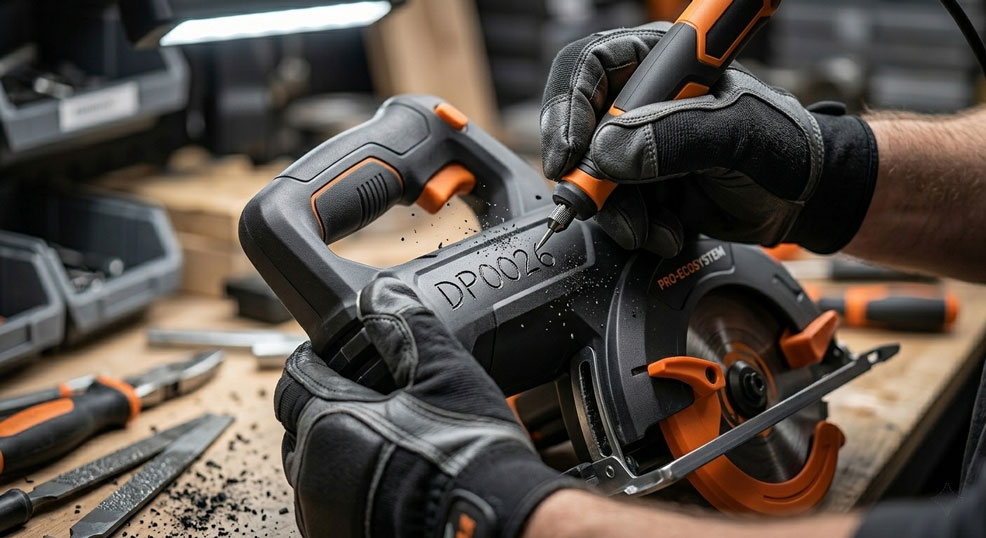
Marked tools are harder to resell. Clear identification reduces their appeal to thieves.
Practical measures include:
- Engraving company names or identifiers
- Applying visible paint markings
- Recording serial numbers
- Photographing tools for documentation
If stolen tools are recovered, identification increases the chance of return. More importantly, marked equipment is less attractive to opportunistic theft.
Keeping a simple asset register also supports insurance claims and internal accountability.
Tracking Technology and Smart Solutions
Tracking technology has become more accessible. Small tracking devices can be fitted inside toolboxes or hidden within vehicles.
While not a guarantee of recovery, tracking can increase the likelihood of locating stolen property. It also adds a psychological deterrent if signage indicates tools are traceable.
Inventory apps allow businesses to record which tools are allocated to which worker or vehicle. Clear allocation reduces internal loss and confusion between crews.
Technology should support basic security practices, not replace them.
Reducing Loss Through Organisation
Not all tool loss is theft. Disorganisation causes just as many problems.
Shared crews often borrow tools without clear tracking. Equipment gets placed down in different work areas and forgotten. Tools end up in the wrong van at the end of the day and no one realises until the next morning.
Structured storage reduces this risk. Dedicated tool bags assigned to specific tasks make it clear which tools belong together and who is responsible for them. Secure tool mounts inside vans keep equipment fixed in predictable positions, preventing movement during transport and making missing items obvious.
Clear routines at the end of each working day also reduce loss. A short checklist to confirm all key tools are accounted for can prevent expensive surprises the next morning.
Organisation is not just tidy working. It is a practical layer of security.
Insurance and Documentation
Insurance should be reviewed regularly. Not all policies cover tools left in vehicles overnight. Some require specific security measures to remain valid.
Tradespeople should:
- Keep purchase receipts
- Maintain serial number records
- Photograph high value equipment
- Understand policy excess amounts
Documentation speeds up claims and reduces disputes. It also clarifies the true value of the equipment being protected.
Insurance should be the final safety net, not the primary strategy.
Building a Security Mindset
Tool security is not achieved through a single purchase. It is built through routine.
Locking storage even during short breaks. Closing van doors every time. Avoiding visible tool displays. Securing equipment before leaving site.
Small actions repeated daily reduce risk significantly.
Security works best in layers. Physical storage, lighting, behaviour, documentation, and awareness all contribute. No single measure is enough on its own.
Preventing theft is always cheaper than replacing tools. Protecting your loadout protects your income.
FAQ’s
Q1: How can I secure tools overnight on site?
A1: Use heavy duty lockable storage anchored where possible, remove high value tools from vans when practical, and ensure the area is well lit. Avoid leaving equipment visible.
Q2: Is van tool theft covered by insurance?
A2: Some policies cover theft from vehicles, but many require specific security measures and may exclude overnight cover. Always check policy details carefully.
Q3: Are tool tracking devices worth it?
A3: Tracking devices can increase recovery chances and act as a deterrent. They are most effective when combined with strong physical security measures.
Q4: What is the most common cause of tool loss?
A4: Opportunistic theft from unsecured vans and poor organisation on shared sites are both common causes.
Q5: Should I leave tools in my van overnight?
A5: It is safer to remove high value tools where possible. If tools must remain in the vehicle, ensure additional internal security measures are in place and avoid visible storage.