


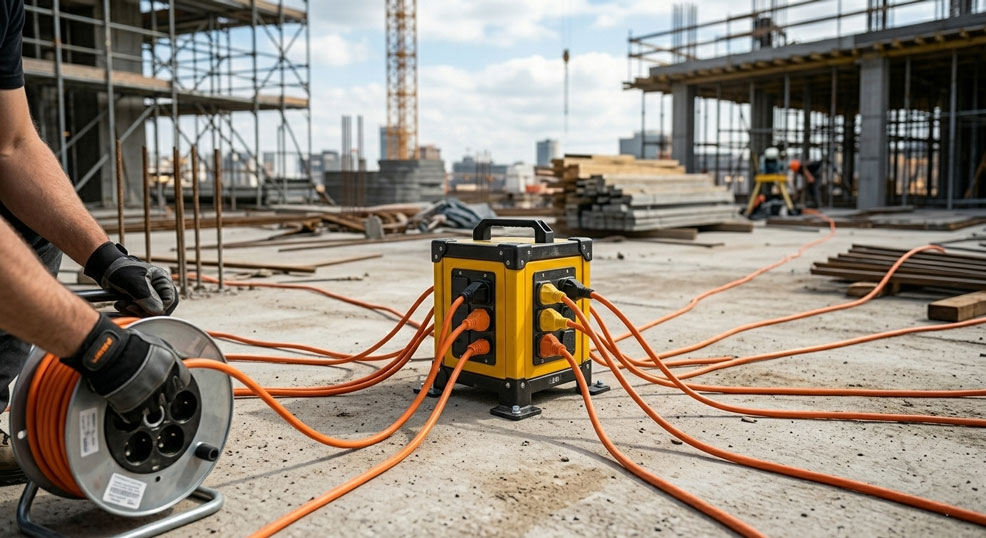
Power management is often treated as an afterthought on-site. Tools get the attention. Infrastructure does not. Yet poor power planning leads to tripped generators, damaged equipment, lost time, and avoidable safety risks.
Generators, extension leads, and battery systems must work together. When they do, work flows smoothly. When they do not, productivity drops quickly.
Effective power management starts with understanding the equipment available under your site electrics & lighting setup and planning the load before work begins.
Understanding Site Power Demand
Every site has a power requirement. The mistake many crews make is guessing rather than calculating.
Generators are rated for both running wattage and starting wattage. Tools with motors often draw more power on start up than during operation. Grinders, mitre saws, compressors, and larger drills can briefly spike above their stated running load.
If several high draw tools start at the same time, a generator that looks sufficient on paper may trip immediately.
Before work begins, list the tools likely to run simultaneously. Add their running wattage together, then allow headroom. Operating a generator continuously at maximum output shortens its lifespan and increases the chance of failure.
Power planning is about margin, not minimum.
Choosing and Positioning Generators
Generator selection should match realistic demand, not ideal conditions.
An underpowered generator will struggle, fluctuate in output, and potentially damage sensitive equipment. Overloading also causes excessive heat build up, leading to shutdowns and downtime.
Placement matters as much as specification. Generators must be positioned in well ventilated areas, clear of enclosed spaces. Exhaust fumes are dangerous and must never be allowed to accumulate.
Noise control should also be considered. Positioning generators away from working zones where possible improves comfort and communication on site.
Fuel planning is often ignored. Running out of fuel mid task can be as disruptive as electrical overload. Estimate runtime based on load and ensure refuelling is planned safely and efficiently.
A stable generator setup is the foundation of reliable site power.
Managing Extension Leads Safely
Extension leads are frequently misused. They are treated as simple connectors rather than part of the power system.
Cable rating matters. Leads must be capable of carrying the load placed upon them. Underrated cables generate heat and increase resistance, particularly under sustained load.
Cable reels must be fully uncoiled during operation. Leaving them coiled traps heat and significantly increases fire risk. This is a common mistake and entirely avoidable.
Voltage drop is another issue on larger sites. The longer the cable run, the greater the potential loss of voltage. Tools at the far end may appear underpowered when the real issue is resistance through excessive cable length.
Protect leads from site traffic and sharp edges. Damaged insulation is both a shock risk and a cause of short circuits.
Extension leads are not temporary afterthoughts. They are critical components of the power chain.
Safe Power Distribution on Site
Daisy chaining multiple extension leads or adaptors is poor practice. Each connection introduces potential weakness and resistance.
Where possible, establish clear distribution points. Keep connections elevated from wet ground. Avoid placing plugs in high traffic areas where they can be kicked loose or crushed.
Wet conditions require additional caution. Electrical connections should never sit directly on damp surfaces. Even light rain increases risk.
Good distribution planning reduces both trip hazards and electrical faults. Organisation in power layout improves safety and efficiency at the same time.
Battery Systems and Charging Strategy
Modern cordless platforms reduce reliance on constant generator power, but they introduce new demands in charging management.
Charging too many batteries at once can overload smaller generators. Staggering charging times reduces peak load and improves efficiency. Dedicated charging zones prevent leads from spreading across work areas.
Batteries perform best within moderate temperature ranges. Charging in extreme cold or heat shortens lifespan. Store them appropriately when not in use.
Reliable batteries and chargers are central to this strategy. Investing in quality batteries and chargers ensures consistent performance and reduces the chance of mid task failure.
Cordless systems should complement generator power, not compete with it.
Reducing Downtime Through Power Planning
Power issues rarely occur without warning. Frequent generator trips, dimming lights, or tools slowing under load indicate system strain.
Conduct a brief power check at the start of each day. Confirm generator fuel levels, inspect leads for damage, and ensure charging stations are organised.
Consider peak demand periods. If heavy cutting or grinding is planned in the morning, avoid charging all batteries simultaneously during that window.
Having a backup plan also matters. A secondary generator or additional charged batteries can prevent full shutdown if problems arise.
Power reliability supports productivity. Poor planning undermines it.
Common Power Mistakes That Damage Equipment
Several avoidable habits shorten tool life and increase risk.
Running generators continuously at maximum output accelerates wear. Allowing voltage to fluctuate damages electronic components in modern tools. Using damaged extension leads exposes equipment and operators to danger.
Charging large numbers of batteries simultaneously on undersized generators leads to overload and inefficient charging cycles.
Ignoring small warning signs, such as unusual heat in cables or repeated breaker trips, often results in larger failures later.
Power management is not complicated, but it requires attention.
Practical Daily Power Checklist
Before starting work each day:
- Confirm generator capacity matches expected load
- Inspect extension leads for cuts or crushed sections
- Fully uncoil cable reels before use
- Position generators safely with adequate ventilation
- Plan battery charging in staggered cycles
These steps take minutes but prevent hours of disruption.
Reliable Power Reduces Downtime
Managing power on site is about infrastructure, not convenience. Generators, extension leads, and battery systems form a single network. Weakness in any part affects the whole.
Planning load capacity, organising distribution, and controlling charging demand reduces risk and protects equipment. Stable power prevents unnecessary breakdowns and limits avoidable disruption.
When power is reliable, tools perform as intended and work continues without interruption. Getting the setup right at the start of the day protects both productivity and equipment.
FAQ’s
Q1: How do I calculate the correct generator size for site work?
A1: Add the running wattage of tools likely to operate simultaneously, then allow additional headroom for starting surges and unexpected demand. Avoid running generators continuously at full capacity.
Q2: Can I run multiple power tools from one extension lead?
A2: It depends on the cable rating and total load. Overloading leads generates heat and increases risk. Always ensure the cable is rated appropriately and fully uncoiled.
Q3: Why should cable reels be fully uncoiled during use?
A3: Coiled cable traps heat under load, increasing fire risk and reducing efficiency. Fully uncoiling allows heat to dissipate safely.
Q4: Is it safe to charge batteries from a generator?
A4: Yes, provided the generator capacity is sufficient. Avoid charging large numbers of batteries simultaneously on undersized units.
Q5: What causes generators to trip frequently on site?
A5: Common causes include overload, voltage fluctuation, damaged extension leads, and simultaneous high starting loads from multiple tools.