


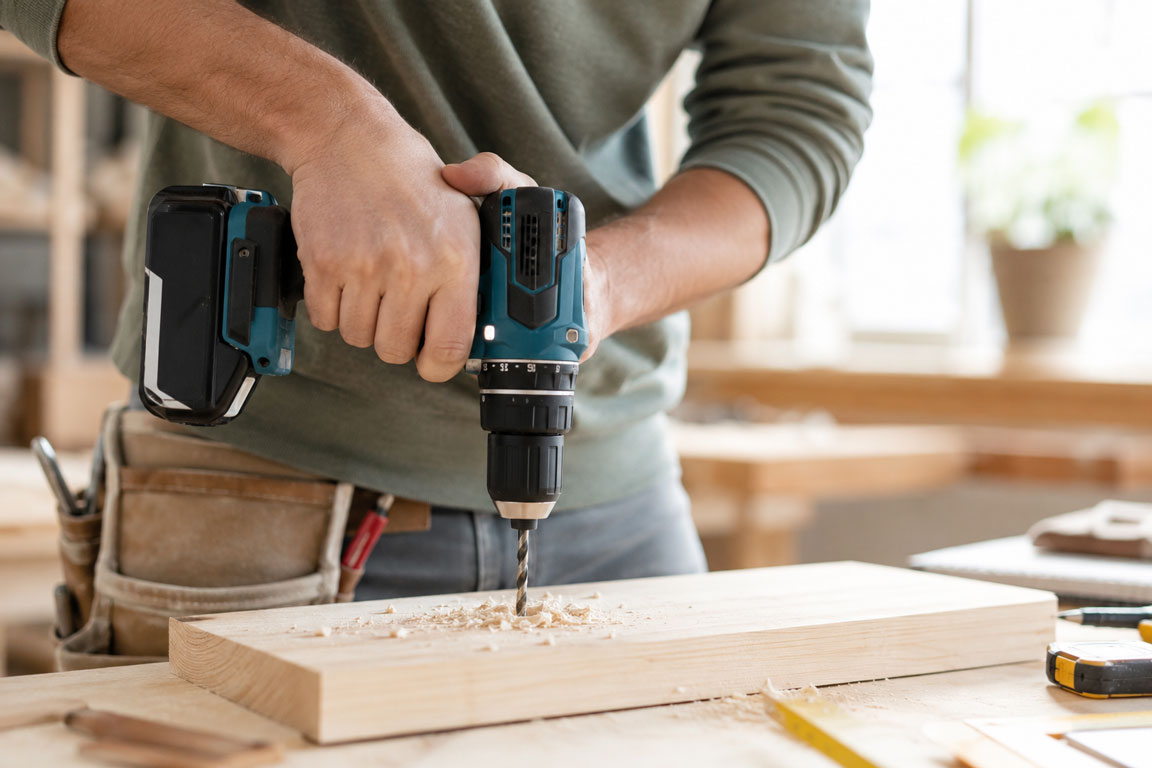
Hand fatigue is common on site, especially during long or repetitive tasks. It builds gradually and often goes unnoticed until it starts to affect control and accuracy. One of the biggest contributing factors is resistance during use, which is often increased by worn or incorrect screwdriver bits, forcing you to apply more pressure than necessary.
The same applies when drilling. Using the right drill bits helps reduce strain by allowing the tool to cut efficiently rather than forcing its way through material. Small improvements like this make a noticeable difference over the course of a full day.
Why Hand Fatigue Matters on Site
Fatigue affects more than comfort. As grip strength reduces, control becomes less precise, and the risk of mistakes increases. Tasks take longer, and the quality of work can drop, especially toward the end of the day.
Over time, repeated strain can also lead to longer-term issues. What starts as temporary discomfort can develop into ongoing problems if it is not addressed early.
Understanding What Causes Hand Fatigue
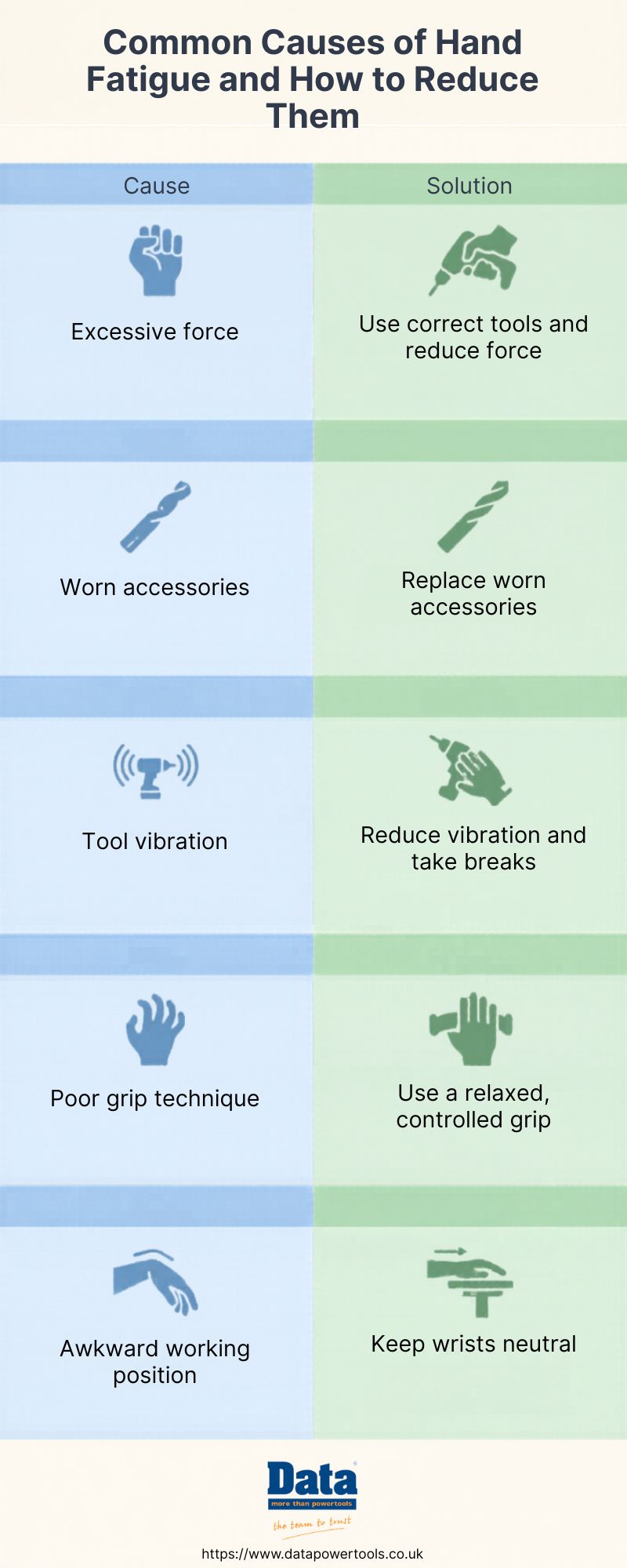
There are several factors that contribute to fatigue, and they often work together rather than in isolation.
- Repetitive motion over long periods
- Excessive grip pressure
- Tool vibration
- Poor ergonomics or awkward positioning
- Increased resistance from worn accessories
Understanding these causes makes it easier to reduce their impact.
Choosing the Right Power Tools for Comfort
Tool design plays a major role in how much strain is placed on your hands. A well-balanced tool with a comfortable grip reduces the effort required to maintain control.
Handle shape, trigger response, and overall weight all contribute to how the tool feels in use. Choosing tools that match the task helps prevent unnecessary strain and improves efficiency.
The Impact of Tool Weight and Balance
Heavier tools increase fatigue over time, especially when used for extended periods. Poor balance can shift pressure onto the wrist and fingers, making the tool harder to control.
A tool that feels stable and centred allows for a more natural grip. This reduces the effort needed to guide it and helps maintain consistency throughout the task.
Reducing Vibration Exposure
Vibration is one of the main causes of fatigue when using power tools. Continuous exposure affects both comfort and control, especially during longer jobs.
Taking breaks, using tools designed to minimise vibration, and avoiding prolonged continuous use all help reduce its impact. Even small adjustments can make a difference over time.
Using the Right Accessories for the Job
Accessories have a direct impact on how much effort is required to complete a task. Dull or incorrect attachments increase resistance, forcing you to apply more pressure and grip the tool more tightly.
This is particularly noticeable when working with worn abrasive wheels & discs, which require more force to achieve the same result. Using the correct accessory for the material and keeping it in good condition reduces strain and improves efficiency.
Improving Grip and Handling Technique
How you hold and use a tool affects fatigue just as much as the tool itself. A tight grip may feel more secure, but it increases strain over time.
Maintaining a controlled but relaxed grip allows the tool to do the work. Positioning your hands correctly and avoiding unnecessary tension helps reduce fatigue and improves control.
Adjusting Your Working Position
Body position plays a key role in reducing strain on your hands. Working at awkward angles or with bent wrists increases pressure and reduces efficiency.
Keeping your wrists in a neutral position and adjusting your stance to suit the task helps distribute effort more evenly. This reduces strain and improves overall control.
Managing Work Duration and Breaks
Continuous use is one of the fastest ways to build fatigue. Short, regular breaks help maintain performance and reduce strain.
Rotating between tasks where possible also helps. Changing movement patterns gives your hands time to recover and prevents fatigue from building up too quickly.
Maintaining Your Tools Properly
Well-maintained tools operate more smoothly and require less effort to use. Keeping tools clean, checking for wear, and replacing worn parts reduces resistance and improves performance.
Regular maintenance also helps identify issues early, preventing them from affecting your workflow.
Using PPE to Reduce Strain
Protective equipment can help reduce fatigue, but it should not be relied on as the only solution.
- Anti-vibration gloves can reduce some impact
- Grip-enhancing materials improve control
- Protective layers reduce exposure to prolonged use
These measures support comfort, but they work best alongside good technique and proper tool selection.
Common Mistakes That Increase Fatigue
Some habits make fatigue worse without being immediately obvious.
- Using the wrong accessory for the job
- Applying excessive force instead of letting the tool work
- Ignoring worn or damaged components
- Gripping tools too tightly
- Working for long periods without breaks
Avoiding these mistakes helps maintain both comfort and performance.
Long-Term Impact of Ignoring Hand Fatigue
Ignoring fatigue can lead to reduced productivity and ongoing discomfort. Over time, repeated strain increases the risk of more serious issues that affect both work and day-to-day activities.
Addressing fatigue early helps maintain consistency and prevents small problems from becoming long-term concerns.
Refining Your Approach Over Time
Reducing fatigue is an ongoing process. Paying attention to what causes the most strain and making small adjustments helps improve comfort over time.
This might include changing accessories more frequently, adjusting technique, or improving how tasks are approached. Small changes can have a lasting impact on efficiency and control.
FAQs
Q1: What causes hand fatigue when using power tools?
A1: It is usually caused by a combination of repetitive motion, vibration, excessive grip pressure, and increased resistance from worn or incorrect accessories.
Q2: How can I reduce vibration from tools?
A2: Use tools designed to minimise vibration, take regular breaks, and avoid long periods of continuous use.
Q3: Do lighter tools always reduce fatigue?
A3: Not always. While lighter tools can help, balance and ergonomics are just as important for reducing strain.
Q4: Are anti-vibration gloves effective?
A4: They can help reduce some impact, but they should be used alongside proper technique and well-maintained tools.
Q5: How often should I take breaks when using tools?
A5: Regular short breaks are more effective than long gaps. Adjust based on the intensity and duration of the task.