


Working out of a small van changes how you approach tools. Space is limited, access is tighter, and every item you carry has to earn its place. If the setup is not planned properly, you end up climbing in and out of the van, shifting tools around, and losing time on every job.
A well-planned setup removes that friction. Tools are easy to reach, storage makes sense, and systems like tool boxes and trolleys make it easier to keep everything organised and accessible. You can get in, do the job, and move on without unnecessary delays. The difference comes down to how the space is organised and how well it matches the way you actually work.
Why Planning Matters in a Small Van Setup
Without a clear setup, tools tend to get stored wherever there is space. That might work for a day or two, but it quickly turns into clutter. You spend time searching for tools, moving items to get access, and repacking things after each job.
This affects more than just speed. It breaks your workflow. Instead of moving from task to task, you stop and start repeatedly. A structured setup keeps everything predictable. You know where tools are, how to access them, and how to put them back without thinking about it.
Understanding Space Constraints Before You Start
The first step is to work with the space you actually have. Measure the usable area inside the van, including floor space, wall space, and height. Pay attention to how the doors open and how you access the van during a job.
Key things to check before planning your layout:
- Door access points and how often each is used
- Internal height and whether vertical storage is possible
- Fixed obstructions such as wheel arches
- Safe clearance for loading and unloading tools
A setup that fits the space properly will always perform better than one that tries to force too much into a small area.
Defining Your Core Tool Loadout
A small van does not allow for carrying everything. The key is to focus on what you use regularly. Daily tools should always be within reach, while less-used items can be stored in secondary areas or left out until needed.
Grouping tools by type of work helps keep things organised. For example, installation tools can be stored together, while maintenance tools sit in a different area. This makes it easier to load the van for specific jobs without rethinking the entire setup each time.
Zoning Your Van for Efficiency
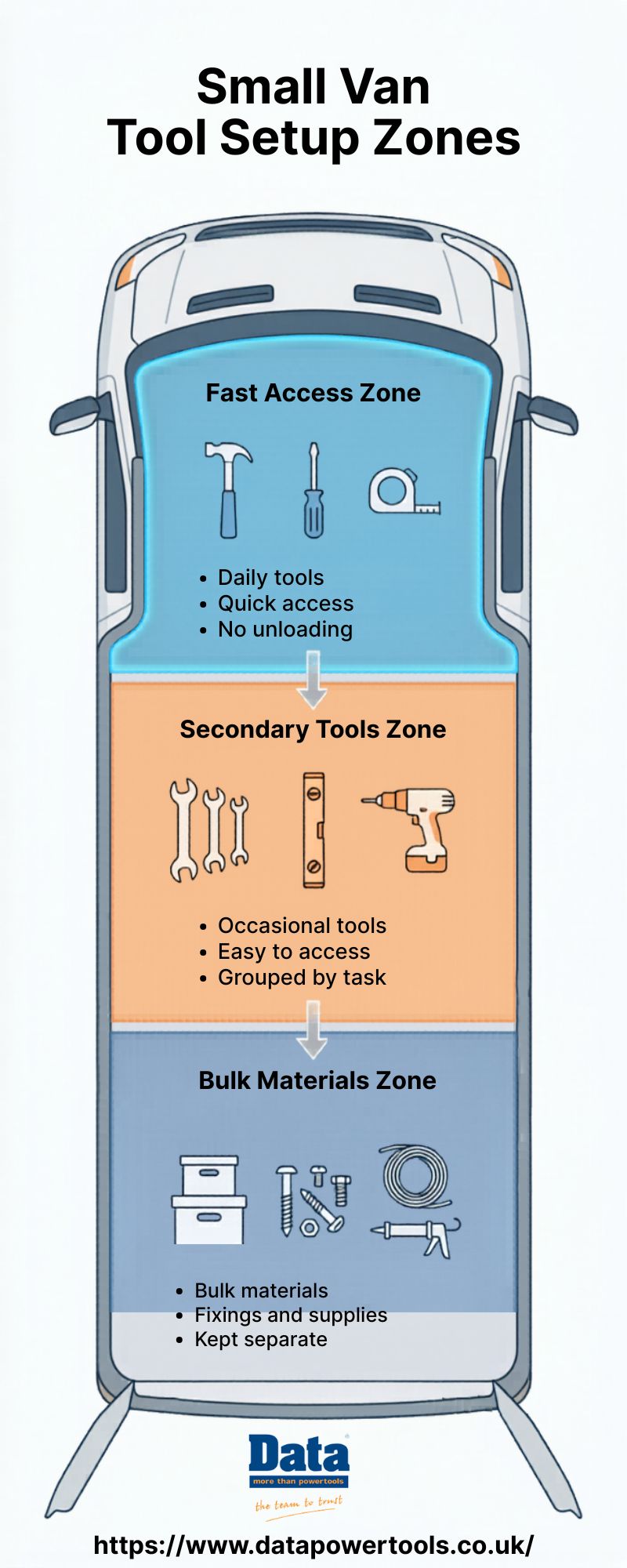
Dividing the van into zones creates structure. Each area has a purpose, which makes it easier to maintain order and reduce wasted movement.
A simple zoning approach:
- Fast access zone for daily tools near the main door
- Secondary zone for less-used tools stored further inside
- Bulk storage zone for materials and fixings kept separate
Zoning reduces movement. Instead of searching through the van, you go straight to the area you need. Over time, this saves a significant amount of effort.
Choosing the Right Storage System
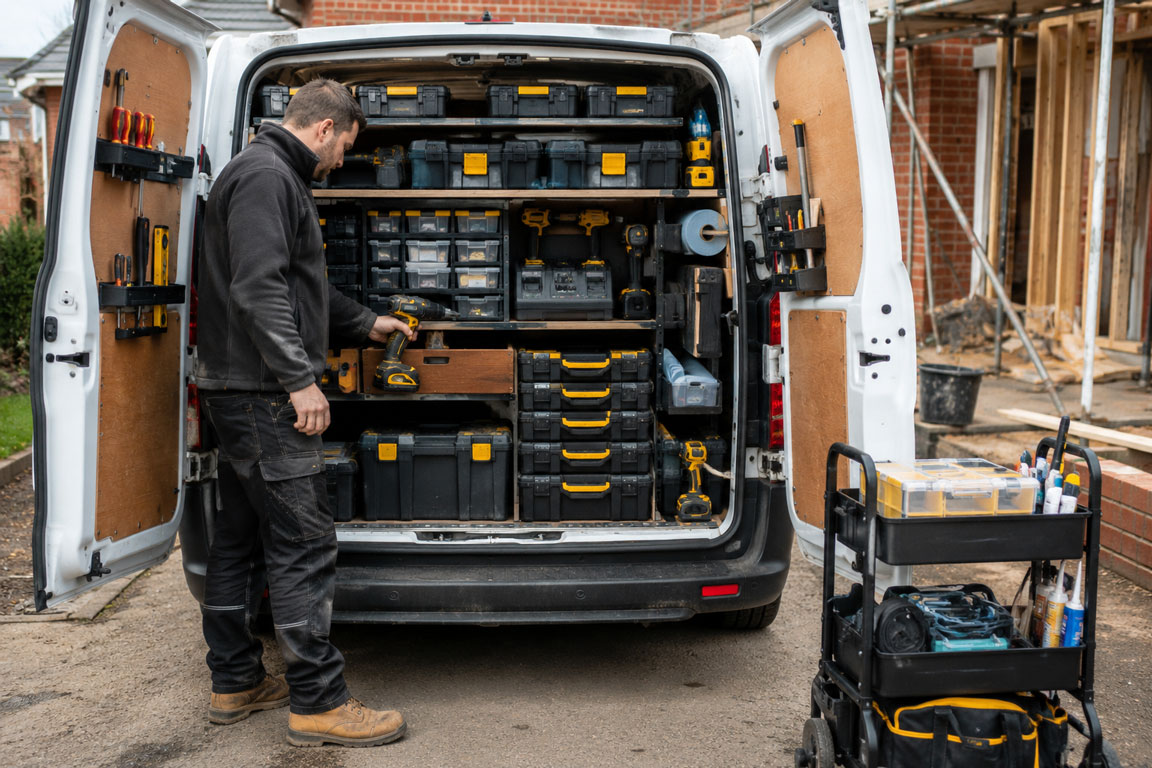
Storage plays a major role in how efficient the setup feels. Fixed shelving can provide stability, but it reduces flexibility. Modular systems allow you to adjust the setup depending on the job, which is useful when space is limited.
Stackable units help keep tools contained and easy to move. Drawers work well for smaller items, while open storage suits larger tools that need to be grabbed quickly. The goal is to choose a system that supports how you work rather than one that simply fills the space.
Planning for Fast Access on Site
Time spent unloading tools adds up quickly. A good setup allows you to access the tools you need without emptying the van.
Place your most-used tools near the door you use most often. This allows you to step in, grab what you need, and get to work without delay. For smaller jobs, you should be able to work without unloading anything beyond the essentials.
Managing Power Tools and Batteries
Cordless tools are a core part of most setups, and they need to be stored properly. Batteries should be kept organised so you know which ones are charged and which ones need attention.
A simple system keeps things reliable:
- Store charged and used batteries separately
- Keep chargers secured in a fixed location
- Avoid leaving batteries loose during transport
- Check battery levels before leaving for a job
When tools and batteries are organised properly, you avoid delays caused by missing or flat equipment.
Organising Fixings, Accessories and Consumables
Small items can quickly create clutter if they are not managed properly. Screws, plugs, and fittings should be stored in separate containers to prevent mixing.
Using labelled storage makes it easier to find what you need without searching through multiple boxes. It also makes restocking quicker, as you can see what is running low at a glance. Keeping these items organised saves time and reduces mistakes during work.
Weight Distribution and Load Safety
How tools are positioned in the van affects both safety and handling. Heavier items should be placed low and close to the centre of the vehicle. This helps maintain balance and reduces movement during transport.
Tools should be secured so they do not shift while driving. Loose items can become damaged and create hazards when the van is opened. A stable setup protects both your equipment and your vehicle.
Adapting Your Setup for Different Jobs
No two jobs are the same, and your setup should reflect that. Carrying tools that are not needed adds weight and takes up valuable space.
Before leaving for a job, adjust your loadout to match the work. Remove tools that are not required and make sure the essentials are easy to access. This keeps the van efficient and reduces unnecessary handling.
Working Efficiently in Mobile Worksites
The van is only part of the setup. Once you arrive on site, you need a way to work without creating clutter outside the vehicle.
Keeping tools organised as you use them helps maintain order. Instead of placing tools randomly, return them to their position or keep them grouped together during the job. This makes packing up faster and reduces the risk of leaving items behind.
Common Mistakes in Small Van Setups
Overpacking is one of the most common issues. It reduces available space and makes everything harder to access. Poor zoning is another problem, as tools end up scattered without a clear structure.
Common mistakes to avoid:
- Carrying tools that are rarely used
- Storing high-use tools too far from access points
- Letting fixings and small items mix together
- Ignoring how the setup affects movement and access
Avoiding these issues keeps the setup efficient and easier to manage.
Refining Your Setup Over Time
A good setup is not fixed. It changes as your work changes. Over time, you will notice which tools you use most and which ones rarely leave their storage.
Adjust the layout based on that experience. Remove items that are not needed and reposition tools to better match your workflow. Small changes can improve both speed and comfort.
FAQ's
Q1: How do you organise tools in a small van?
A1: Start by grouping tools based on how often they are used and where they are needed. Keep daily tools near access points and store less-used items further inside the van.
Q2: What is the best storage system for mobile worksites?
A2: Modular storage systems work well because they allow you to adjust the setup depending on the job while keeping tools contained and easy to move.
Q3: How do you stop tools moving in a van?
A3: Use secure storage such as containers, drawers, or fixed shelving, and position heavier items low to prevent movement during transport.
Q4: How do you manage batteries and chargers in a van?
A4: Keep batteries organised in a dedicated area and use a consistent charging system so you always know which ones are ready to use.
Q5: How often should you reorganise your van setup?
A5: Review your setup regularly, especially when your type of work changes, to ensure it remains efficient and relevant.