


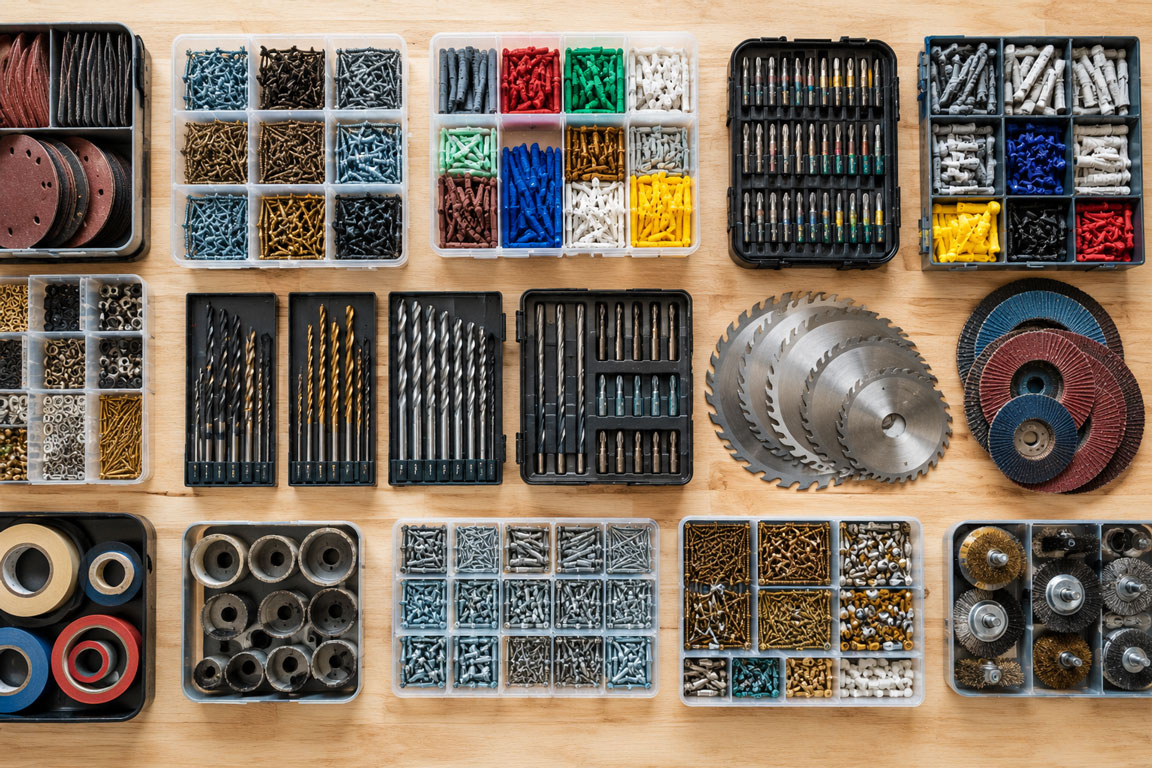
Consumables like blades are often overlooked, but poor organisation quickly slows work down on site. Time is lost searching for the right item, sorting through mixed containers, or stopping work to find replacements.
Items like drill bits and fixings and fastenings are used constantly, so keeping them organised and easy to access makes a noticeable difference to workflow. Small delays repeated throughout the day quickly add up, especially on larger or more complex jobs.
Why Consumable Organisation Matters on Site
Consumables are used more frequently than most tools, yet they are often managed with less structure. This creates unnecessary interruptions, breaks workflow, and increases the chance of using the wrong item.
When consumables are organised properly, tasks flow more smoothly. You spend less time searching and more time working. Over the course of a full job, this can have a measurable impact on speed and consistency.
Understanding the Types of Consumables You Carry
Before organising anything, it helps to define what you are working with. Consumables can be grouped into a few key categories, each with different storage and handling needs.
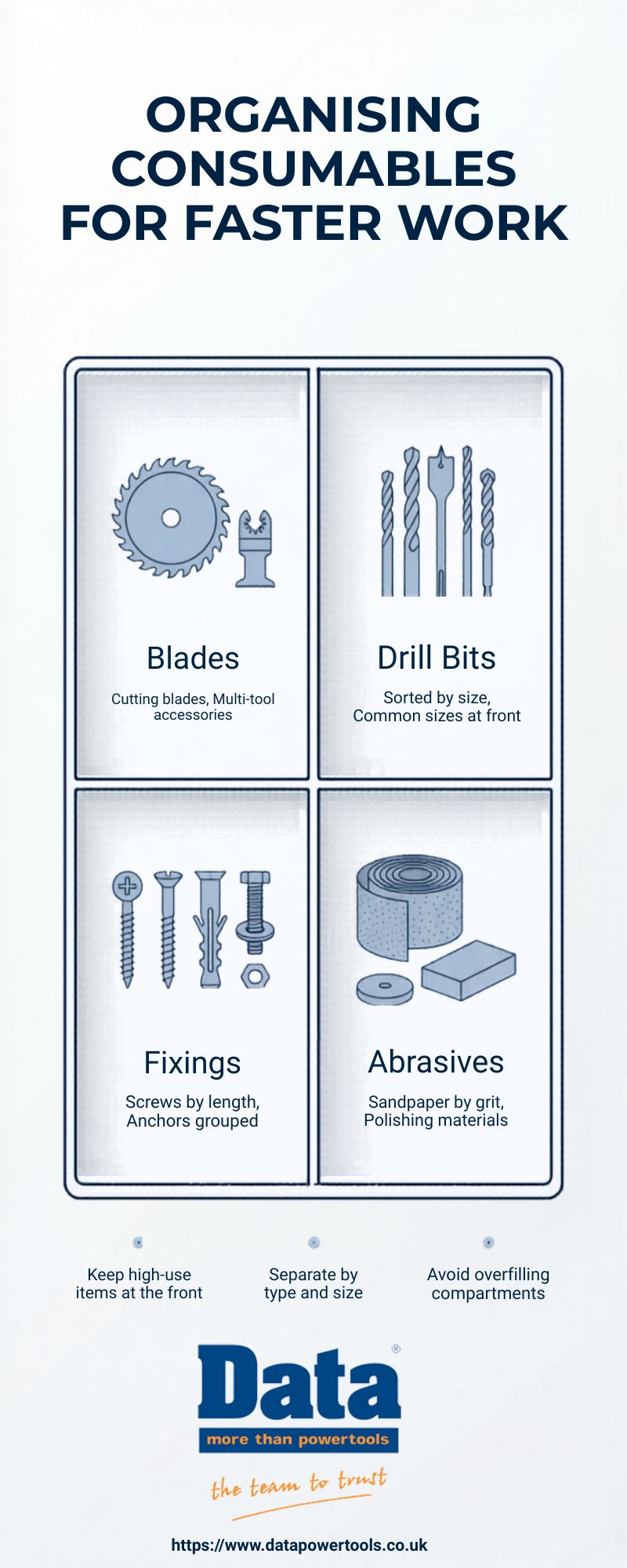
- Cutting tools such as blades, discs, and multi-tool accessories
- Drill bits and driver bits
- Fixings including screws, nails, and anchors
- Abrasives such as sandpaper and polishing materials
Breaking consumables into categories creates a clear structure that supports faster organisation and access.
Separating Consumables by Function
One of the most effective ways to stay organised is to group items based on how they are used. Mixing different types of consumables in the same container leads to confusion and slows down decision-making.
Keeping cutting tools separate from fixings, and bits separate from abrasives, reduces the time spent searching. It also makes it easier to maintain order, as each category has a defined place.
A simple structure is easier to remember and easier to maintain over time.
Organising by Size and Type
Within each category, further organisation is needed. Sorting by size and type allows you to quickly find the exact item required without stopping to check multiple options.
Keeping commonly used sizes at the front or top improves access, while less-used sizes can be stored deeper. Consistency is important here. Using the same structure across all kits ensures that items can be found quickly regardless of who is using them.
Keeping fixings separated by size and type makes it easier to work efficiently without interrupting the flow of the job.
Structuring Your Storage for Fast Access
Organisation is not just about grouping items. It is also about how they are positioned. Frequently used consumables should be placed where they can be accessed quickly, without moving other items.
A practical storage setup includes:
- High-use items placed at the front or top
- Less-used items stored deeper or lower
- Clear separation between categories
- Containers that are not overfilled
This approach reduces handling time and keeps everything within easy reach.
Using the Right Storage Systems
The type of storage you use has a direct impact on how effective your organisation is. Small parts need contained storage, while larger consumables require space that allows easy access without damage.
Stackable storage can help keep everything contained during transport, while organisers allow for clear separation of smaller items. Visibility is also important. Being able to see what is inside a container reduces the need to open multiple boxes.
The goal is to support access and visibility, not just storage.
Labelling and Visibility
Labelling removes guesswork. When sizes and types are clearly marked, you do not need to stop and check each item before using it.
Consistent labelling across all kits makes it easier for different team members to find what they need. It also supports faster restocking, as it is clear what needs to be replaced.
Visibility and labelling work together to reduce hesitation and improve speed.
Managing Stock Levels and Restocking
Running out of consumables mid-job creates delays that are easily avoidable. Keeping track of usage helps maintain the right stock levels.
A simple system includes:
- Setting minimum levels for high-use items
- Checking stock at the end of each job
- Restocking regularly rather than waiting until items run out
This ensures that consumables are always available when needed.
Reducing Waste and Damage
Consumables are easily damaged if not stored correctly. Blades can become dull, bits can wear unevenly, and fixings can become mixed or contaminated.
Keeping items separated and protected helps maintain their condition. Avoid mixing new and worn items, as this makes it harder to judge quality during use.
Proper storage reduces waste and improves performance.
Keeping Consumables Organised on Site
Even a well-organised system can break down during a job if it is not maintained. Items are often taken out and not returned properly, leading to clutter.
Keeping a small working area organised helps maintain control. Returning items to their place where possible prevents mix-ups and makes packing up faster.
Consistency during the job is just as important as organisation before it starts.
Common Mistakes That Slow You Down
There are a few common issues that reduce efficiency when organising consumables.
- Mixing different items in the same container
- Overloading organisers beyond their capacity
- Poor or inconsistent labelling
- Carrying unnecessary stock
- Failing to maintain the system over time
Avoiding these mistakes keeps the setup efficient and easy to use.
Scaling Consumable Organisation Across a Team
As teams grow, consistency becomes more important. Different workers using different systems creates confusion and slows down work.
Standardising how consumables are organised ensures that everyone works in the same way. This makes it easier to move between jobs, share resources, and train new team members.
A consistent system improves both speed and reliability.
Refining Your System Over Time
No setup is perfect from the start. Over time, usage patterns will show what works and what does not.
Adjusting storage, removing rarely used items, and improving layout based on experience helps keep the system effective. Regular review ensures that organisation keeps pace with the demands of the work.
Small improvements can have a lasting impact on efficiency.
FAQs
Q1: What is the best way to organise screws and fixings?
A1: Keep them separated by size and type using labelled containers so they are easy to identify and access during work.
Q2: Should you separate new and used consumables?
A2: Yes, keeping them separate helps maintain quality and makes it easier to identify worn or damaged items.
Q3: How often should consumables be restocked?
A3: Stock should be checked regularly, ideally at the end of each job or day, to avoid running out during work.
Q4: What storage works best for drill bits and blades?
A4: Organisers with clear compartments work well, as they keep items separated and easy to access.
Q5: How do you stop consumables from getting mixed up on site?
A5: Use consistent storage, clear labelling, and return items to their place during the job to maintain order.