


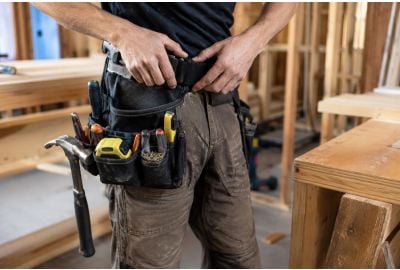
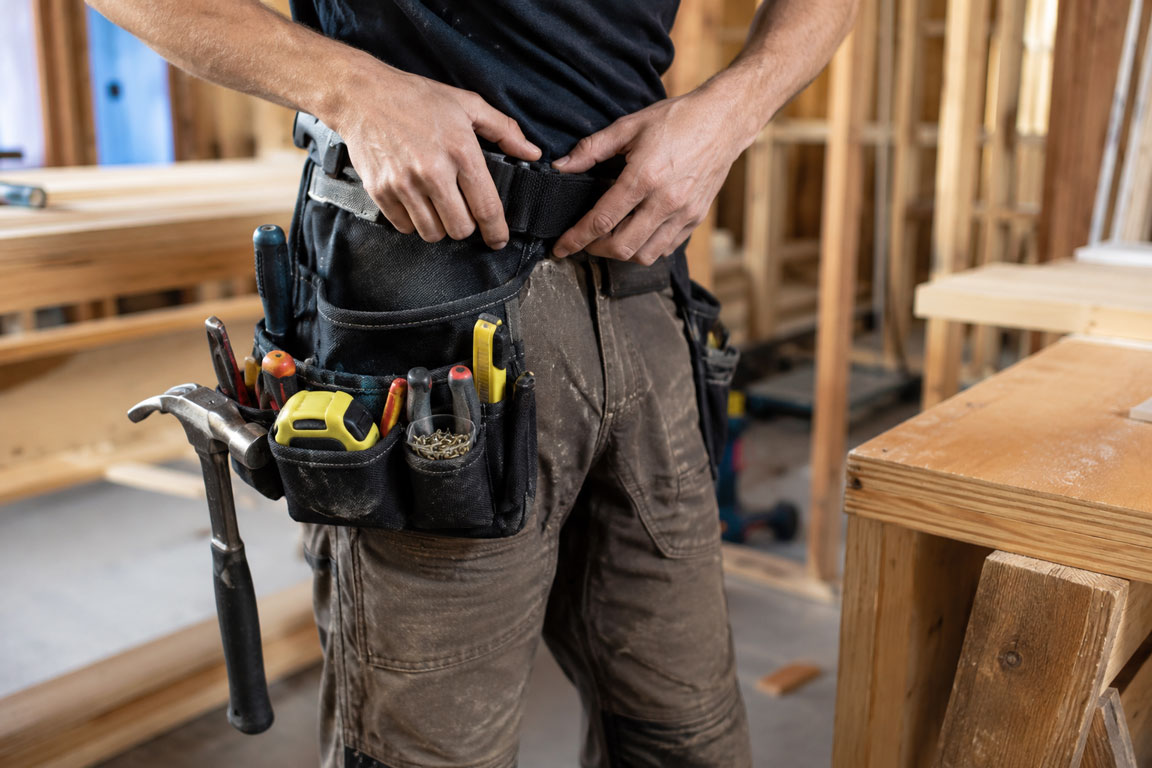
A poorly organised tool belt slows you down more than most people realise. You reach, adjust, shift tools around, and repeat that cycle throughout the day. It builds up. By the end of a job, you feel it in your lower back, your hips, and your pace of work.
An organised setup using tool belts and pouches works differently. Everything sits where you expect it, so you stop thinking about where tools are. You move less, work faster, and stay more comfortable across the day. The difference is not the belt itself, but how it is organised.
Why Tool Belt Organisation Matters on Site
Time is often lost in small, repeated actions. Reaching into the wrong pouch, searching for fixings, or adjusting the belt all take seconds. Across a full day, those seconds turn into lost minutes, and that affects how much you get done.
There is also a physical impact. Poor weight distribution puts pressure on one side of the body, which leads to fatigue over time. It may not be obvious early on, but it becomes clear after long shifts. A well-organised belt reduces that strain and supports how you move.
Choosing the Right Type of Tool Belt
Organisation starts with the structure of the belt. Lightweight apron-style belts can work for short jobs, but they often lack support for longer days. Padded belts provide more stability and help manage heavier loads.
Suspenders can make a noticeable difference by spreading weight across your shoulders instead of your hips. This becomes more important as your tool count increases. Modular systems also help, allowing you to swap pouches depending on the job rather than carrying everything at once.
If the belt does not fit properly or cannot support the load, no amount of organisation will fix it.
Choosing the Right Setup for Your Trade
Different trades need different layouts. Electricians tend to carry smaller tools along with connectors and fixings, so they benefit from multiple compartments that keep items separated. Carpenters rely on measuring tools, pencils, and fasteners, so quick access matters more than compartment size.
Roofers often keep their setup minimal, as excess weight makes movement harder and less safe at height. Plumbers carry heavier hand tools, so balance across both sides of the belt becomes more important than simply adding more storage.
The most effective setup is one that reflects the work being done rather than trying to cover every possible task.
Balancing Weight for All-Day Comfort
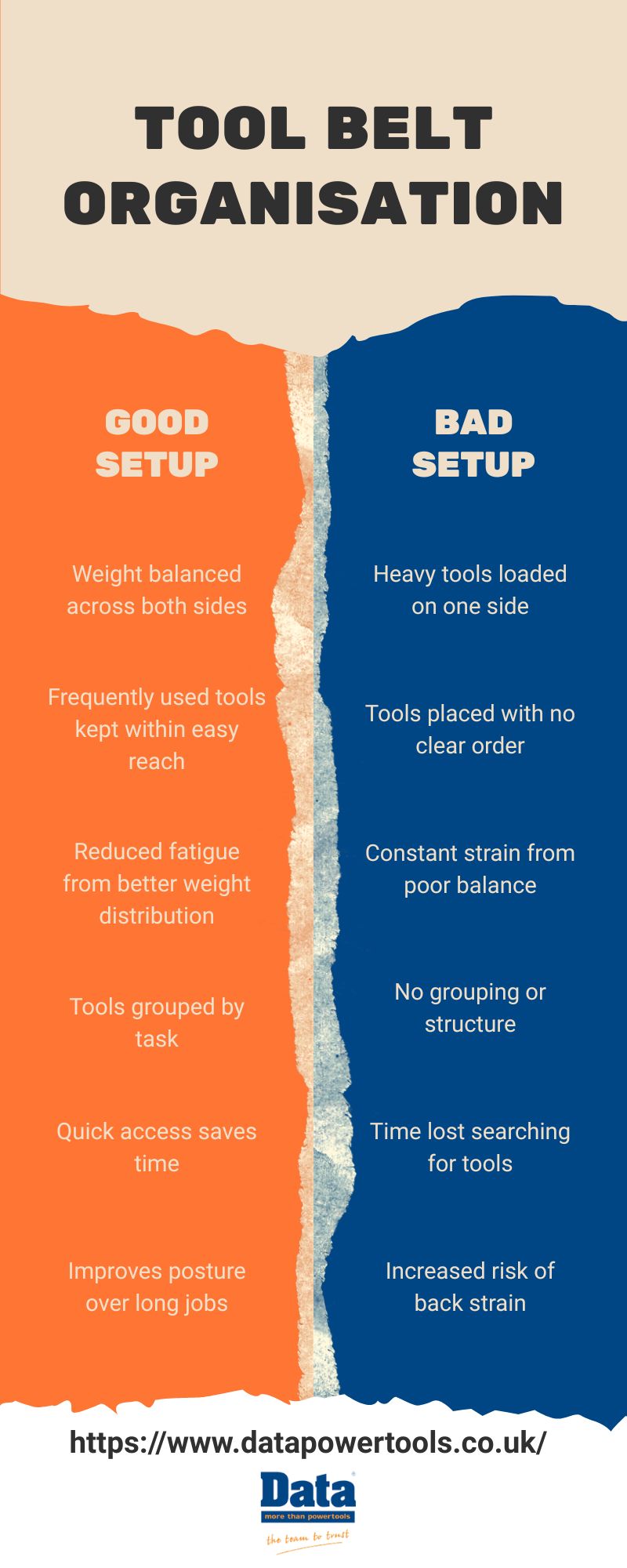
Weight distribution has a direct impact on comfort. When most of the load sits on one side, it pulls your body out of alignment and creates strain in your hips and lower back.
A better approach is to keep heavier tools closer to the centre and spread the load evenly across both sides. This helps maintain a more natural posture and reduces fatigue over time.
The belt should sit firmly without shifting. Too loose and it moves as you work. Too tight and it restricts movement. Getting this balance right makes a noticeable difference across a full day.
Structuring Your Belt Around Workflow
A tool belt should be organised around how you actually work. Think about which tools you use most often and where your hands naturally go during a task.
Your dominant hand should have access to your most-used tools, while the other side can hold support tools or less frequently used items. This reduces unnecessary movement and keeps your workflow steady.
When tools are placed without structure, you end up reaching across your body or stopping to locate what you need. A consistent layout removes that hesitation.
What to Carry and What to Leave Out
Carrying too much is one of the most common problems. It can feel safer to have everything on hand, but it adds weight and slows you down.
Focus on what you use regularly. Tools that are only needed occasionally should be kept in a toolbox or nearby storage rather than on your belt. This keeps your setup lighter and easier to manage.
A streamlined belt improves movement and makes it easier to stay organised.
Pouch Layout That Works in Practice
The way tools sit inside the pouches matters just as much as where the pouches are placed. Tools should be grouped by function so similar items are kept together.
Avoid stacking tools where they become difficult to reach. Each tool should have a clear position that allows you to grab it quickly. Visibility is important. If you can see what is in a pouch at a glance, you spend less time searching.
A clean internal layout supports the overall efficiency of the belt.
Organising Fasteners and Small Accessories
Fasteners can quickly become disorganised if they are not managed properly. Mixing screws, nails, plugs, and clips together slows you down and increases the risk of using the wrong fixing.
Keeping these items separated makes them easier to access and helps maintain a steady workflow. Dedicated compartments or pouches prevent items from becoming mixed during a job.
Placing frequently used fixings within easy reach reduces interruptions and keeps tasks moving.
Safety, Mobility and Working Position
Your tool belt should support movement, not restrict it. When working on ladders, an unbalanced setup can affect stability. When kneeling or crawling, poorly placed tools can cause discomfort or limit movement.
There is also the risk of tools catching on materials or structures. Overfilled pouches and loose items increase the chance of snagging, which slows you down and can create hazards.
A well-balanced setup improves mobility and keeps tools secure across different working positions.
Accessories That Improve Efficiency
Some accessories can improve how a tool belt performs when used properly. Suspenders help distribute weight more evenly and reduce strain on your hips. Hammer loops, drill holsters, and tape holders keep larger tools secure and accessible.
Magnetic holders can be useful for certain tasks, especially when working with screws or small fixings. The key is to avoid overloading the belt with unnecessary additions. Each accessory should serve a clear purpose.
Common Mistakes That Slow You Down
Carrying too much weight is a common issue. It makes the belt harder to manage and increases fatigue. Poor weight distribution also causes problems by creating imbalance and discomfort.
Random tool placement slows down workflow. When tools do not have a consistent position, more time is spent locating them. These small inefficiencies build up and affect overall performance.
Addressing these issues early helps maintain a more efficient setup.
Refining Your Tool Belt Setup Over Time
A well-organised tool belt has a direct impact on how you move and how efficiently you work. Better balance reduces strain, while better access to tools keeps your workflow steady throughout the day.
It is worth adjusting your setup as your work changes. Tools that were essential on one job may not be needed on the next. Keeping your belt focused on what you actually use, and refining it over time, helps maintain both efficiency and comfort.
FAQ's
Q1: How tight should a tool belt be?
A1: It should be tight enough to stay in place without shifting, but not so tight that it restricts movement or causes discomfort.
Q2: What is the best material for a tool belt?
A2: Leather offers durability, while synthetic materials provide a lighter option. The best choice depends on your working conditions and load.
Q3: How much weight should you carry on a tool belt?
A3: Only carry what you use regularly. Excess weight reduces efficiency and increases fatigue over time.
Q4: Should you use suspenders with a tool belt?
A4: Suspenders help distribute weight across your shoulders, which can improve comfort on longer jobs.
Q5: How often should you reorganise your tool belt?
A5: Review your setup regularly, especially when your type of work changes or if you notice discomfort or inefficiency.