


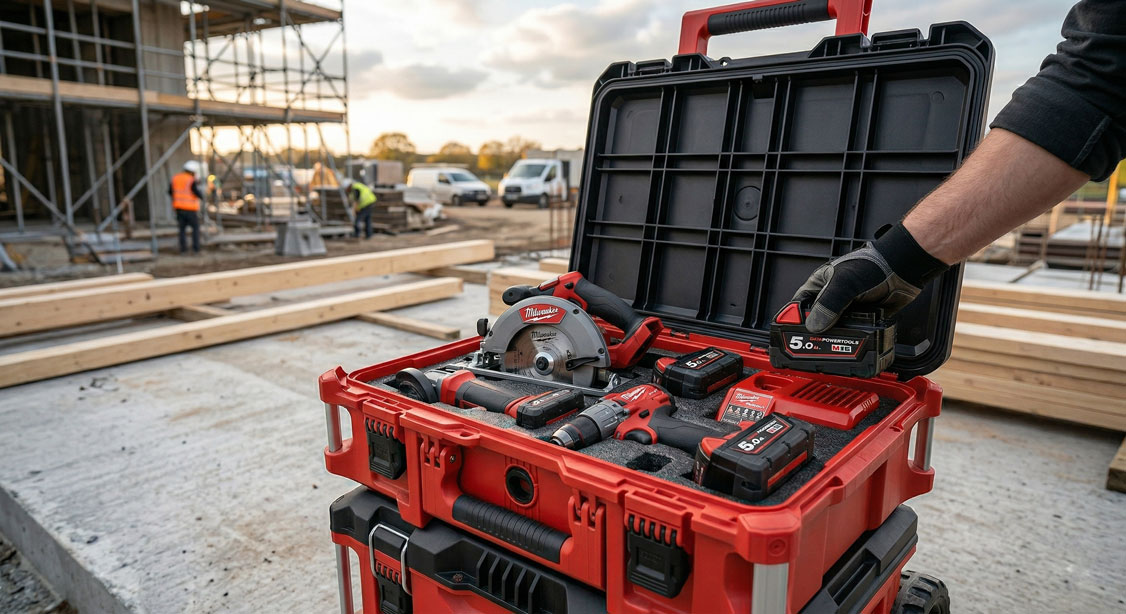
Construction work exposes weak tool choices very quickly. A kit that looks complete on paper can still leave gaps once the day starts moving. One job may involve drilling masonry fixings into block, driving long screws into timber, trimming sheet material, then cutting a fixing or bracket to make something fit. If the core tools are not right, time gets lost through workarounds, repeated setup, and extra strain on the user.
That is why a first Milwaukee kit needs to be built around tools that earn their place every day. For most construction professionals, that means choosing a small group of cordless tools that cover drilling, fixing, cutting, and on-site adjustment. Milwaukee has built a platform used across many trades, so the real decision is not whether there are enough options. It is knowing which ones are genuinely worth starting with.
What Makes a Tool Essential on a Construction Site
An essential tool is not the same as a specialist one. Specialist tools matter when the work demands them, though they often sit unused outside a narrow task. Essential tools are the ones that come out repeatedly across different jobs, materials, and stages of a project. They help with first-fix work, installation, adjustment, snagging, and day-to-day problem solving.
On a UK construction site, the most useful tools tend to share a few qualities. They need to cope with dust, awkward access, changing tasks, and periods of heavy use. They also need to work across more than one material. A tool that performs well only in ideal conditions is less useful than one that keeps going when the pace picks up and space is tight.
The other key point is battery consistency. Starting with tools that sit on the same platform makes daily use easier and future expansion more sensible. It cuts down the need for separate chargers, mixed batteries, and unnecessary overlap in the van or workshop.
A tool is usually worth classing as essential when it does most of the following:
- Handles more than one common site task
- Works across different materials
- Holds up under repeated daily use
- Fits into a wider cordless platform without waste
Cordless Combi Drill for Everyday Fixing and Drilling
If one tool had to go into the kit first, it would usually be the combi drill. On most sites, it gets used for drilling timber, metal, and masonry, then switches straight into fixing duties. That range matters because construction work rarely stays in one material for long. A single morning can move from battens and framing to brackets, masonry anchors, or service penetrations.
The hammer function is what gives the combi drill its place here. Standard drill drivers are useful in lighter work, though a combi drill is better suited to the broader demands of site work. When drilling into brick or block for plugs, fixings, and brackets, that percussion action makes the tool far more useful. It also means the same tool can stay in hand for longer rather than being swapped out every time the substrate changes.
Recommended Product
Milwaukee M18FPD3-502X 18V 4th Gen FUEL Combi Drill With 2 x 5.0Ah Batteries
This model suits the type of mixed work found on construction sites. It is built for drilling into masonry, timber, and metal without needing to switch tools constantly. The included 5.0Ah batteries give enough runtime for a full working day across typical tasks, which is important when moving between areas of a site. For new users, starting with a kit like this avoids the common mistake of buying a body-only tool and then needing to sort batteries and charging separately.
Impact Driver for Fast and Repetitive Fixing
A combi drill can drive screws, though an impact driver is the better choice once fixing becomes frequent or more demanding. This applies to structural screws, long fixings, and repetitive fastening where speed and consistency matter. The tool is designed to deliver torque more efficiently, allowing the user to maintain pace without forcing the tool through each fixing.
Over a full day, this also reduces strain. Driving larger fixings with a drill can become tiring, especially in overhead or awkward positions. An impact driver keeps the work controlled and consistent, which becomes more noticeable on framing, timber work, and repeated installation tasks.
Recommended Product
Milwaukee M18FID3-502X M18 Fuel Impact Driver With 2x 5Ah Batteries
This impact driver fits well into a construction setup where fixing speed and reliability matter. The kit format means it is ready to use straight away, which is important for first-time buyers building a working kit. It is suited to structural fixing, timber framing, and general site fastening where repeated use is expected throughout the day.
Angle Grinder for Cutting and Site Adjustments
Cutting and adjustment work is part of most construction jobs. Materials rarely arrive in exactly the right size, and changes often need to be made on the spot. An angle grinder allows quick cutting of metal, trimming bolts, and preparing surfaces where needed. It is also used for grinding and cleaning edges before fitting or fixing components.
Control matters with this type of tool. A grinder needs to respond quickly and stop safely, especially when working in tight areas or around other trades. That is where braking features become useful in real-world use, not just as a specification detail.
A grinder typically supports tasks such as:
- Cutting threaded rod, bolts, and metal brackets
- Trimming materials to fit on-site conditions
- Grinding back welds or rough edges
- Preparing surfaces before fixing
Recommended Product
Milwaukee M18FHSAG125XPDB-552X 125mm Braking Grinder Kit
A 125mm grinder is a practical choice for general construction work as it balances control and cutting ability. This model includes a braking function, which improves safety during day-to-day use. The kit setup also makes it suitable for those building a cordless system from the start, rather than adding a single tool to an existing setup.
Circular Saw for Fast and Accurate Cutting
Cutting timber and sheet material is a core part of construction work. Whether it is framing, flooring, or general fitting, a circular saw allows straight, repeatable cuts without relying on manual methods. This improves both speed and consistency across the job.
Cordless circular saws have become standard on site because they remove the need for trailing leads while still delivering enough power for typical cutting tasks. Battery performance becomes important here, especially when working through thicker material or making repeated cuts over time.
Recommended Product
Milwaukee M18FCS66GR3-121C GEN 3 18V Fuel Circular Saw Guide Rail Compatible With 1x 12Ah Forge Battery
This saw is suited to construction work where clean, straight cuts are needed across timber and sheet materials. The guide rail compatibility adds accuracy when required, while the included 12Ah battery supports longer cutting sessions without frequent changes. It fits well into framing, flooring, and general cutting tasks where consistency matters.
How These Tools Work Together on Site
When these tools are used together, they cover most of the tasks encountered on a typical construction day. The combi drill handles drilling and general fixing, the impact driver takes over for repetitive fastening, the circular saw deals with cutting, and the grinder allows quick adjustments when materials need to be modified.
This reduces the need to switch between multiple specialised tools and helps keep the workflow moving. Instead of stopping to find the right tool for each small task, the core kit stays in use throughout the job.
A simple workflow often looks like:
- Drill and prepare fixing points
- Drive fixings efficiently with the impact driver
- Cut materials to size with the circular saw
- Adjust or trim components with the grinder
Choosing the Right Setup for Your First Milwaukee Kit
Starting with the right setup is more important than having a large number of tools. Many new users focus on buying as many tools as possible, though this often leads to overlap and unnecessary spending. A smaller, well-chosen kit will usually perform better in real conditions.
Kit options with batteries and chargers are often the better starting point. They allow the tools to be used immediately and form the base of a wider system. Body-only tools make more sense once a battery platform is already established.
When planning a first setup, it helps to focus on:
- Tools that cover multiple tasks
- Compatibility across the same battery system
- Battery capacity that supports a full working day
- Avoiding duplicate tools with similar roles
Practical Outcomes from a Well-Built Tool Kit
A well-built tool kit does more than just complete tasks. It improves how the work is carried out across the day. Fewer interruptions, fewer tool changes, and better consistency all contribute to a smoother workflow. This becomes more noticeable on larger jobs or when working under time pressure.
For new tradespeople, this also builds confidence. Having the right tools available for common tasks reduces hesitation and allows the focus to stay on the job rather than the limitations of the equipment.
In practical terms, a strong core setup leads to:
- Faster job completion with fewer delays
- Reduced downtime caused by tool limitations
- More consistent results across different tasks
- Greater confidence when handling varied site work
FAQ
Q1: What tools should a beginner construction worker start with?
A1: A combi drill, impact driver, circular saw, and angle grinder provide a solid starting point for most construction tasks.
Q2: Is a combi drill enough on its own for site work?
A2: A combi drill covers many tasks, though pairing it with an impact driver improves efficiency for fixing work.
Q3: Why use an impact driver instead of a drill?
A3: An impact driver handles repetitive and heavy-duty fixing more efficiently and reduces strain during extended use.
Q4: What size angle grinder is best for general construction work?
A4: A 115mm or 125mm grinder is usually the most practical size for control and versatility on site.
Q5: How do I choose between different Milwaukee battery systems?
A5: Most construction users start with the M18 system as it supports a wide range of tools suited to site work.