


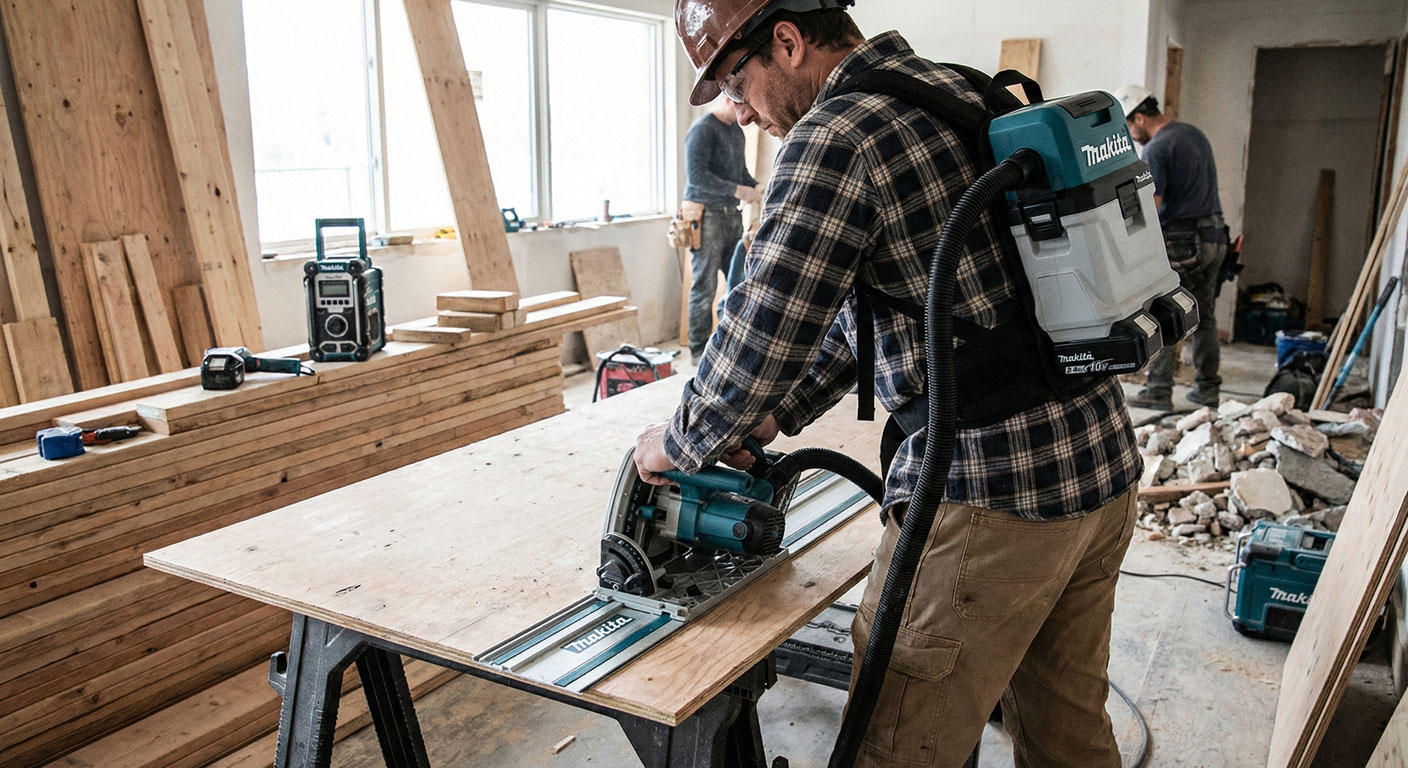
Most trades have access to a dust extractor. Far fewer use it consistently. The issue is not awareness or regulation. It is friction. When hoses snag, suction fades, filters clog, or setup feels awkward, dust extraction stops being part of the job and starts feeling like an interruption.
Dust control only works when it fits the pace and reality of site work. Systems that slow progress, restrict movement, or demand constant attention get bypassed. This is why many teams gravitate toward Makita cordless dust extractors and vacuums for mobile or short-duration tasks. Convenience often determines whether extraction is used at all, especially on smaller jobs or during snagging and fit-off.
This article focuses on how to set up a Makita dust control system that stays switched on throughout the day, rather than one that looks compliant on paper and gets ignored once work ramps up.
Why Dust Control Systems Fail on Real Job Sites
Most dust control failures are gradual rather than dramatic. Suction drops slowly. Hoses become harder to move. Noise increases. Cutting still works, just not cleanly. Because the system has not failed outright, the extractor keeps running until someone decides it is no longer worth the effort.
Many setups are technically correct but practically fragile. They rely on perfect hose routing, clean filters, and uninterrupted airflow. Real sites are shared, cluttered, and constantly changing. Trades step over hoses, shift extractors to access work areas, and switch tools repeatedly. A dust control system that cannot tolerate that level of disruption will not survive a full day.
The result is predictable. Extraction starts strong, then fades quietly until it is switched off altogether.
Choosing the Right Makita Extractor for the Work
Cordless extractors suit short-duration and mobile work. They are easy to reposition, quick to deploy, and remove the friction of finding power. For punch lists, domestic jobs, and spaces where cables are a problem, they are often the difference between using dust extraction and not using it.
Corded extractors suit sustained cutting and fixed work zones. They offer higher capacity, more consistent airflow, and better tolerance for continuous dust production. When cutting, chasing, grinding, or sanding for extended periods, Makita corded dust extractors and vacuums tend to perform more predictably across the day.
The common mistake is choosing an extractor based on room size rather than dust load. A small area cutting masonry produces more airborne dust than a large space drilling timber. The extractor should always be matched to the work being done, not the footprint of the job.
Balancing Mobility and Output on Demanding Jobs
Some jobs fall between the two extremes. Mobility still matters, but dust output is too high for standard cordless extraction to cope comfortably. Larger renovations, repeated cutting, or shared extractors across multiple tools quickly expose the limits of smaller units.
In these situations, higher-output cordless systems such as Makita 40V Max XGT dust extractors and vacuums make sense. They reduce the compromise between portability and performance, allowing teams to maintain airflow without trailing cables through active work areas.
These setups are not about convenience alone. They are about consistency. When suction holds steady, trades are less likely to disable extraction mid-job, even when work becomes repetitive or demanding.
Airflow Fundamentals That Actually Affect Performance
Airflow is determined by more than extractor size. Hose length, diameter, and routing have a direct impact on suction at the tool. Long, narrow hoses restrict airflow and increase the chance of blockages. Tight bends and crushed sections compound the problem.
Shorter hoses with an appropriate diameter maintain airflow and respond better as tools move. Adaptors should fit securely without steps or gaps. Each air leak reduces effectiveness and increases noise, which is often the first sign that performance is slipping.
Good airflow is usually obvious in use. The hose stays light, responsive, and clear. When airflow degrades, extraction becomes noisy, sluggish, and frustrating, even if the extractor itself is still running.
Tool Pairing, Visibility, and Cut Quality
Not all tools extract equally. Sanders and plunge saws generally perform well when paired correctly. Grinders and some cutters will always release some dust, regardless of extractor size. Problems arise when expectations are unrealistic.
Effective dust extraction improves more than air quality. It improves visibility at the cut line, reduces rework, and helps maintain consistent finishes. On sanding tasks, good extraction prevents disc clogging and reduces heat build-up. Over time, this extends consumable life and improves overall job quality.
Knowing which tools benefit most from extraction helps trades focus effort where it delivers the greatest return, rather than abandoning the system because one tool never performs perfectly.
Filters, Bags, and Keeping Suction Consistent All Day
Many performance issues blamed on extractors are actually caused by neglected consumables. Filters clog gradually. Bags overfill quietly. Suction fades without a clear failure point. By the time cutting quality drops noticeably, extraction is already compromised.
Consumables such as Makita dust bags and accessories play a critical role in maintaining airflow. Overfilled bags restrict the movement of air and increase motor strain. Incorrectly fitted bags leak dust back into the system, reducing efficiency further.
Maintenance routines need to reflect site reality. Quick checks during breaks work better than rigid schedules that rarely get followed. Performance-based checks keep systems effective without turning dust control into a constant distraction.
Making Dust Control Part of the Job, Not an Extra Step
Dust control sticks when it becomes routine rather than optional. Setting the extractor up before cutting starts makes it part of the workflow, not an add-on. Standardising hose connections and keeping extractors positioned consistently reduces friction when switching tools.
On shared sites, simple habits matter. One person moving an extractor should not disrupt everyone else. Clear expectations around hose use, bag changes, and positioning prevent small issues from escalating into system failure.
Consistency matters more than perfection. A system that works reliably most of the time delivers better outcomes than one that works flawlessly but rarely stays switched on.
FAQ’s
Q1: Should I choose a cordless or corded Makita extractor for site work?
A1: Cordless suits mobile and short-duration tasks. Corded suits sustained cutting and fixed work zones.
Q2: Why does my extractor lose suction halfway through the day?
A2: Gradual clogging of filters, overfilled bags, or restricted hoses are the most common causes.
Q3: Are higher-output cordless extractors worth it?
A3: Yes, when mobility is required but standard cordless units struggle to maintain airflow under load.
Q4: Do hoses and adaptors really make that much difference?
A4: Yes. Poor hose routing and air leaks reduce suction more than many trades realise.
Q5: How often should filters and bags be checked?
A5: During heavy dust work, daily checks based on performance are more effective than fixed schedules.