

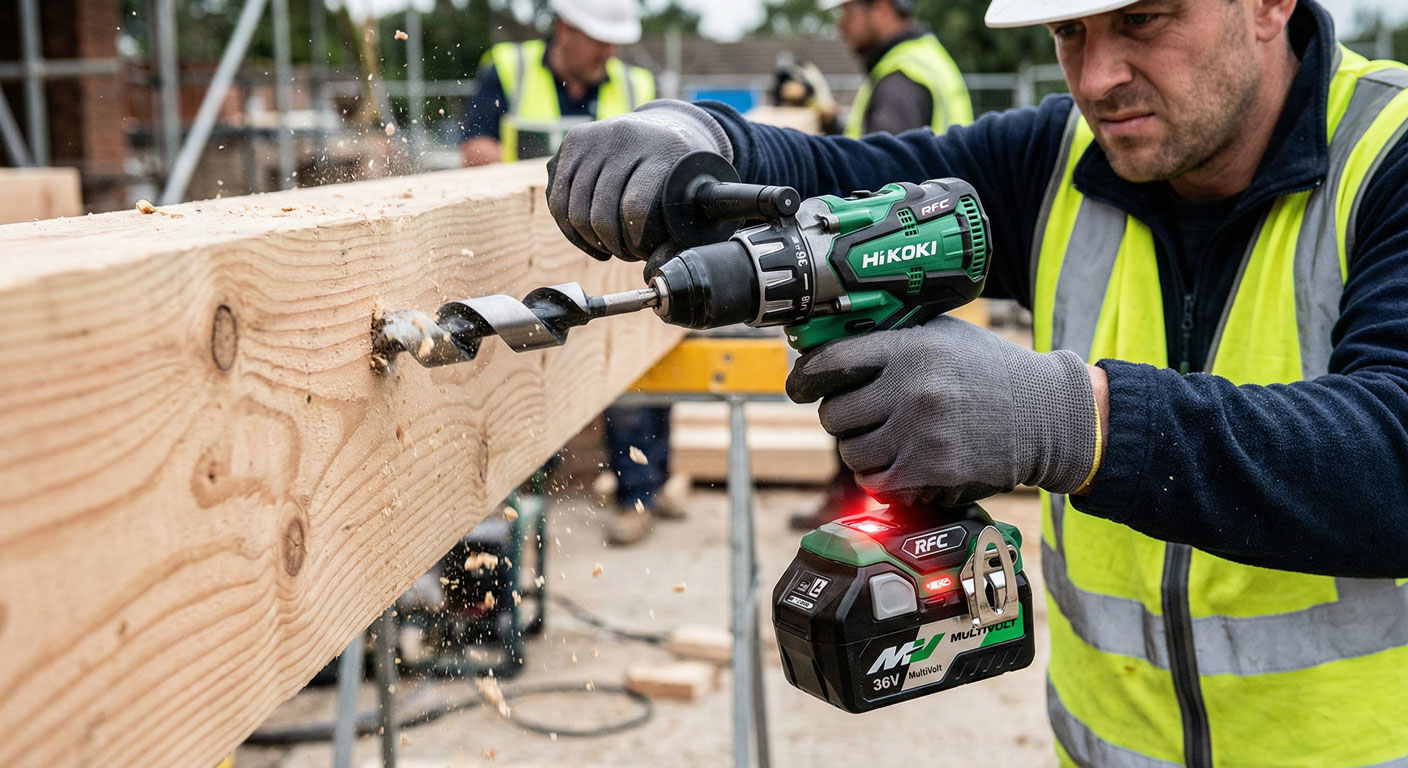
High-torque cordless tools fail fast when something goes wrong. A bit binds, a fastener snags, or a grinder catches an edge, and the reaction is immediate. Injuries happen in a split second, not because someone is careless, but because modern cordless tools deliver more power than ever before.
That is why safety in high-torque work is not about warning labels or compliance. It is about control. Across the wider range of HiKOKI cordless power tools, the focus is not just on output, but on how that power is managed when conditions change under load.
When torque rises suddenly, the difference between a controlled stop and a violent kickback comes down to how the tool reacts in the moment.
How Torque Creates Risk in Real-World Work
Torque becomes dangerous when resistance changes unexpectedly. A drill bit grabs, a fastener bottoms out, or a cutting disc stalls. The tool tries to keep turning, and the reactive force is transferred straight into the user’s wrists, arms, and shoulders.
Cordless tools amplify this risk because they deliver full torque instantly. There is no gradual build-up like older corded machines. The moment resistance increases, the reaction is immediate. This is why bind-ups and kickback are more common in drilling, fastening, and grinding than many tradespeople expect.
The risk is not theoretical. It shows up most often in awkward positions, overhead work, and fatigue-affected end-of-day tasks.
The Safety Features That Actually Reduce Incidents
Not all safety features are equal. Stickers and guards do nothing once torque spikes. What matters are systems that detect load changes and respond faster than the user can.
Electronic control systems that monitor speed and resistance can shut the tool down when a bind-up is detected. Soft-start behaviour reduces the shock when a tool first engages. Load-sensing electronics prevent sudden torque surges that catch users off guard.
The key point is intervention. When something goes wrong, the safest tools react instantly rather than relying on the user to recover control after the fact.
Control, Grip, and Stability Under Torque
Safety is not just electronics. How a tool is held matters as much as how it is programmed. Handle design, grip texture, and balance all influence how much force reaches the user when torque spikes.
A well-balanced tool reduces twisting force. Proper auxiliary handle placement gives leverage rather than letting the tool rotate freely. Trigger modulation allows finer control when starting or stopping under load.
Over a long day, fatigue erodes grip strength and reaction time. Tools that remain stable under torque help compensate for that decline rather than amplifying it.
Setting the Tool Up Correctly Before You Pull the Trigger
Incorrect setup defeats even the best safety systems. Clutch settings that are too high, wrong speed selections, or mismatched bits increase the likelihood of bind-ups.
Choosing the correct mode for the task matters. High-torque settings are not always appropriate, especially for delicate fastening or drilling into unpredictable materials. Slower speeds and controlled torque limits reduce reaction force and give electronic systems time to intervene.
Setup is a safety decision, not just a performance one.
Where Impact Torque Demands Extra Caution
Impact tools deserve special attention because torque is delivered in sharp bursts rather than smoothly. That makes control more difficult when something goes wrong.
Within the HiKOKI cordless impact driver range, the emphasis on controlled delivery and responsive shut-off becomes critical. Impact drivers can snap fasteners, twist wrists, or damage workpieces if torque is not managed properly.
Understanding when to use an impact driver, and when a drill or wrench is safer, is part of reducing injury risk under load.
Safer Technique When Torque Is High
No safety feature replaces good technique. Proper stance, bracing the tool, and keeping the body positioned to absorb reaction forces all reduce injury risk.
Letting the tool do the work matters. Forcing a cut or fastener increases resistance and raises the likelihood of sudden torque spikes. When a tool begins to struggle, stopping and reassessing is safer than pushing through.
Experience helps, but it does not eliminate risk. Many injuries happen to skilled users who underestimate how quickly conditions can change.
PPE and Site Habits That Reduce Common Injuries
Tool safety ends where site habits begin. Gloves improve grip but must be appropriate for rotating equipment. Eye protection guards against sudden material ejection during bind-ups. Stable footing reduces the chance of losing balance when torque reacts unexpectedly.
Distractions and rushed work increase mistakes. Most torque-related injuries happen late in the day, when fatigue and time pressure combine. Recognising those risk windows is as important as any tool feature.
Choosing Cordless Power Without Compromising Safety
When selecting high-torque cordless tools, headline torque figures should not be the deciding factor. Consistent control, predictable response, and safety intervention matter more than peak output.
Tools that manage torque intelligently reduce injury risk, extend tool life, and improve confidence on site. Over time, controlled power delivers better results than raw force alone.
FAQ’s
Q1: Are higher-torque tools always more dangerous?
A1: Higher torque increases risk if control systems and technique are poor. Well-managed torque can be safer than uncontrolled lower power.
Q2: Do electronic safety features replace good technique?
A2: No. They support safe use, but correct setup and handling remain essential.
Q3: When should anti-kickback systems intervene?
A3: During sudden bind-ups or stalls where reactive force exceeds safe limits.
Q4: Does fatigue increase torque-related injury risk?
A4: Yes. Grip strength and reaction time drop as fatigue increases.
Q5: What should I prioritise when choosing a high-torque cordless tool?
A5: Control, balance, and safety response should come before maximum torque figures.