


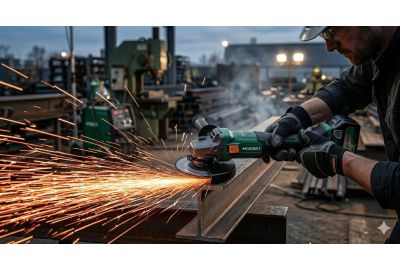
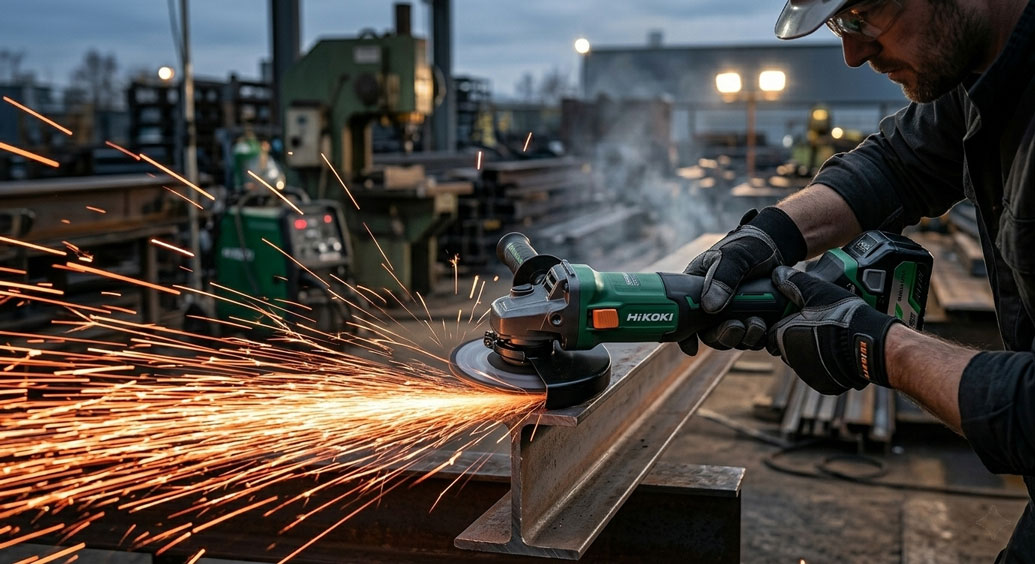
Heavy-duty angle grinders earn their place on jobs where lighter tools start to lose pace. On UK building sites, in fabrication shops, and during demolition work, grinders often spend long periods cutting steel, cleaning welds, chasing out mortar, or stripping back damaged material. That kind of work puts steady strain on the motor, gearing, bearings, and disc.
A grinder that feels fine for short bursts can become frustrating once the workload turns repetitive and demanding. Speed can fall away, the body can run too hot, and control can suffer when pushed into thicker material. This is where a heavy-duty HiKOKI angle grinder stands out. The benefit is straightforward. It keeps working at a steady level without constant slowdown or strain.
Why Standard Angle Grinders Fall Short on Heavy-Duty Work
A standard angle grinder can handle general cutting and grinding, though it often starts to show its limits when the work becomes constant. This is common when cutting thick box section, trimming rebar in volume, or grinding back welds across long runs. Small performance drops at the start turn into real inefficiencies over a full shift.
Heat is usually the first warning sign. As the motor works harder, the tool warms up and begins to feel less stable. Dust makes this worse, especially on mixed-material sites where debris builds quickly.
Common issues include:
- Loss of speed when cutting thicker material
- Overheating during extended use
- Increased vibration and reduced control
- Faster wear on internal components
Once these problems stack up, the operator often compensates by forcing the tool, which reduces accuracy and increases fatigue.
What Defines a Heavy-Duty Angle Grinder
A heavy-duty grinder is built to handle sustained load without performance dropping off. This starts with stronger motors or higher-output battery systems that can maintain speed under pressure.
Internal construction matters just as much as power. Gearing, bearings, and housing all need to withstand repeated strain. The tool should feel stable in hand, even when cutting dense material or working at awkward angles.
Heavy-duty performance is not just about raw output. It is about consistency, control, and reliability over time.
Power and Torque in Real Cutting Conditions
Power only shows its value when the disc meets resistance. Free-spinning speed means little once the grinder is pushed into thick steel or dense masonry. The real test is how well the tool holds speed when it is under load.
High torque allows the grinder to keep momentum through the cut. This reduces the need to force the tool and helps maintain a smoother working rhythm. Over time, this leads to cleaner cuts and less strain on both the tool and the user.
Where heavy cutting and demolition are part of the job, a larger grinder becomes essential.
Recommended Product
HiKOKI G3623DA/JAZ/36 Multi Volt 230mm Angle Grinder With 2x 4.0Ah/8.0Ah Batteries
For deep cutting and demanding site work, a 230mm grinder provides the reach and cutting depth needed for structural steel and heavy materials. This model is built around the Multi Volt system, which delivers strong output while maintaining consistent performance across longer tasks. The inclusion of 4.0Ah/8.0Ah batteries supports extended use without frequent interruptions. It suits demolition work, large-section cutting, and situations where smaller grinders struggle to keep pace.
For users already working within the same battery platform, a body-only option provides the same performance without duplicating batteries.
Recommended Product
HiKOKI G3623DA/W4Z Multi Volt Cordless Angle Grinder (Body Only)
This version offers the same core capability, making it a practical choice for those who need heavy-duty performance but already have compatible batteries on site. It allows teams to expand capacity without increasing kit weight unnecessarily.
Durability That Holds Up on Site
Durability is measured over time, not just on first use. Grinders used in real conditions face dust, debris, vibration, and repeated handling throughout the day. A tool that cannot manage these factors will lose reliability quickly.
Protection against dust ingress helps preserve internal components. Heat management keeps the motor and electronics working within safe limits during extended use. The overall build should feel solid, with no weak points in the housing or controls.
Signs of strong durability include:
- Stable performance over long sessions
- Resistance to dust and debris build-up
- Minimal change in vibration over time
- Consistent operation under repeated load
These factors make a difference when the grinder is used daily rather than occasionally.
Safety Features That Matter in High-Risk Work
Angle grinders carry risk, especially under heavy load. Sudden resistance in the cut can cause kickback, while poor control increases the chance of mistakes. Safety features play a direct role in how manageable the tool feels during demanding work.
Kickback control helps reduce sudden tool movement when the disc binds. Restart protection prevents the grinder from powering up unexpectedly after an interruption. Brake systems reduce the time the disc continues spinning after switch-off.
For work that requires both power and control, a smaller, more balanced grinder often gives better handling.
Recommended Product
HiKOKI G3613DVF 36V MultiVolt Brushless 125mm Paddle Switch Angle Grinder Body Only
A 125mm grinder offers a strong balance between control and performance. This model combines Multi Volt output with a paddle switch design, giving the user more immediate control over operation. It is well suited to fabrication work, controlled cutting, and situations where precision matters as much as power. The brushless motor supports consistent performance while reducing wear over time.
Choosing the Right Grinder for the Job
Choosing the right grinder depends on the task rather than a single specification. Disc size, power source, and handling all influence how well the tool performs in practice.
Key considerations include:
- Disc size based on cutting depth and material
- Power requirements for sustained or heavy use
- Corded versus cordless depending on mobility needs
- Weight and balance for extended handling
Larger grinders suit deep cuts and heavy material removal. Smaller grinders provide better control for detailed work. The right choice comes down to matching the tool to the demands of the job.
Real Use Cases Across Trades
Different trades place different demands on angle grinders. In steel fabrication, grinders are used for cutting, weld preparation, and finishing. Consistent speed and control are essential for maintaining quality.
On construction sites, grinders are often used for quick adjustments, cutting brackets, or working through masonry. The tool needs to be reliable and ready for repeated use throughout the day.
Demolition work adds another layer of demand. Materials are often unpredictable, access can be awkward, and the grinder must handle resistance without losing performance. In these conditions, durability and control become just as important as power.
Getting the Best Performance from Your Grinder
Even a heavy-duty grinder relies on proper setup and handling to perform at its best. Disc selection is one of the most important factors. Using the correct disc for the material improves cutting efficiency and reduces strain on the tool.
Work technique also matters. Applying steady pressure and allowing the grinder to maintain its own speed leads to better results than forcing the cut. Positioning and grip affect both control and safety.
Routine checks help maintain performance:
- Inspect discs for wear or damage
- Keep vents clear of dust and debris
- Ensure guards are correctly positioned
- Monitor vibration and tool behaviour
These steps help extend the life of the tool and maintain consistent results.
What Better Performance Looks Like on Site
Better performance becomes clear in how the work progresses. A heavy-duty grinder that maintains speed under load allows tasks to be completed more efficiently. Cuts are cleaner, grinding is more consistent, and less time is spent correcting mistakes.
In workshop environments or long-duration tasks, corded grinders still have a role where uninterrupted power is needed.
Recommended Product
HiKOKI G23SC4 230mm 2400W Angle Grinder
For continuous use, a corded 230mm grinder provides reliable output without the need to manage battery runtime. This model delivers strong, consistent power suited to extended cutting sessions and heavy material removal. It is well suited to workshop environments or site setups where power access is not a limitation and sustained performance is the priority.
Stronger performance also reduces fatigue. A grinder that cuts cleanly and predictably allows the user to work with better control throughout the day. The result is a more stable workflow, fewer interruptions, and improved overall efficiency.
FAQ's
Q1: What makes a heavy-duty angle grinder different from a standard one?
A1: A heavy-duty angle grinder is designed to handle sustained load, thicker materials, and longer run times without losing performance or control.
Q2: How do I choose the right disc size for my work?
A2: Disc size should match the depth of cut and material type, with larger discs suited to deeper cuts and smaller discs offering better control.
Q3: Are cordless angle grinders powerful enough for heavy-duty tasks?
A3: Modern cordless grinders can handle demanding tasks, though performance depends on battery output and the type of work being carried out.
Q4: What safety features should I look for in an angle grinder?
A4: Key features include kickback control, restart protection, braking systems, and a handle design that supports stable operation.
Q5: How can I extend the lifespan of my angle grinder on site?
A5: Use the correct disc, avoid forcing the tool, keep it clean, and carry out regular checks to maintain performance and safety.