


Dust control is becoming a much bigger focus across UK construction sites, workshops, and refurbishment projects. Cutting, grinding, drilling, and demolition work all generate airborne dust that spreads quickly through active work areas. What was once treated as a normal part of construction work is now receiving far more attention from contractors, site managers, and tradespeople.
Modern extraction systems and accessories such as dust extraction shrouds are becoming increasingly common as contractors look for cleaner and safer ways to manage dust onsite. Improvements in cordless equipment, extraction technology, and site organisation are also changing how dust control is approached across many trades.
Why Construction Dust Has Become a Serious Industry Issue
Construction dust is generated across a huge range of tasks. Concrete drilling, chasing walls, cutting slabs, sanding timber, and grinding metal all release fine airborne particles into the surrounding area.
One of the main problems is how long dust remains suspended in the air after work has finished. Dust spreads beyond the immediate task area and often affects multiple trades working nearby. On busy sites, this creates wider operational problems alongside the obvious cleanliness issues.
There is also much greater awareness now around long-term exposure. More contractors are beginning to view dust management as part of normal site planning rather than something dealt with at the end of the job.
The Types of Dust Commonly Found on UK Job Sites
Different trades generate different types of dust depending on the material and application involved.
Common examples include:
- Silica dust from concrete, brick, and stone
- Wood dust from cutting and sanding operations
- Metal particles from grinding and fabrication work
- General demolition and refurbishment dust
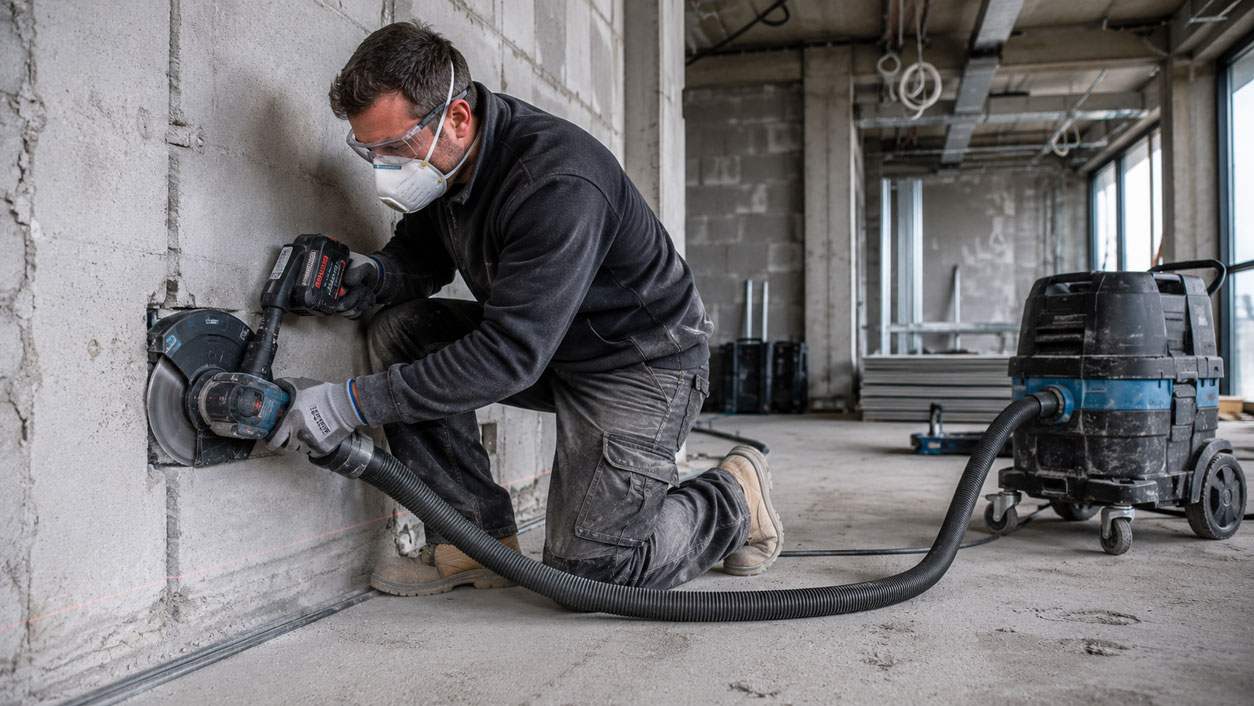
Dust generated from cutting and grinding with grinding discs and abrasive wheels can spread quickly across active work areas if extraction systems are not used properly.
Why Silica Dust Is Receiving So Much Attention
Silica dust remains one of the biggest concerns across the construction industry. Materials such as concrete, brick, mortar, and stone all contain crystalline silica, which becomes airborne during cutting and drilling tasks.
The problem is the size of the particles produced. Fine respirable dust can travel deep into the lungs during repeated exposure over time. As awareness has increased, more contractors and site managers are placing greater emphasis on controlling dust during high-exposure tasks.
This is one reason why extraction systems are now being used far more frequently alongside cutting and drilling equipment across UK jobsites.
How Dust Affects Productivity and Site Conditions
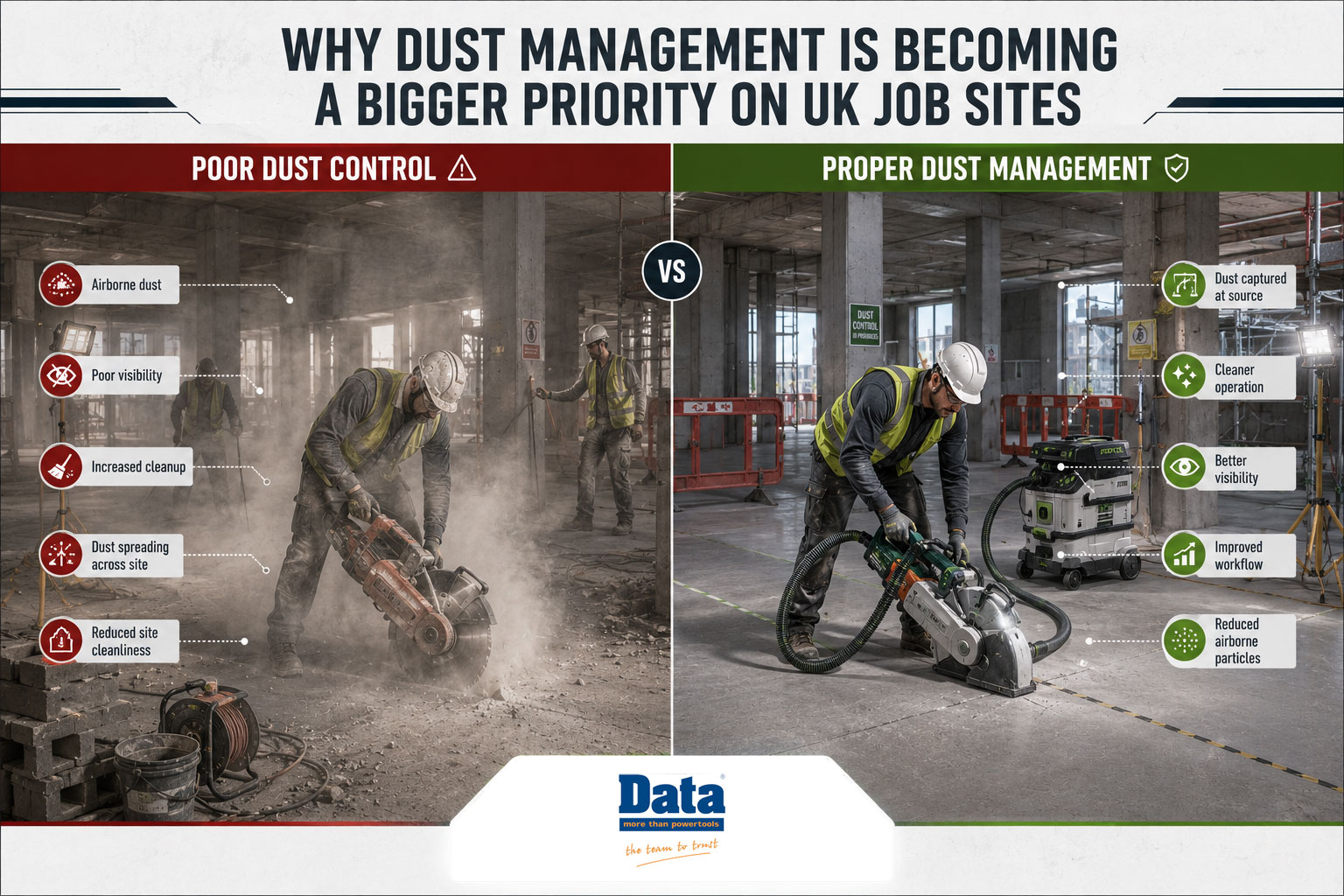
Dust affects much more than cleanliness. Excessive airborne particles reduce visibility during work, contaminate surrounding areas, and increase cleanup time throughout the day.
Heavy dust buildup can also affect equipment performance by blocking vents, contaminating moving parts, and increasing maintenance requirements. On refurbishment projects, uncontrolled dust often spreads into completed areas or occupied sections of buildings, creating additional delays and frustration.
Well-managed sites generally operate more efficiently because work areas stay cleaner, safer, and easier to organise.
The Role of Modern Dust Extraction Equipment
Dust extraction systems are becoming standard equipment on many sites rather than optional add-ons. Modern extraction units are now designed to integrate directly with cutting, grinding, and drilling equipment.
Capturing dust at source is far more effective than attempting to clean it afterward. This reduces airborne contamination during work and helps prevent dust from spreading throughout the surrounding area.
Portable extraction systems have also improved significantly in recent years. Smaller and more mobile units make it easier for tradespeople to maintain dust control across a wider range of applications.
Why More Contractors Are Using Dust Control Accessories
Accessories designed specifically for dust control are becoming increasingly common across many trades. Guards, extraction attachments, and shrouds allow operators to contain dust much closer to the point where it is generated.
This creates several practical benefits:
- Cleaner working areas throughout the day
- Reduced airborne dust during cutting and grinding
- Faster cleanup after tasks are completed
- Better visibility around active work zones
Many contractors are now building extraction accessories into their standard site setups rather than treating them as occasional additions.
How Cordless Technology Is Changing Dust Management
Cordless equipment is helping improve dust management in several ways. Without trailing extension leads and generators, extraction systems can be positioned more flexibly around active work areas.
Cordless extraction units also make it easier to control dust during reactive maintenance work, smaller installations, and projects with restricted access. Improved runtime from modern cordless batteries and charging systems is helping extraction equipment operate more effectively across busy construction sites.
As cordless systems continue improving, mobile dust management is becoming far more practical for everyday site work.
Dust Management in Indoor and Occupied Buildings
Indoor projects often create greater pressure around dust control because surrounding spaces may still be occupied during construction work. Offices, schools, retail environments, healthcare facilities, and residential refurbishments all require cleaner operating conditions.
Uncontrolled dust spreads quickly through ventilation systems, corridors, and neighbouring work areas. This creates disruption not only for tradespeople but also for building occupants.
Cleaner operation is becoming increasingly important as more construction work takes place within active or partially occupied environments.
The Impact on Health and Worker Welfare
Cleaner working conditions improve the overall site environment for everyone involved. Reduced airborne dust helps create more comfortable work areas, particularly during prolonged cutting and grinding tasks.
Worker welfare is receiving much greater attention across the industry, especially on larger projects where multiple trades operate in close proximity. Dust control now forms part of wider conversations around housekeeping, ventilation, site organisation, and working conditions.
Many contractors are recognising that cleaner sites generally create better overall working environments.
How Dust Management Supports Better Tool Performance
Dust can have a direct effect on tool performance over time. Fine particles contaminate cooling vents, moving components, and extraction systems themselves if maintenance is ignored.
Keeping work areas cleaner helps reduce debris buildup around equipment and can support more reliable operation during prolonged use. Extraction systems also improve visibility around cutting lines and drilling areas, helping operators work more accurately.
This operational side of dust management is often overlooked compared to the health discussion, but it still plays an important role onsite.
Why UK Job Sites Are Becoming Less Tolerant of Poor Dust Control
Site standards are changing across much of the UK construction industry. Cleaner sites are increasingly viewed as better organised, more professional, and easier to manage safely.
Main contractors are also placing more emphasis on housekeeping expectations during active projects. Excessive dust is now more likely to be viewed as poor workflow management rather than an unavoidable part of construction work.
As equipment improves and extraction systems become more accessible, expectations around dust control are continuing to rise.
Challenges Contractors Still Face with Dust Management
Despite the improvements, dust management still creates challenges for many contractors. Extraction systems add additional equipment costs and require regular maintenance to operate effectively.
Smaller sites can also struggle with space limitations when multiple extraction units and hoses are introduced into already restricted work areas. Fast-moving reactive work sometimes creates pressure to prioritise speed over proper dust control setups.
Balancing mobility, efficiency, and effective containment remains one of the ongoing challenges across many jobsites.
The Future of Dust Management on Construction Sites
Dust management is likely to become even more integrated into everyday construction workflows over the coming years. Tool manufacturers are continuing to develop better extraction compatibility across cordless systems, cutting equipment, and grinding applications.
Battery improvements are also supporting the growth of more mobile extraction systems that can operate effectively without permanent access to power supplies. Cleaner operation is gradually becoming part of standard site expectations rather than something limited to specialist projects.
As site standards continue evolving, dust control is likely to influence equipment selection and workflow planning much more heavily than it did previously.
Cleaner Worksites Are Becoming the Standard
Dust management is becoming a central part of modern construction site operation across the UK. Health concerns, cleaner workflows, improved housekeeping, and better extraction technology are all contributing to the shift.
Modern cordless systems and extraction equipment are making dust control far more achievable across a wide range of applications. Contractors are increasingly treating cleaner operation as part of normal professional site practice rather than an optional extra added only when problems arise.
FAQ's
Q1: Why is dust management becoming more important on UK job sites?
A1: Greater awareness around health risks, cleaner workflows, and improved site standards has increased the focus on controlling airborne dust during construction work.
Q2: What is silica dust and why is it dangerous?
A2: Silica dust is produced when cutting or drilling materials such as concrete and brick. Fine respirable particles can be harmful when repeatedly inhaled over long periods.
Q3: How do modern dust extraction systems work?
A3: Extraction systems capture dust close to the source during cutting, grinding, or drilling tasks, helping reduce airborne contamination around the work area.
Q4: Does cordless equipment improve dust management?
A4: Cordless systems improve mobility and make it easier to position extraction equipment without trailing cables or generators restricting movement.
Q5: What are the biggest challenges with controlling dust onsite?
A5: Equipment costs, limited site space, extraction maintenance, and maintaining efficient workflows are some of the main challenges contractors still face.