


Choosing the right nail gun starts with the job itself. A tool that works well for framing a stud wall will not give the same result when fitting skirting or fixing small decorative trim. Using the wrong type often leads to weak fixings, visible marks, split timber, or time spent pulling nails and starting again.
That issue shows up regularly on UK building sites, in joinery workshops, and during renovation work. Many users choose a nail gun based on what they already have rather than what the task requires. Understanding how different DeWALT nailers are used in real conditions helps you work faster, protect materials, and avoid rework.
Why Nail Gun Selection Matters on Site
Nail gun choice affects how secure a fixing is and how much finishing work is needed after installation. On structural work, a nail that lacks length or strength can leave joints loose. On finishing work, using a heavier nailer can leave large holes or crush the surface of the timber.
Time loss builds quickly when the wrong tool is used. Nails may need to be removed, trims may need filling, and damaged materials may need replacing. On a busy site, this slows the whole sequence of work.
There is a clear difference between first fix and second fix work. Structural tasks need penetration and holding strength. Finishing work needs control and a clean result. Matching the nail gun to the task keeps work consistent and reduces unnecessary delays.
Understanding the Main Types of Nail Guns
Nail guns are designed around specific stages of work. Framing nailers are built for structural timber. Second fix nailers are used for interior joinery. Brad nailers handle lighter, more detailed tasks where appearance matters.
Each type uses a different nail size and delivers a different level of force. That difference affects both the strength of the fixing and the finish left behind. Trying to use one nail gun across all tasks often leads to problems with either holding strength or surface damage.
Some users move between different stages of work during a project. In those cases, having access to both first fix and second fix tools makes a clear difference to workflow and results.
Framing Nailers for Structural Work
Framing nailers are used where strength is the priority. Tasks include stud walls, roof timbers, joists, and general structural framing. These tools drive long nails deep into timber, creating strong connections that can handle load and movement.
Recommended framing nailer
DeWALT DCN930P2-GB 18V XR Brushless 90mm Framing Nailer Kit
This nailer is built for first fix work where consistent driving power is needed across structural timber. The 90mm capacity allows it to handle typical framing requirements, including thicker sections used in studwork and roofing. The brushless motor supports repeat use across large areas without a drop in performance.
Cordless operation removes the need for compressors, which is useful when moving around a structure or working at height. On larger builds, this improves workflow by reducing setup time and keeping the user mobile. This type of nailer suits trades carrying out full framing jobs or any work where speed and holding strength are the priority.
Using a framing nailer outside of this role can cause damage. The force and nail size can split lighter materials or leave visible holes, so it should be kept for structural work.
Second Fix Nailers for Interior Finishing
Second fix nailers are used once structural work is complete and interior fitting begins. Tasks include skirting boards, architraves, door frames, and other visible joinery.
Recommended second fix nailer
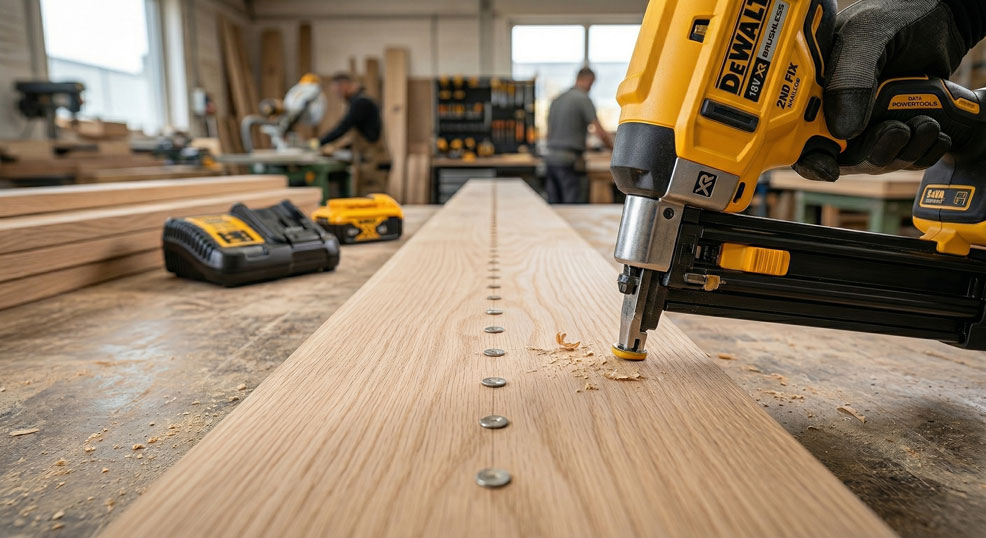
Dewalt DCN660P2-GB 18V 5AH Brushless 2nd Fix Nailer
This nailer is designed for interior work where the fixing needs to hold securely without damaging the surface. It drives second fix nails that are strong enough for trims while leaving marks that can be filled quickly before decorating.
The 18V XR platform supports cordless use, which is useful when working in finished or occupied spaces where hoses would get in the way. This improves control when fitting long runs of skirting or working in tighter areas such as hallways and staircases.
This type of nailer helps maintain consistency across visible work. It reduces the need for rework and limits surface damage, which is important on jobs where finish quality matters.
Brad Nailers for Light and Precise Work
Brad nailers are used for lighter tasks where precision matters. These include small trims, mouldings, panelling, and detailed finishing work where materials are more delicate.
Recommended brad nailer
DeWALT DCN680D2-GB 18V XR Brushless 18Ga Brad Nailer (2x 2.0ah Batteries)
This tool is suited to fine work where a clean finish is required. The 18-gauge nails are thin enough to reduce surface marking while still providing enough hold for light applications. This makes it useful for decorative trims, narrow sections, and joinery work where splitting is a concern.
The cordless setup allows quick use without setup time, which is helpful when moving between tasks or working on detailed sections that require positioning adjustments. It also gives better control when working on visible surfaces.
This type of nailer is not intended for load-bearing work. It performs best when used on lighter materials or alongside adhesive where additional support is needed.
Choosing the Right Nail Size and Type
Nail size must match both the tool and the material. Gauge refers to thickness, while length determines how far the nail will penetrate. Larger nails provide more holding strength, though they can damage lighter materials if used incorrectly.
Material thickness is the first consideration. The nail should pass through the front material and anchor securely into the backing. If it is too short, the fixing will be weak. If it is too long, it may split the timber or protrude through the back.
Material type also affects performance. Softwood is more forgiving. Hardwood and engineered boards require more control and correct nail selection to avoid damage.
Matching nail size to the job improves durability and reduces the need for rework.
Cordless Nail Guns and on Site Efficiency
Cordless nail guns remove the need for compressors and hoses. This improves mobility and reduces setup time, especially when working across multiple areas or in tight spaces.
Recommended combined setup
DeWALT DCK2046P2-GB XR 18V 1st Fix & 2nd Fix Nailer Kit
This kit provides both a first fix framing nailer and a second fix nailer in one setup. It suits users who move between structural and finishing tasks on the same job. Having both tools available reduces downtime and avoids switching between different systems.
The shared battery platform allows both nailers to run from the same setup, which simplifies battery management on site. This is useful for trades working across different stages of a project or managing multiple tasks in a single day.
Cordless operation across both tools improves workflow by removing setup delays and allowing faster transitions between tasks.
Common Mistakes When Choosing a Nail Gun
One common mistake is using a brad nailer where more holding strength is required. This can lead to joints loosening over time, even if the initial finish looks clean.
Another issue is using a framing nailer on finishing work. This can damage materials and increase the amount of filling and sanding needed later.
Material choice is often overlooked. Dense timber and engineered materials require different handling compared to softwood. Using the wrong nail size or tool can lead to splitting or poor fixing.
Choosing based on convenience rather than application often creates more work. Matching the tool to the job avoids these issues.
Making the Right Choice for Your Work
Choosing the right nail gun comes down to the type of work being carried out. Structural tasks require a framing nailer that can drive large nails with consistent power. Interior work requires a second fix nailer that balances strength with a clean finish. Detailed work requires a brad nailer for accuracy and minimal marking.
For users working across multiple stages, a combined setup such as the DeWALT DCK2046P2-GB XR 18V 1st Fix & 2nd Fix Nailer Kit can simplify the process and reduce downtime.
Matching the tool to the task improves efficiency, protects materials, and delivers a better finish. It also reduces rework and keeps projects moving at a steady pace from start to finish.
FAQs
Q1: What is the difference between a brad nailer and a second fix nailer?
A1: A brad nailer uses thinner nails for light work and leaves smaller marks. A second fix nailer uses thicker nails with more holding strength for trims and joinery.
Q2: Can a framing nailer be used for finishing work?
A2: It can be used, though it is not suitable. The nails are larger and can damage materials or leave visible marks.
Q3: What nail size should I use for skirting boards?
A3: Second fix nails are typically used for skirting. The length depends on the thickness of the material and the surface behind it.
Q4: Are cordless nail guns powerful enough for structural work?
A4: Yes, modern cordless framing nailers such as the DeWALT DCN930 range provide enough power for most structural tasks.
Q5: How do I choose the right nail gun for DIY projects?
A5: Identify the task first. Use a brad nailer for light trims, a second fix nailer for interior work, and a framing nailer for structural tasks.