


Battery choice affects cordless tool performance more than most trades expect. The same drill or saw can feel sharp and responsive one day, then heavy and sluggish the next, purely because the battery fitted is wrong for the work. Runtime drops, balance shifts, and productivity fades long before the tool itself reaches its limits.
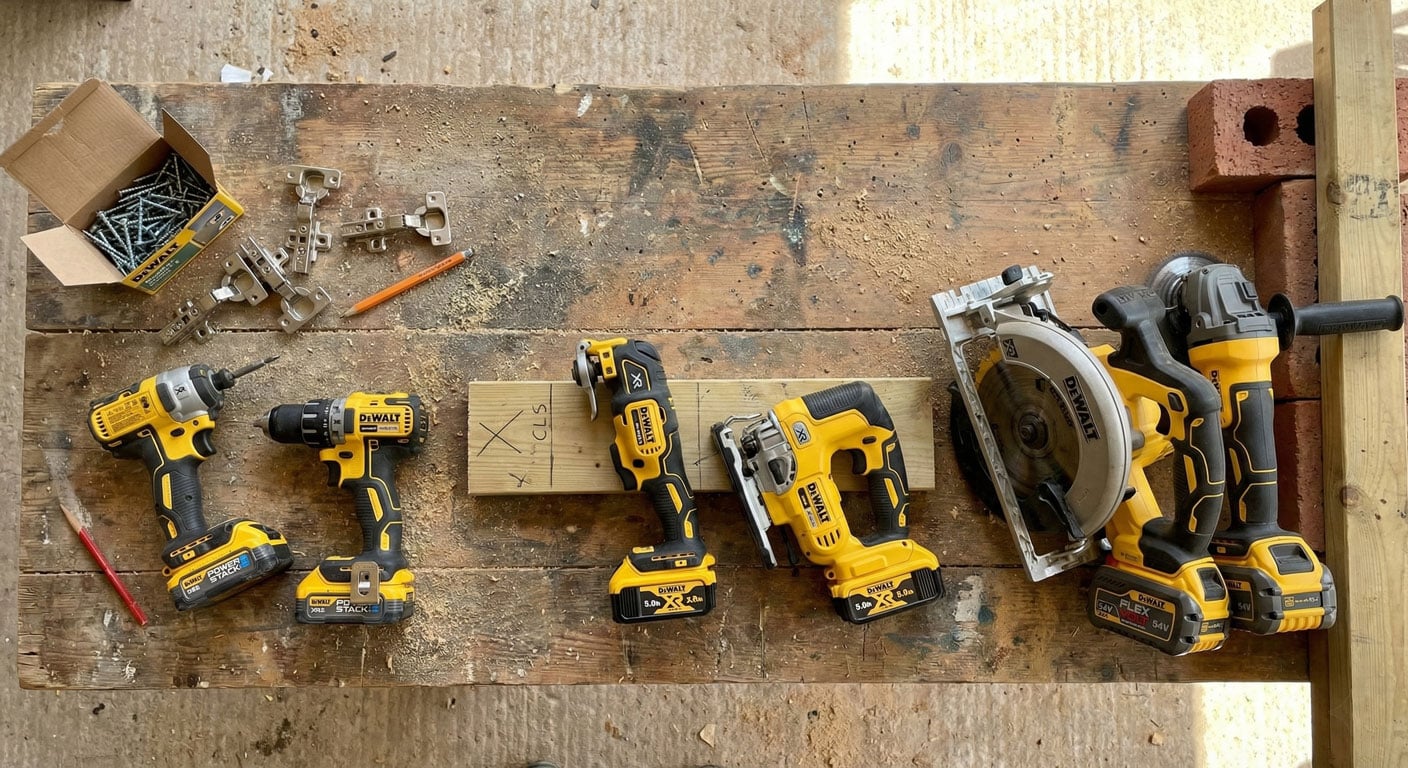
Across the wider DeWALT cordless system, battery selection is not an afterthought. XR, POWERSTACK, and FLEXVOLT are built for different demands across real site work. When kits are built without understanding how these systems behave under load, tools feel inconsistent and batteries never seem to last when they should.
For most trades, battery choice also becomes a buying decision. Knowing when standard XR packs are enough, when lighter POWERSTACK batteries make sense, and when high-draw tools demand FLEXVOLT capacity helps avoid wasted spend across the DeWALT batteries range.
This guide focuses on practical battery selection for UK trades. No history lessons. No spec chasing. Just how DeWALT batteries behave in real jobs and how to match them properly to the work.
XR, POWERSTACK and FLEXVOLT in Plain Terms
XR batteries sit at the core of most DeWALT cordless kits. They suit drilling, fastening, light cutting, and general site work where balance and predictable runtime matter. For many trades, XR packs are the default because they cover the widest spread of tools.
POWERSTACK batteries prioritise compact size and control. They deliver strong output for their size and noticeably improve balance on drills and drivers. On overhead work, ladders, and repeated fastening, less bulk and less weight is what you feel first.
FLEXVOLT batteries are designed for sustained, high-draw applications. Large grinders, circular saws, reciprocating saws, and outdoor tools demand consistent output rather than short bursts. FLEXVOLT delivers that, but the trade-off is weight, which is why it suits cutting and outdoor work better than fine control tasks.
Problems start when one battery type is expected to handle everything.
Compatibility and Mixing Batteries Without Confusion
FLEXVOLT batteries can be used on XR tools. Many trades do this when they want longer runtime without carrying extra spares. It works, but balance changes. A compact drill can feel bottom-heavy and awkward in tight spaces.
XR batteries do not suit FLEXVOLT tools built for higher draw. Even if a tool powers on, performance drops and cut-out protection may trigger early. That can look like a faulty tool when it is really a battery mismatch.
Mixing systems is fine when it is deliberate. It goes wrong when batteries get grabbed at random from the van.
Matching Battery Type to Tool Type
Drills and impact drivers benefit from balance and control. XR covers most daily work well. POWERSTACK can make a real difference on repetitive fastening and overhead work where fatigue creeps in.
Grinders, circular saws, and reciprocating saws place a continuous load on batteries. FLEXVOLT performs best here because it holds output under sustained demand. XR batteries can work for quick cuts, but they tend to drain faster and can feel like they hit a wall under heavier load.
Outdoor equipment also favours FLEXVOLT because run time and consistent output matter more than saving a bit of weight.
Tool type is only half the story. The other half is how long you are running the tool for. Short bursts suit lighter packs. Long cutting sessions suit higher capacity and better thermal stability.
Runtime, Weight and Balance
On-site, balance matters before numbers do. A tool that feels awkward slows you down even if the battery lasts longer. Heavier batteries shift the centre of gravity, especially on drills and drivers, and that affects control and accuracy.
Lighter batteries can improve productivity across a full day because fatigue sets in later. You might swap batteries more often, but your hands and shoulders are not cooked by mid-afternoon. That tends to mean cleaner work and less rework.
This is why POWERSTACK suits control tasks and FLEXVOLT suits heavy cutting. They solve different problems.
Charging and Spares Setup for Small Teams
Charging issues usually come from bottlenecks, not battery faults. One fast charger can work well if your rotation is disciplined. Multiple standard chargers can be better when several tools are running at once and you need steady replenishment.
Fast charging makes the most sense for high-draw batteries used on saws and grinders. For drills and drivers, steady rotation often works better than trying to hammer everything through one charger.
The goal is simple. Always have a charged battery ready without buying a pile of spares that rarely leave the van.
A Buying Strategy That Avoids Wasted Spend
For most trades, additional XR batteries are the best first purchase. They cover the widest range of tools and make the kit more flexible across different jobs.
POWERSTACK makes sense when drills and drivers do most of the work and you care about balance. If you are often working overhead, in cabinets, or doing repeated fixings, this is where the benefit shows.
FLEXVOLT earns its place when you regularly run high-draw tools. If grinders, big saws, or outdoor tools are in your weekly workload, one or two FLEXVOLT batteries can deliver more value than several mid-size packs that struggle under load.
A balanced kit usually beats a large kit.
Storage and Transport Habits That Keep Performance Consistent
Battery performance drops when packs live in hot vans or freezing toolboxes. Temperature swings affect runtime and output more than most people realise, especially first thing on cold mornings.
Avoid leaving batteries fully charged for long periods when they are not being used. Rotate packs so the same battery is not always the first to get hammered and the first to be charged.
Small habits like these keep performance more consistent and extend usable life without turning battery care into a daily chore.
What to Take Onto Site Tomorrow
If you want a practical setup that suits most jobs, keep battery choice simple. Use XR batteries as your default for drills, drivers, and general site work where balance and flexibility matter. Add POWERSTACK where fatigue and control become an issue, especially on overhead or repetitive tasks.
Keep FLEXVOLT for high-draw cutting, grinding, and outdoor work where sustained output matters more than weight. Matching the battery to the workload makes tools feel predictable, reduces stoppages, and keeps the kit working the way it should throughout the day.
FAQ’s
Q1: Can I use FLEXVOLT batteries on all XR tools?
A1: Yes. FLEXVOLT batteries will run XR tools. Expect longer runtime, but also extra weight and a different balance in hand.
Q2: Why do XR batteries struggle on some FLEXVOLT tools?
A2: FLEXVOLT tools are designed for sustained higher draw. XR batteries may not deliver the output required and can trigger cut-out protection early.
Q3: Are POWERSTACK batteries worth it for general site work?
A3: They are most noticeable on drills and drivers used all day, especially overhead or in tight spaces. For heavy cutting, larger batteries often make more sense.
Q4: How many batteries should a small team realistically carry?
A4: Enough to keep one battery charging while another is in use. Beyond that, rotation and charging habits usually matter more than buying extra packs.
Q5: Does battery weight really affect productivity?
A5: Yes. Balance and fatigue affect accuracy and speed. Lighter batteries often help you work cleaner for longer across a full day.