


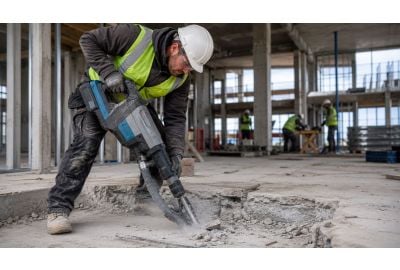
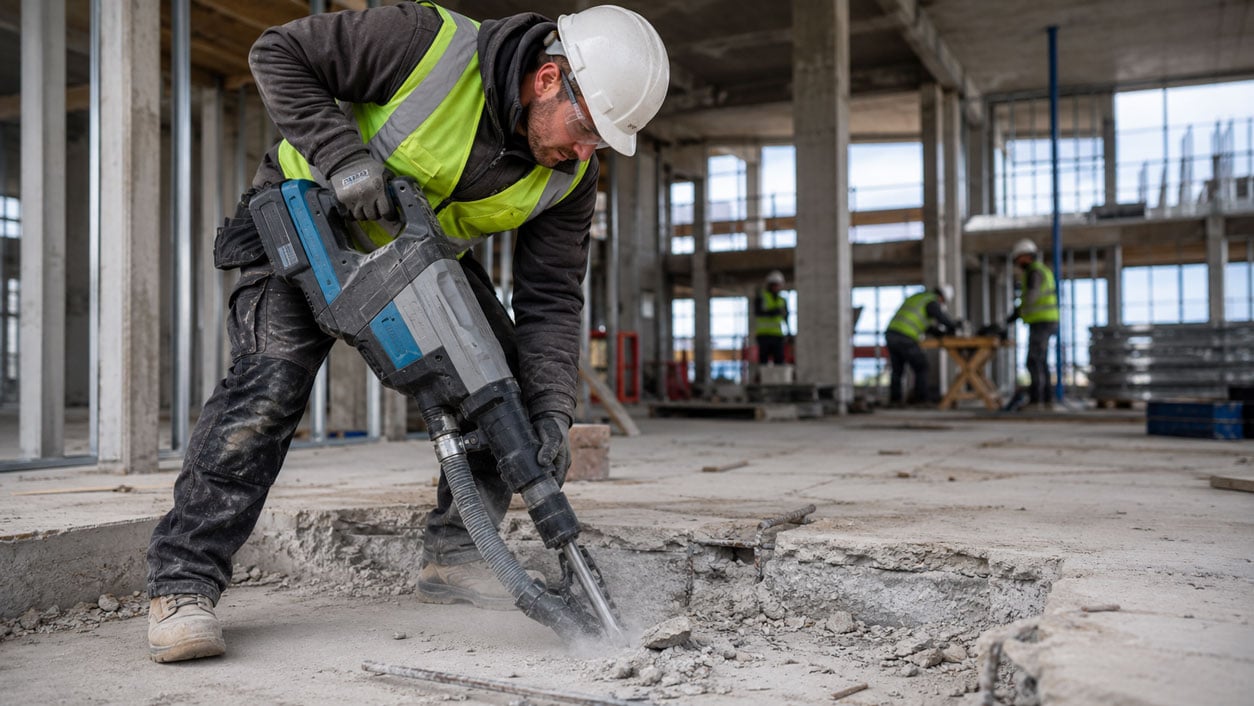
Concrete work has traditionally depended on petrol-powered equipment, generators, and long extension leads spread across active construction sites. While these setups have been standard for years, they also introduce noise, additional maintenance, fuel handling, and limitations around mobility. As construction sites become more focused on efficiency and safety, cordless concrete equipment is becoming far more common across a wide range of applications.
Modern battery technology has pushed cordless equipment well beyond light-duty use. Tasks that once relied almost entirely on corded or petrol-powered machines are now increasingly handled by cordless systems designed for demanding site conditions. Equipment paired with SDS chisels & points is now regularly used for breaking, demolition, and heavy-duty drilling applications that previously required more restrictive power setups.
Why Construction Sites Are Moving Towards Cordless Equipment
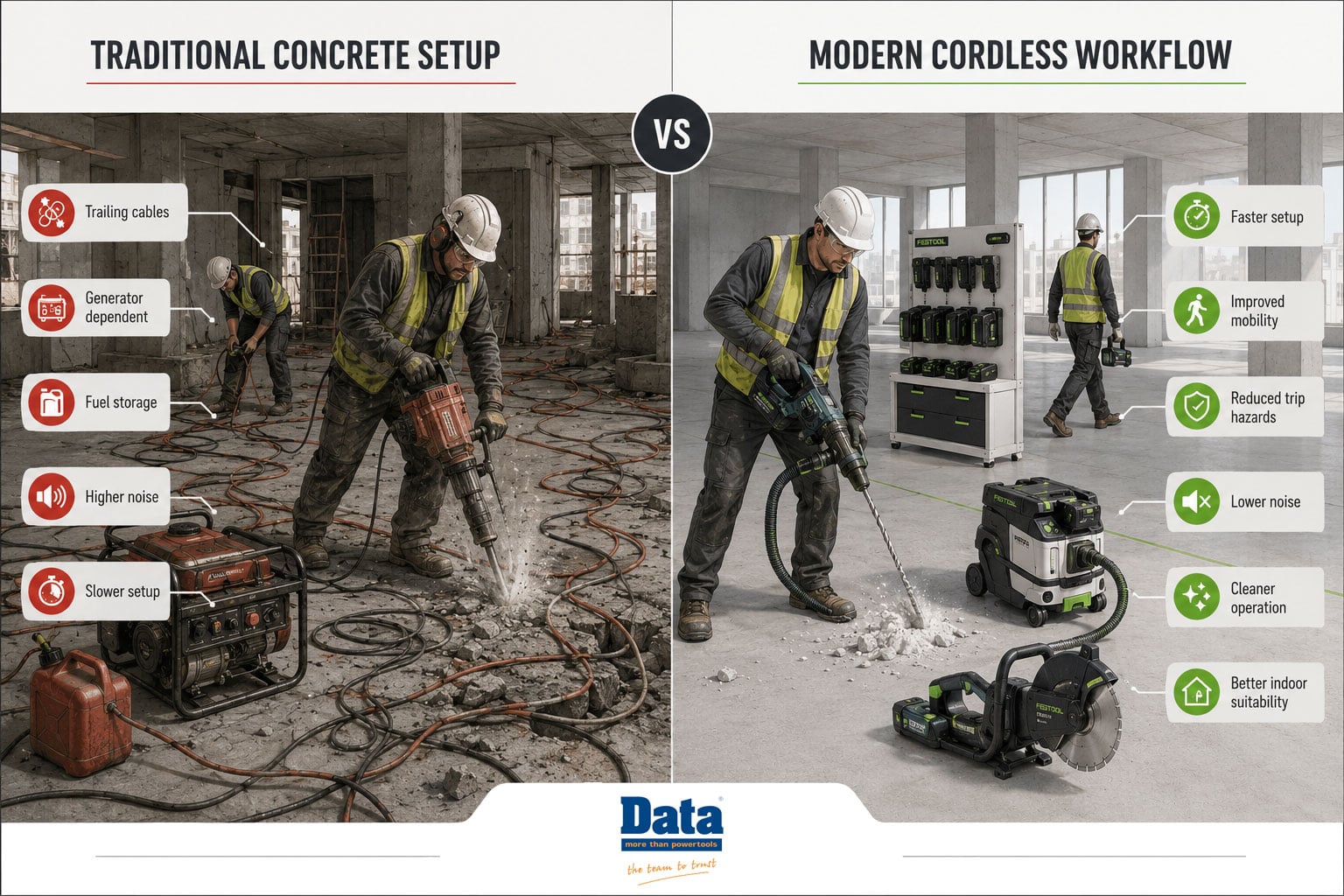
One of the biggest advantages of cordless equipment is flexibility. Removing the need for generators and trailing cables allows teams to move more freely around site and reduces the time spent setting up work areas.
Cordless systems are particularly useful on busy sites where multiple trades are working simultaneously. Without cables crossing walkways or confined spaces, movement becomes safer and more efficient. Smaller jobs can also be completed faster because equipment can be deployed immediately without arranging temporary power.
This shift is changing how many construction sites operate, especially on projects where mobility and speed are increasingly important.
The difference between traditional and cordless concrete workflows becomes much clearer when viewed in a real site environment.
What Counts as Cordless Concrete Equipment
Cordless concrete equipment now covers a much wider range of tools than many people realise. Improvements in battery output and motor efficiency have expanded cordless systems into more demanding construction tasks.
Common examples include:
- Rotary hammers and concrete breakers
- Cut-off saws and demolition equipment
- Concrete vibrators and compactors
- Dust extraction and core drilling systems
This expansion means cordless systems are no longer limited to smaller finishing work or short-duration tasks.
Improvements in Battery Technology
Battery development has been one of the biggest drivers behind the growth of cordless concrete equipment. Higher-capacity lithium-ion systems now provide significantly more runtime and power output than earlier cordless platforms.
Brushless motors have also improved efficiency by reducing energy loss and lowering heat generation during use. Faster charging systems and dual-battery platforms have made it possible for many teams to run cordless equipment continuously throughout the working day.
These developments have made cordless systems increasingly viable for demanding site environments.
Reduced Site Hazards and Improved Safety
Trailing power leads are one of the most common hazards on active construction sites. Cordless equipment removes much of that risk by reducing cable congestion around working areas.
There are also fewer issues related to fuel handling, generator positioning, and temporary site power. This becomes particularly important in confined spaces, elevated working areas, and busy environments where movement is restricted.
Reducing these hazards helps create safer and more manageable working conditions across the site.
Better Mobility Around Construction Sites
Mobility is one of the biggest operational advantages of cordless systems. Workers can move between work zones without needing to reposition cables, generators, or power supplies.
This is especially useful in:
- Stairwells and scaffolded areas
- Refurbishment projects with limited access
- Multi-storey construction environments
- Small reactive maintenance jobs
The ability to deploy equipment quickly and move freely improves workflow efficiency and reduces downtime throughout the day.
The Impact on Indoor Construction Work
Indoor construction and refurbishment projects are seeing some of the biggest benefits from cordless equipment adoption. Petrol-powered systems are often unsuitable indoors due to exhaust emissions and ventilation concerns.
Cordless equipment reduces noise levels and removes onsite exhaust fumes, making it better suited to occupied buildings, commercial refurbishments, and fit-out projects. This creates a safer and more comfortable working environment for both operators and surrounding trades.
Lower noise output is also increasingly important on projects with strict site restrictions or nearby occupied spaces.
Dust Management and Cleaner Working Environments
Dust control has become a major focus across the construction industry, particularly during cutting and drilling operations. Modern cordless systems are increasingly designed to integrate directly with extraction equipment.
Many contractors now combine cordless concrete tools with dusttool shrouds to improve dust containment and reduce airborne particles during work. This supports cleaner working conditions and helps sites maintain better control over dust-related hazards.
Improved dust management also reduces cleanup time and creates a more organised working environment overall.
Comparing Cordless and Petrol-Powered Equipment
Cordless concrete equipment offers several advantages, but there are still situations where petrol-powered systems remain useful, particularly during long periods of continuous heavy-duty operation.
Cordless systems generally provide:
- Lower noise levels
- Reduced maintenance requirements
- Improved mobility
- Cleaner operation indoors
Petrol-powered equipment may still offer advantages in runtime during large-scale continuous applications, although battery technology continues to narrow this gap.
Runtime and Battery Management on Site
Battery management has now become part of day-to-day site planning. Teams using cordless systems need organised charging routines and reliable battery rotation processes to maintain productivity.
High-output batteries & chargers play a major role in keeping equipment operational throughout the working day. Many contractors now keep multiple charging stations and spare battery sets onsite to minimise interruptions during heavier concrete applications.
As cordless systems become more common, battery logistics are increasingly treated as part of standard site operations.
Maintenance Advantages of Cordless Equipment
Cordless equipment typically requires less maintenance than petrol-powered alternatives. Without fuel systems, pull-start mechanisms, or engine servicing requirements, ongoing upkeep is often simpler and cleaner.
Reduced maintenance downtime can improve reliability across busy projects, particularly for contractors managing multiple tools and operators. Cleaner operation also helps reduce contamination from fuel and oil within working areas.
Over time, these operational advantages can contribute to lower maintenance demands and improved equipment management.
Environmental and Noise Reduction Benefits
Environmental considerations are becoming increasingly important across the construction industry. Cordless systems help reduce onsite emissions and lower overall noise pollution, particularly in urban and indoor environments.
Many projects now operate under tighter environmental restrictions, making quieter and cleaner equipment more practical for modern construction work. Reduced noise also improves communication between workers and creates a less disruptive working environment overall.
As sustainability becomes a larger focus within construction, cordless systems are likely to play an increasingly important role.
Challenges and Limitations Still Facing Cordless Equipment
Despite major improvements, cordless concrete equipment still has limitations in some applications. Runtime can remain a challenge during prolonged heavy-duty use, particularly on large demolition or cutting projects.
Higher upfront costs for batteries and charging infrastructure can also be a barrier for some contractors. Larger battery systems may add additional weight to equipment, which can affect handling during extended use.
However, ongoing battery development continues to improve performance across these areas.
Which Trades and Projects Benefit Most
Several sectors are particularly well suited to cordless concrete equipment. Refurbishment contractors, maintenance crews, demolition teams, and utility contractors often benefit from the flexibility and reduced setup requirements cordless systems provide.
Projects involving restricted access, occupied buildings, or frequent movement between work areas also tend to benefit from cordless workflows. As equipment capabilities continue to improve, adoption is expanding across a broader range of construction environments.
The Future of Cordless Equipment in Construction
Cordless technology is continuing to develop rapidly, with manufacturers investing heavily in higher-output batteries, improved runtime, and heavier-duty applications.
As battery platforms become more capable, more construction sites are beginning to structure workflows around cordless systems rather than traditional generator-based setups. Equipment that once required permanent access to power is increasingly becoming portable and easier to deploy.
This shift is likely to continue as construction sites place greater emphasis on mobility, safety, and operational efficiency.
FAQs
Q1: Is cordless concrete equipment powerful enough for heavy-duty construction work?
A1: Modern cordless systems are now capable of handling many demanding drilling, breaking, and cutting applications that were previously dominated by corded or petrol-powered equipment.
Q2: How long do cordless concrete tool batteries typically last?
A2: Runtime depends on the application, battery capacity, and equipment being used, but modern high-output battery systems can support extended site use with proper battery rotation.
Q3: Does cordless equipment reduce site hazards?
A3: Yes, cordless systems reduce trailing cables, lower fuel-related risks, and improve movement around busy or restricted work areas.
Q4: Is cordless concrete equipment suitable for indoor projects?
A4: Cordless equipment is particularly well suited to indoor work because it produces lower noise levels and no exhaust emissions during operation.
Q5: What are the biggest limitations of cordless concrete equipment?
A5: Runtime during prolonged heavy-duty use, charging logistics, and higher upfront battery costs are still some of the main limitations.