


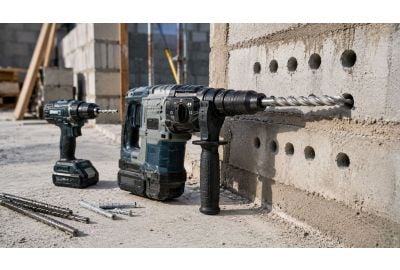
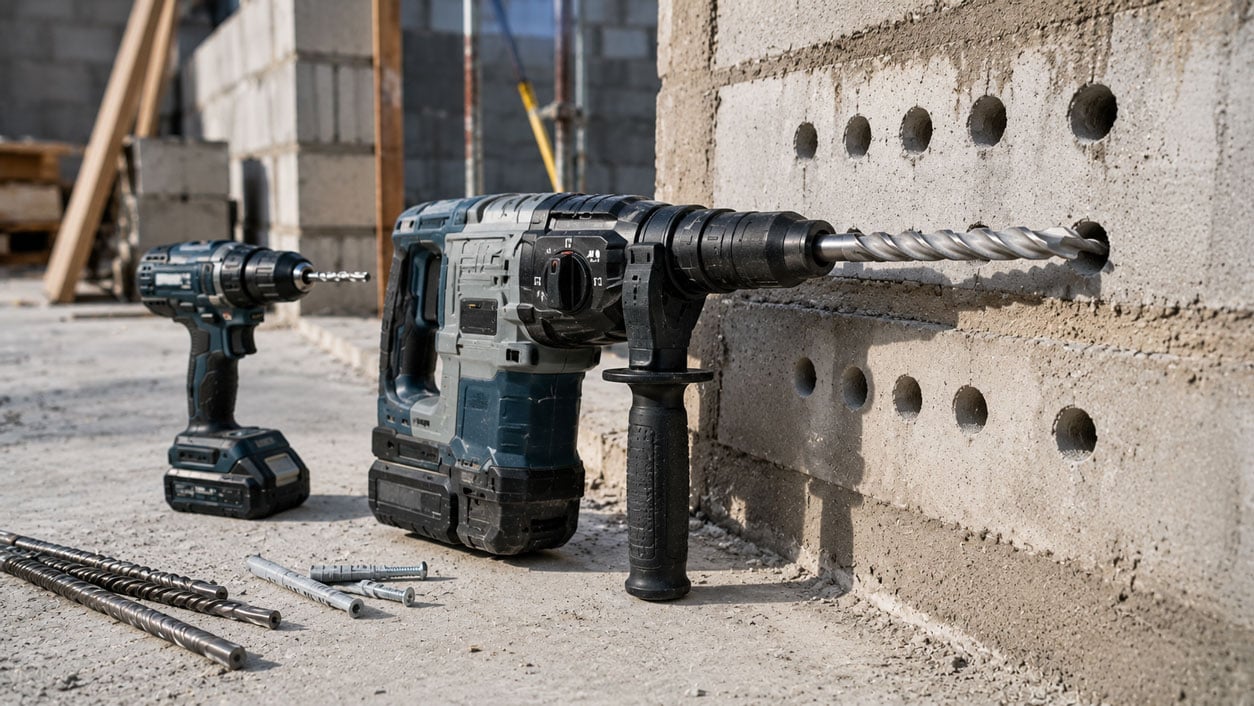
Choosing between a combi drill and an SDS drill can be surprisingly difficult. On paper, both can drill into masonry, both are widely used on site, and both are available in cordless and corded versions. Once you start drilling into brick, blockwork or concrete on a regular basis, though, the differences become very obvious.
If you're comparing a standard combi drill with tools designed specifically for drilling into concrete, brick and masonry, understanding how each tool works will help you spend your money in the right place and avoid buying a tool that struggles with the jobs you do most often.
Why SDS Drills and Combi Drills Are Often Compared
Many tradespeople start with a combi drill because it covers a wide range of tasks. It can drill holes, drive screws and handle occasional masonry work without requiring multiple tools.
The question usually arises when masonry drilling becomes more frequent. A combi drill might cope with a few holes in brick, but drilling larger holes or working with concrete quickly reveals its limitations.
This is where SDS drills enter the conversation.
Both tools are designed to drill holes, but they achieve that goal using completely different mechanisms. One prioritises versatility. The other prioritises masonry performance.
Understanding that difference is often the key to deciding which tool belongs in your kit.
What Is a Combi Drill and What Can It Do?
A combi drill is one of the most versatile power tools available. Most models offer three functions:
- Standard drilling
- Screwdriving
- Hammer drilling
This makes a combi drill suitable for a huge range of tasks around homes, workshops and construction sites.
With the correct drill bit fitted, a combi drill can handle timber, plastics, metal, plasterboard and light masonry work. The adjustable clutch also makes it suitable for driving screws without damaging materials or fixings.
For many users, particularly DIY enthusiasts and general tradespeople, a combi drill may be the tool that gets used more than any other.
Modern cordless combi drills are also compact and lightweight. Carrying one throughout the day is rarely an issue, and most professional battery platforms offer compatibility across dozens of tools using the same batteries.
That flexibility explains why a combi drill is often the first power tool many people purchase.
How an SDS Drill Works Differently
An SDS drill is designed specifically for masonry drilling.
Unlike a combi drill, which relies on mechanical hammer action generated by two internal discs, an SDS drill uses a pneumatic hammer mechanism. This produces far greater impact energy with less effort from the user.
The result is immediately noticeable when drilling into hard materials.
Instead of slowly grinding through brick or concrete, the drill bit effectively hammers its way through the material while rotating. This allows faster drilling speeds and reduces strain on both the user and the tool.
Another major difference is the chuck design.
SDS drill bits lock directly into the tool rather than being tightened in a traditional three jaw chuck. This allows the bit to move slightly during operation, helping transfer impact energy more efficiently.
Most users comparing an SDS drill to a combi drill are actually looking at SDS Plus machines. SDS Max tools are larger and designed for heavier concrete drilling and demolition work.
Performance in Brick, Blockwork and Concrete
This is where the gap between the two tool types becomes most obvious.
A combi drill can drill into masonry. There is no question about that. The issue is how quickly and efficiently it can do so.
For occasional wall plugs or light installation work, a combi drill may be perfectly adequate. Many electricians, plumbers and DIY users successfully drill masonry every day using combi drills.
Once hole sizes increase or drilling becomes repetitive, things start to change.
An SDS drill will usually:
- Drill faster
- Require less physical pressure
- Produce cleaner holes
- Handle harder materials more easily
- Create less user fatigue
Pairing an SDS drill with drill bits designed for demanding masonry applications becomes particularly valuable when working with concrete, engineering brick or dense blockwork.
A task that may take considerable effort with a combi drill often feels routine with an SDS machine.
Which Tool Is Better for Everyday Trade Work?
The answer depends largely on the trade.
An electrician installing cable clips and occasional fixings may use a combi drill for much of the day. The ability to drill and drive screws using one tool makes it highly practical.
A plumber fitting pipework through masonry walls may find an SDS drill significantly more productive.
Builders often carry both because different tasks require different tools.
Kitchen fitters, maintenance engineers and property refurbishment contractors frequently encounter a mix of materials throughout the day. Timber, plasterboard, masonry and fixings all require different approaches.
In these situations, relying on a single tool can become frustrating.
The most productive setups often include a combi drill for general work and an SDS drill for dedicated masonry tasks.
The Advantages of Owning a Combi Drill
Despite the superior masonry performance of an SDS drill, a combi drill remains the more versatile option.
Its ability to switch between drilling and screwdriving makes it useful for countless jobs across different materials.
Benefits include:
- Suitable for wood, metal and masonry
- Adjustable clutch settings
- Excellent screwdriving capability
- Compact design
- Lower weight
- Typically lower purchase cost
If masonry drilling forms only a small part of your workload, a quality combi drill may be all you need.
Many users never reach the point where an SDS drill becomes necessary.
When an SDS Drill Is Worth the Investment
There comes a point where a combi drill simply isn't the most efficient tool for the job.
If you regularly drill into:
- Brick
- Concrete
- Dense blockwork
- Reinforced masonry
then an SDS drill becomes far easier to justify.
The time savings alone can be significant.
Many users who switch to SDS drills comment that they wish they had bought one sooner. Jobs become quicker, less tiring and generally more enjoyable.
This becomes even more noticeable when drilling larger diameter holes or installing multiple fixings throughout the day.
For professionals, the productivity gains often outweigh the additional cost very quickly.
Do You Need Both Tools?
For many tradespeople, the answer is yes.
A combi drill and an SDS drill complement each other rather than compete directly.
The combi drill handles:
- Screwdriving
- Wood drilling
- Metal drilling
- General site tasks
The SDS drill handles:
- Masonry drilling
- Concrete drilling
- Larger diameter holes
- Heavy duty installation work
This combination allows each tool to perform the tasks it was designed for.
If most of your work involves timber, fixings and occasional masonry, a combi drill may be enough.
If masonry work forms a regular part of your day, adding an SDS drill will likely improve productivity and reduce frustration.
You may also find our guide on choosing between a drill driver and an impact driver useful if you're deciding which drilling and fastening tools belong in your kit.
Making the Right Choice for Your Work
The best drill is the one that matches the jobs you actually do.
A combi drill offers versatility, portability and excellent all round performance across a wide range of materials. For many users, it remains the most useful tool in the workshop or van.
An SDS drill is a specialist tool built to tackle masonry quickly and efficiently. When concrete, brick and blockwork become a regular part of your workload, the difference in performance is difficult to ignore.
If you only drill a handful of holes into masonry each month, a combi drill may be all you need.
If you're regularly fighting dense materials and spending too much time drilling concrete, an SDS drill is likely to be one of the most worthwhile upgrades you can make.
FAQ's
Q1: Can an SDS drill replace a combi drill?
A1: Not completely. An SDS drill excels at masonry drilling but is generally less suitable for everyday screwdriving and general purpose drilling tasks.
Q2: Is an SDS drill more powerful than a combi drill?
A2: For masonry drilling, yes. SDS drills deliver significantly greater impact energy and drill through hard materials much more efficiently.
Q3: Can a combi drill drill into concrete?
A3: Yes, although performance depends on the strength of the drill, the quality of the drill bit and the hardness of the concrete.
Q4: What is the difference between SDS Plus and SDS Max?
A4: SDS Plus tools are the most common choice for general construction and installation work. SDS Max tools are larger and designed for heavier drilling and demolition applications.
Q5: Do electricians and plumbers need an SDS drill?
A5: Many do. Anyone regularly drilling through brick, blockwork or concrete can benefit from the increased speed and reduced effort provided by an SDS drill.
Q6: Which drill is better for DIY users?
A6: For most DIY users, a quality combi drill is often the best starting point because it can handle a wide variety of tasks around the home.