

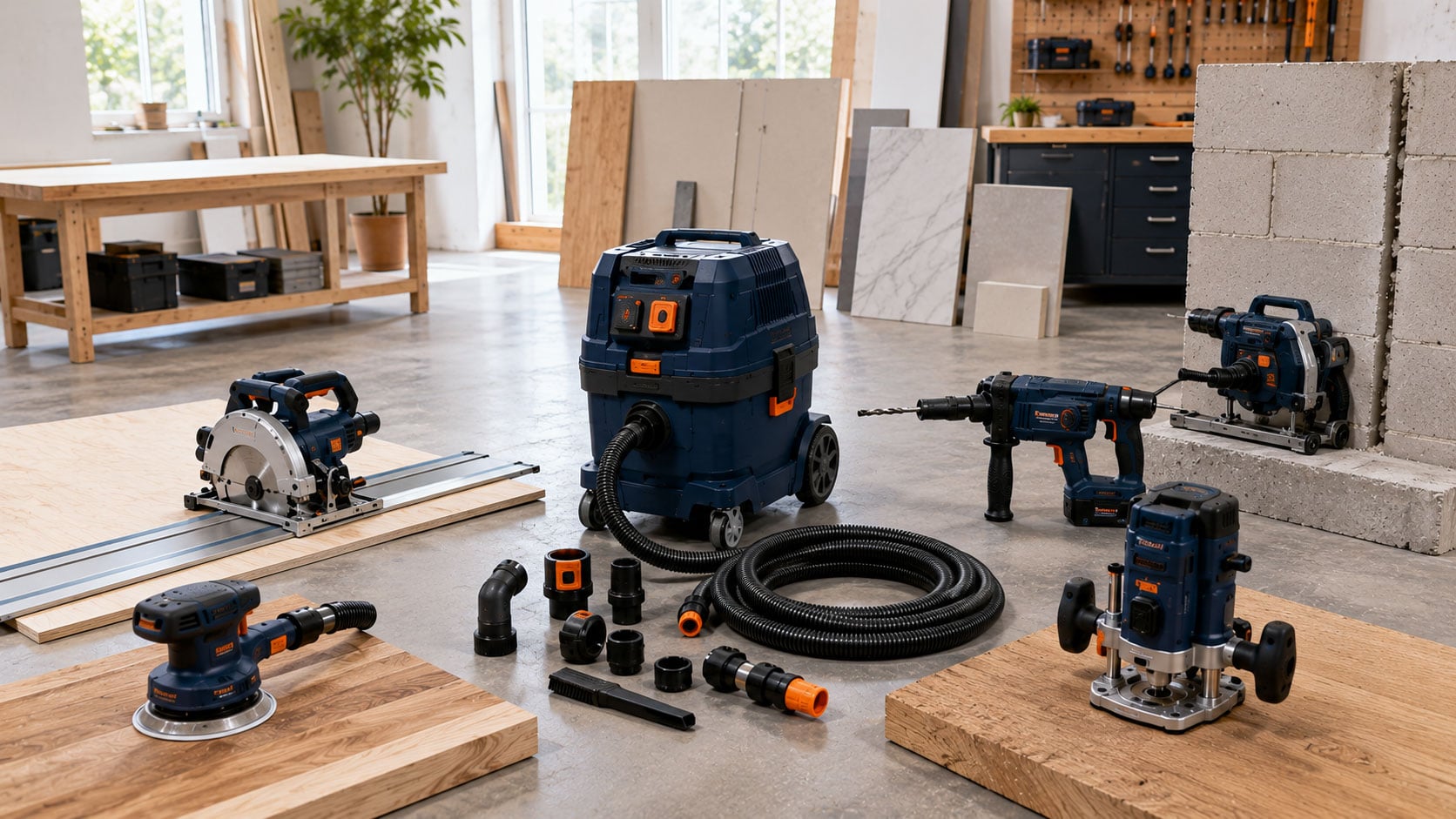
Dust is part of almost every trade, but the type and amount you produce depends entirely on the work you do. Fine timber dust from a sander needs a different approach to concrete dust from chasing walls, while decorating and renovation work often creates a mix of materials.
That's why there isn't a single dust extraction setup that suits everyone.
Choosing professional dust extraction systems for power tools starts with understanding your day to day work rather than buying the biggest extractor available. The right combination of extractor, hose, filters and accessories can improve visibility, reduce clean up time and keep your workspace far cleaner.
Why Every Trade Has Different Dust Extraction Needs
Different power tools create different types of waste.
A carpenter working with sanders and mitre saws produces fine wood dust that quickly spreads around a workshop. A builder cutting concrete generates heavier mineral dust that places greater demands on the extractor and filtration system. Electricians and plumbers often need compact equipment that can move easily from room to room.
The volume of dust matters too.
Someone occasionally sanding a door has very different requirements from a flooring installer spending all day cutting MDF and laminate.
Choosing the right setup starts by matching the extractor to the work you carry out most often, rather than trying to find one machine that does everything equally well.
Understanding the Main Parts of a Dust Extraction System
An effective dust extraction setup is a complete system rather than a single machine.
The extractor provides suction, but its performance depends on using the correct hose, tool adapters and filters for the task.
Collection bags make disposal quicker and help protect the filters, while automatic tool activation starts the extractor whenever the connected power tool is switched on. This reduces wasted running time and captures dust from the moment cutting or sanding begins.
Adding the right accessories allows one extractor to work efficiently with a wide range of power tools, making it far more useful across different jobs.
Choosing the Right Setup for Your Trade
The best dust extraction setup depends on the tools you use and the environment you work in.
| Trade | Typical Dust | Recommended Setup |
|---|---|---|
| Carpenters and Joiners | Fine timber dust | Extractor with fine filtration, connected to sanders, saws and routers |
| Builders | Concrete, brick and masonry dust | High performance extractor with durable hose and suitable filtration |
| Decorators | Fine paint and filler dust | Compact extractor for sanding equipment |
| Kitchen Fitters | MDF, laminate and timber | Portable extractor for saws, routers and sanders |
| Electricians and Plumbers | Wall chasing and drilling dust | Lightweight extractor that's easy to move around site |
Matching the extractor to your trade improves dust collection, reduces cleaning time and helps keep tools working efficiently throughout the day.
Choosing the Right Accessories
Accessories often make as much difference as the extractor itself.
A hose that's too narrow can reduce airflow, while the correct adapter creates a secure connection between the extractor and power tool.
Many trades also benefit from tool mounted dust collection accessories, particularly when drilling or chasing walls, as they capture dust closer to the source before it spreads around the workspace.
Other useful accessories include replacement filters to maintain suction, collection bags for quicker disposal and floor cleaning attachments that allow the extractor to double as a site vacuum at the end of the job.
Choosing accessories that suit the tools you already own usually delivers better results than simply buying a larger extractor.
Cordless Dust Extraction and Automatic Tool Activation
Cordless dust extractors have become increasingly popular for work where mains power isn't always available.
They allow tradespeople to move freely around site without trailing extension leads, making them particularly useful for installation work and smaller jobs.
Many modern extractors also feature automatic tool activation. When the connected power tool starts, the extractor starts automatically and continues running briefly after the cut has finished to collect any remaining dust.
Wireless systems, including Makita AWS, take this a step further by allowing compatible tools and extractors to communicate without a physical control cable.
These features don't necessarily increase suction, but they do make dust extraction easier to use throughout the working day.
Building a Complete Dust Management System
Good dust control is about more than buying a powerful extractor.
The best results come from combining the right extractor with suitable hoses, filters, collection bags and tool specific accessories. Keeping filters clean, replacing them when required and using the correct bags also helps maintain consistent suction over time.
Working practices make a difference too. Connecting the extractor before starting the job, checking hoses for blockages and choosing accessories that suit the tool all improve dust capture.
If you're unsure which dust classification is appropriate for your work, understanding the differences between M Class and L Class dust extraction will help you choose equipment that matches the materials you work with and any site requirements.
Choosing the Best Dust Extraction Setup
Before buying, think about how and where you'll use the extractor.
If you mainly work indoors, quieter operation and effective filtration are likely to be priorities. For site work, portability, capacity and battery compatibility may be more important.
Consider:
- The type of material you cut or sand most often
- How frequently you'll use the extractor
- Whether you mainly work indoors or outdoors
- The level of dust your tools generate
- How often you need to move between jobs
- Whether automatic tool activation would improve productivity
Choosing the right system for your trade will usually deliver better results than simply buying the largest or most expensive model.
FAQ's
Do I need a dust extractor or will a standard vacuum work?
A standard vacuum isn't designed for continuous power tool dust extraction. A dedicated dust extractor provides better airflow, filtration and compatibility with power tools.
Which trades benefit most from dust extraction?
Carpenters, builders, decorators, kitchen fitters, electricians and plumbers all benefit by reducing airborne dust and improving site cleanliness.
What accessories improve dust collection?
The right hose, tool adapters, replacement filters, collection bags and tool mounted dust collection accessories all help improve extraction performance.
Can one dust extractor work with multiple power tools?
Yes. With the correct hose and adapters, a single extractor can usually be connected to a wide range of compatible power tools.
Is cordless dust extraction powerful enough for professional use?
Many modern cordless extractors provide enough performance for professional applications, particularly installation, maintenance and smaller site work.
How do I know whether I need an M Class dust extractor?
It depends on the materials you work with and any site requirements. Higher risk dusts often require an M Class extractor.