


Battery specifications can be confusing, particularly when comparing different batteries within the same cordless platform. One of the most common questions buyers ask is whether a higher Ah battery will make a tool more powerful.
The short answer is that a higher Ah battery does not automatically increase power in the way many people assume. However, the full answer is slightly more complicated.
Understanding the relationship between battery capacity, runtime and power delivery can help you choose the right battery and charging setup for your tools while avoiding some of the most common misconceptions surrounding cordless equipment.
Why Battery Ratings Cause So Much Confusion
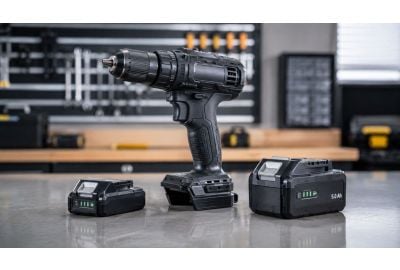
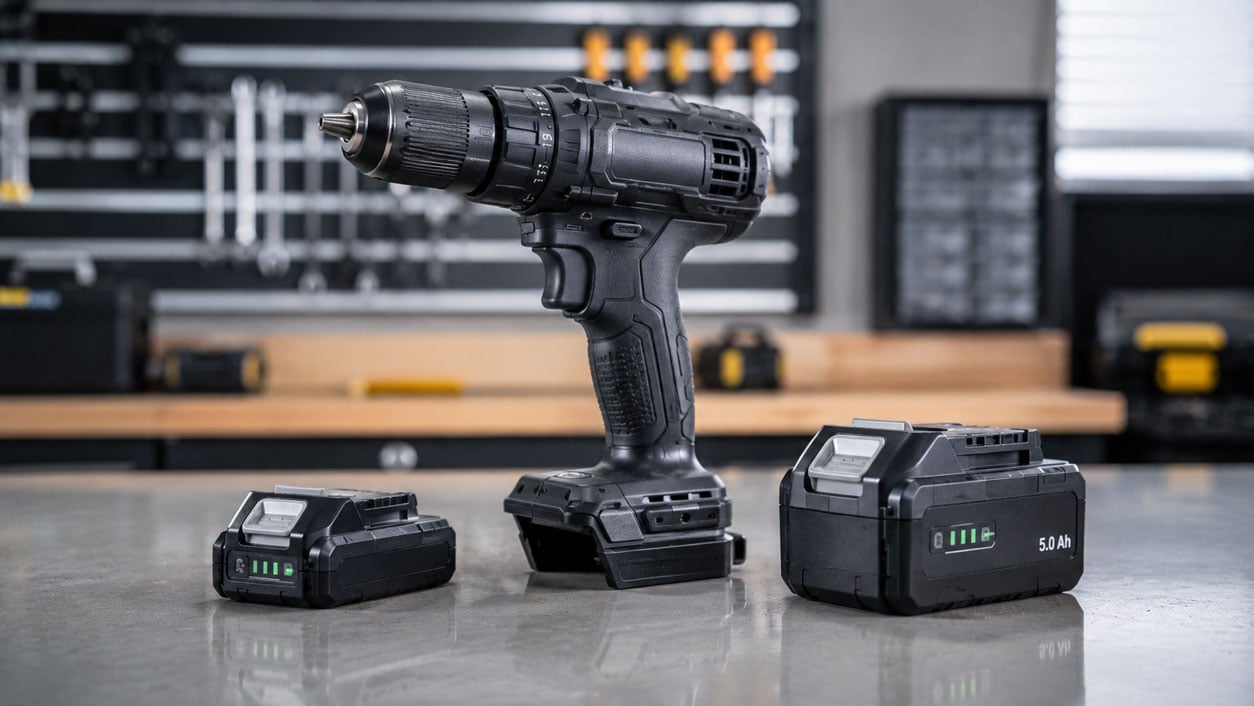
Modern cordless tools are often sold with multiple battery options. A drill may be available with a compact 2.0Ah battery, while another version of the same tool comes with a larger 5.0Ah battery.
Many users naturally assume that the bigger number means the tool will be more powerful.
This misunderstanding is understandable because battery specifications are often discussed alongside tool performance. Marketing materials frequently highlight battery capacity, runtime and output in the same conversation, making it easy to assume they all refer to the same thing.
In reality, Ah and power measure different aspects of battery performance.
Understanding what each specification represents is the first step towards making better purchasing decisions.
What Does Ah Actually Mean?
Ah stands for amp hours.
In simple terms, amp hours measure how much electrical energy a battery can store. The higher the Ah rating, the more energy the battery can hold before it needs recharging.
A useful way to think about it is as the size of a fuel tank.
A larger fuel tank allows a vehicle to travel further before refuelling. It does not necessarily make the vehicle faster or more powerful.
The same principle applies to cordless tool batteries.
A 5.0Ah battery contains more stored energy than a 2.0Ah battery within the same voltage platform. This means the larger battery can generally power the tool for longer between charges.
The key point is that capacity and power are not identical concepts.
Does a Higher Ah Battery Increase Runtime?
In most situations, yes.
This is the primary advantage of a higher Ah battery.
Because it stores more energy, a larger capacity battery can usually keep a tool operating for longer before requiring a recharge.
For example, if a particular tool operates for one hour using a 2.0Ah battery, a larger battery may allow significantly longer operating time under similar conditions.
Actual runtime will vary depending on:
- The tool being used
- The workload involved
- Battery condition
- Temperature
- Battery technology
Even so, longer runtime remains the main reason many professionals choose higher-capacity batteries for demanding applications.
Fewer battery changes can improve productivity and reduce interruptions throughout the working day.
Does a Higher Ah Battery Make a Tool More Powerful?
This is where things become more interesting.
In simple terms, a higher Ah battery does not directly increase a tool's rated power output.
A cordless drill fitted with a 5.0Ah battery does not suddenly become a completely different drill compared with the same model fitted with a 2.0Ah battery.
The motor, electronics and overall tool design remain unchanged.
However, there are situations where a higher-capacity battery may help the tool maintain performance more effectively under demanding loads.
Larger battery packs often contain additional cells and may be capable of delivering current more efficiently during sustained heavy use.
This can create the impression of increased power, particularly when performing demanding tasks such as:
- Large hole drilling
- Masonry drilling
- Grinding
- Cutting dense materials
- Driving long structural fixings
The distinction is important. The battery is not necessarily increasing the tool's power rating, but it may help the tool sustain performance more effectively.
Why Voltage Matters More Than Most People Think
When discussing cordless tool power, voltage is often a more significant specification than amp hours.
Voltage influences the amount of electrical potential available to the motor.
This is why higher-voltage platforms are frequently used for larger and more demanding tools.
For example, there can be a significant difference between:
- 12V systems
- 18V systems
- 36V systems
- 40V platforms
A larger Ah battery within the same voltage range increases capacity. Moving to a higher voltage platform can fundamentally change the performance characteristics of the tool itself.
This is why comparing voltage and capacity separately is important when evaluating cordless equipment.
When a Higher Ah Battery Can Improve Performance
While Ah primarily relates to capacity, some higher-capacity batteries are designed to support greater performance under load.
Manufacturers continually improve battery technology through:
- Better cell design
- Improved cooling systems
- Enhanced electronics
- Lower internal resistance
These developments can allow larger batteries to deliver energy more efficiently during demanding applications.
Our article on modern battery design and its impact on runtime and heat management explains how newer battery technologies are helping improve cordless tool performance.
Advances in smart battery systems designed to improve cordless performance are also helping users get more from their tools throughout the working day.
These advances highlight why battery performance involves far more than simply looking at the Ah rating printed on the side of the pack.
The Trade-Offs of Larger Batteries
Higher-capacity batteries are not always the right choice.
While they offer longer runtime, they also introduce several compromises.
Common trade-offs include:
- Increased weight
- Higher purchase cost
- Greater tool bulk
- Reduced manoeuvrability in some applications
A compact drill used for overhead work may actually feel more comfortable with a smaller battery fitted.
Many professionals own multiple battery sizes and choose the most appropriate option depending on the task.
The goal is often to balance runtime, comfort and performance rather than simply selecting the largest battery available.
Why Battery Technology Matters as Much as Capacity
Modern cordless performance depends heavily on battery design.
Cell quality, cooling systems and electronics all influence how effectively energy is delivered to the tool.
Effective battery cooling technology and temperature management can play a major role in maintaining performance during demanding applications.
Heat is one of the biggest factors affecting battery efficiency and longevity. Better temperature management can help maintain performance while supporting longer battery life.
This is one reason why two batteries with similar Ah ratings may not always perform identically in real-world conditions.
The technology inside the battery can be just as important as the capacity itself.
Choosing the Right Battery for Your Work
The best battery is not always the largest battery.
If you regularly use high-demand tools throughout the day, larger capacity batteries may provide worthwhile productivity benefits by reducing charging interruptions.
For lighter applications, smaller batteries may offer better handling and lower overall weight.
When comparing batteries, consider:
- Runtime requirements
- Tool type
- Working environment
- Weight considerations
- Battery technology
- Platform compatibility
Focusing only on Ah ratings can sometimes overlook other factors that contribute to real-world performance.
Understanding the role of capacity, voltage and battery design will help you choose batteries that genuinely suit the way you work.
FAQ's
Q1: Does a higher Ah battery make a drill more powerful?
A1: Not directly. A higher Ah battery primarily increases capacity and runtime, although some larger battery packs may help sustain performance more effectively during demanding tasks.
Q2: What is the difference between Ah and voltage?
A2: Ah measures battery capacity, while voltage relates to electrical potential and has a greater influence on overall tool performance.
Q3: Will a 5.0Ah battery last longer than a 2.0Ah battery?
A3: In most situations, yes. A 5.0Ah battery stores more energy and will typically provide longer runtime.
Q4: Are higher Ah batteries heavier?
A4: Generally, yes. Higher-capacity batteries usually contain more cells, increasing both weight and size.
Q5: Do all tools benefit from larger batteries?
A5: Not always. Some compact tools may be easier to handle with smaller batteries, particularly during overhead or extended use.
Q6: Is it better to have two smaller batteries or one larger battery?
A6: That depends on the application. Many professionals prefer having multiple batteries available so they can rotate between tools and chargers throughout the day.