

Professional grade doesn't come with an official stamp that is slapped on a box, and professional grade doesn't necessarily mean an expensive tool. It is a certain way a tool is engineered that is apparent once a device is being put through its paces, not while sitting idly in a store.
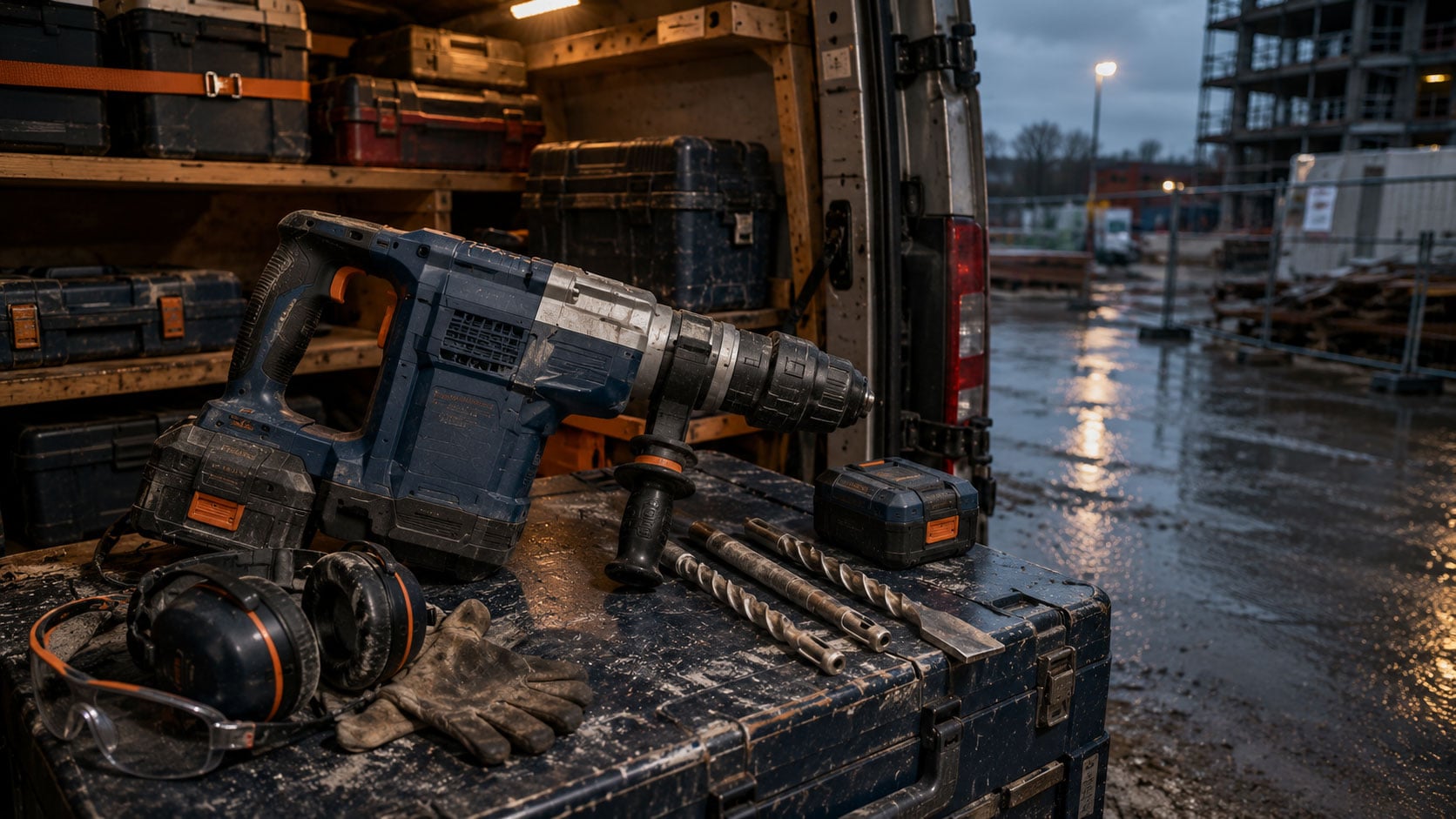
Put your SDS Max combi hammer through a day of heavy-duty drilling and demolition, and you will easily spot the difference between a tool engineered for such work and a cheaper one not designed for this type of use. These characteristics are duty cycle, thermal management, runtime stability and component quality.
Duty Cycle Is the True Distinction Between Professional and DIY Tool, Not the Price
Every electric motor has a duty cycle rating – the amount of time it may operate without any pauses for cooling. A tool that is intended for DIY work is engineered for quick work bursts with plenty of breaks in between.
Pushing a DIY tool through hours of non-stop work will make it generate more heat than it should, trip a thermal cutout many times, or wear out faster than it should. An engineer-made tool has a higher duty cycle rating – a motor, windings and cooling channels are selected accordingly.
Thermal Management During Continuous Work
Heat is what ultimately limits a tool in terms of how much strain it can handle. An electric motor generates heat during its operation, and how well heat is handled by a tool depends on whether its performance remains consistent during long periods of work or not. Brushless electric motors are more efficient and generate less heat for the same amount of power compared to brushed ones; that is why brushless motors became the de facto standard for professional tools.
Housing, airflow and size of a motor also play a significant role in the heat generation and dissipation process. Tools that are overheating will throttle themselves in order to save their electronics, which results in weaker performance as the work period goes on. Read our article on brushless motors to learn more on this topic.
Runtime Stability, Not Just Long Battery Life
Runtime numbers on specifications tell you about how long a battery lasts, but not about how consistent its performance is during that period of time. A tool that is characterised by high runtime stability will have almost the same performance level both at the beginning and at the end of the battery life, while the opposite tool will significantly lose power output at the end of the charging cycle.
It is particularly important for jobs that require a sustained power supply. There are multiple factors influencing the performance of a power tool during its work: controller, quality of batteries and power delivery under load are among them. None of them is reflected in runtime numbers on a spec sheet.
High-Quality Components That Actually Matter
Quality components are not just a slogan. It is about specific components that do their job well. Bearings with tighter tolerance levels increase the lifespan of a tool and decrease vibrations. Materials of gears are resistant to wear for tools that are subject to heavy use on a regular basis, such as an impact wrench used daily in automotive or construction work.
Precision of chuck and collets increases accuracy of tool usage and reduces the risk of accessories falling from a tool. Sealing elements around the housing protect internal electronics from dust and moisture. None of these features is included in a spec sheet of a tool, but they are exactly the features that make a tool durable.
Durability of a Tool Under Continuous Use, Not Toughness in Test Lab
It is obvious that drop testing of a tool is a good test, but it does not tell anything about how durable the tool is. Professional-grade tools are tested against repeated exposure to vibrations, temperature changes, dust and moisture. This is a completely different test from measuring the durability of a tool in a lab.
The professional tool will maintain consistent performance over thousands of duty cycles and under various environmental conditions. The tool that survives the lab test is good for occasional use, but will most likely fail under conditions of daily use.
What It Means For You When Buying a Tool
It is important to remember that there is no official way to determine whether a tool is suitable for professional work or not. You should take a look at the duty cycle rating on spec sheets, ingress protection rating and how the tool is described for continuous and intermittent use.
A warranty is a good signal in this case, as manufacturers typically provide a warranty for tools that are expected to survive daily use. The weight and design of a tool may be considered too, as it should run cool and consistently. The weight and cooling design of a tool are heavier than those of a lighter tool built for occasional use.
FAQ's
Q1. Is a professional power tool always better than a DIY one?
A1. No, because a DIY-rated tool will fit for occasional use just fine, but it is not designed to sustain long-term and repeated work.
Q2. What is duty cycle and why does it matter?
A2. Duty cycle is the time interval during which a tool can run non-stop before it needs to cool.
Q3. Do brushless motors run cooler than brushed ones?
A3. Yes, they are more efficient and generate less waste heat for the same power output.
Q4. Does a longer warranty mean a tool is better built?
A4. It is a good signal, but not the only one, as manufacturers provide warranties to tools that they are sure will withstand daily use.
Q5. Is component quality something I can check before buying?
A5. Yes, there are several ways to check them: duty cycle, ingress protection rating, warranty length.
Q6. Do I need professional-grade tools for occasional DIY use?
A6. No, because a DIY-rated tool is typically suitable for occasional use.