

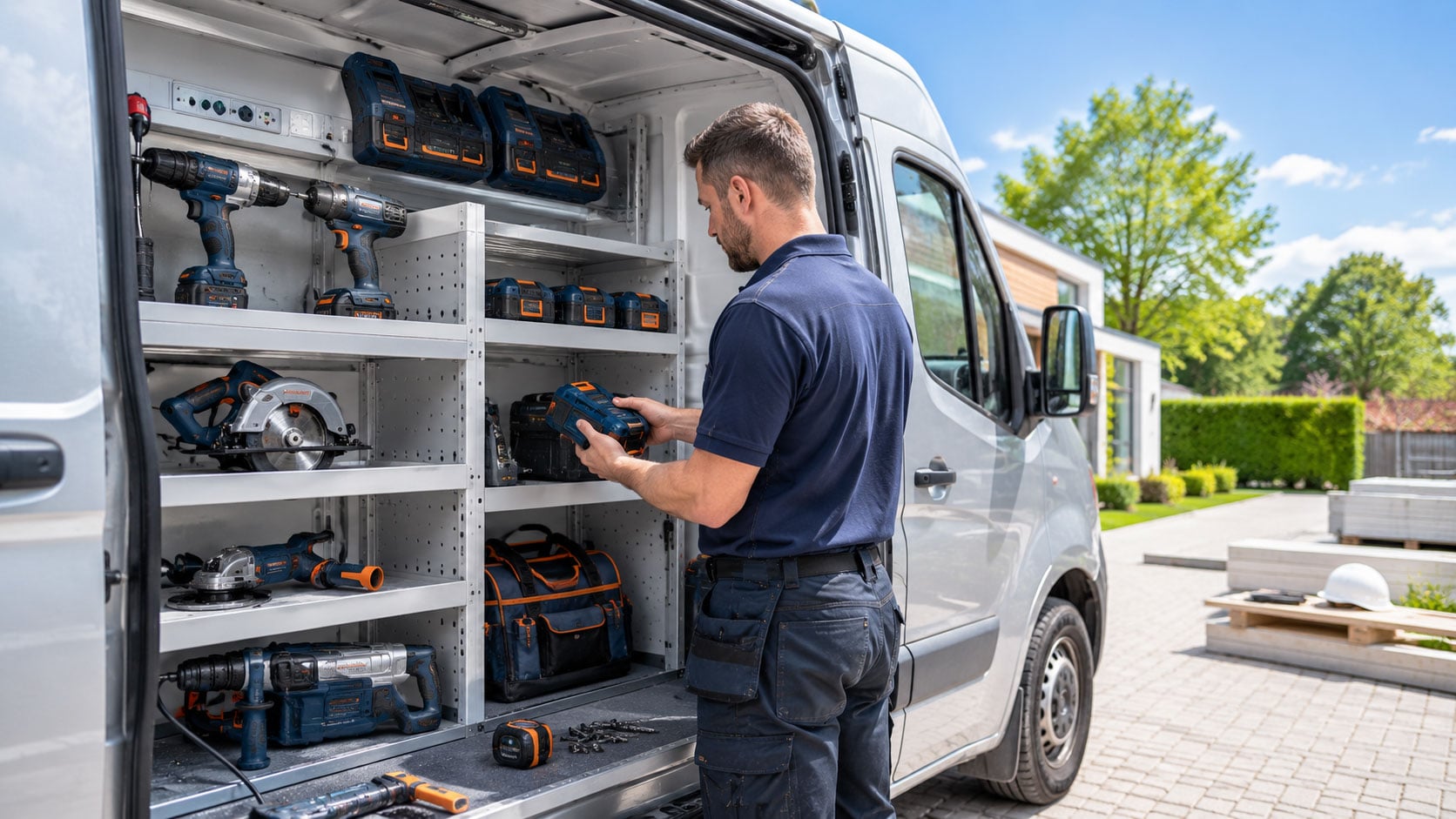
The most common starting point for picking a cordless battery platform is to ask which is the best battery platform. This is the wrong starting point, since there is no single battery platform which suits everyone's needs, regardless of how good the marketing surrounding a particular range may be.
The important thing to understand is how you use your batteries and which applications you are doing. It is worth taking a look at the batteries and chargers of the major battery platforms before you even begin comparing the brands.
Consider The Tools You Use The Most
Before you pick a platform, you need to make a realistic list of the tools that you need most. A typical carpenter or joiner would need a drill driver, impact driver, circular saw, jigsaw, multi-tool and planer, possibly a mitre saw. An electrician needs mainly a drill driver, impact driver, SDS drill, multi-tool, cable tools, lighting and dust extraction tools.
A builder will need a combi-drill, impact driver, SDS rotary hammer, grinder, circular saw and even demolition tools. A DIY user would need 4 or 5 tools for frequent usage, rather than a huge selection of tools for professionals. The point of making this list is not to impress yourself with the number of tools available for the platform you chose, but to choose the one which suits you best in your applications.
Match Your Battery System to Your Hardest Jobs
Not all cordless jobs put the same demands on a battery. Easy jobs such as drilling and driving screws do not ask a lot from the battery, as opposed to more heavy-duty machines such as circular saws, angle grinders, SDS rotary hammers, reciprocating saws and outdoor machinery, which drain a battery much faster and make it overheat during prolonged operation.
A carpenter doing kitchens has different requirements than a person who works with masonry or carries out demolition jobs. The most demanding job you perform regularly is better to use as a starting point for platform selection, since if your battery handles it easily, it will handle everything else without problems as well.
Estimate The Runtime That You Need
The runtime requirement depends on your working pattern just as much as on the size of the battery. Prolonged use will require different batteries from occasional use. A battery that you share between multiple tools will drain faster than the one which performs a single task.
Access to charging possibilities is another important factor - a workshop with power available is more flexible in this aspect, while mobile or site work will require you to use multiple batteries in rotation, instead of a single battery throughout the whole working day.
The number of batteries and their charging time become as important in some cases as the capacity of any one of them.
| Working Pattern | What Really Matters |
|---|---|
| Light occasional use | Compact batteries and easy charging |
| Frequent drilling and fastening | Enough batteries for rotation |
| Demanding cutting and grinding | Sufficient runtime and batteries |
| Site work | Runtime, charging possibilities and mobility |
| Multiple cordless tools | Sharing batteries and charging |
Don't Assume That The Biggest Battery Is The Best One
Of course, the bigger the battery, the more runtime it has. However, it also has additional weight and size, which can be easily forgotten about when looking at the specifications. It makes a big difference when it comes to tool balance, especially when it comes to overhead tools, since the tool will cease to be compact if it is fitted with an oversized battery.
A carpenter operating an impact driver above his head does not need an oversized battery, as opposed to someone using a demanding circular saw on the same platform. Demanding tools may profit from the bigger or high-output battery design, but that does not mean that every tool in the kit should use it. The way to go is using different sizes of the battery in the same compatible platform, according to the demands of each tool separately.
Consider The Expansion Possibilities of Your Platform
Think not only about the tools you currently have, but also about those that you will need over the next few years. Over time, you are going to need specialist trade tools, dust extraction, lighting, outdoor equipment, larger saws, fixing equipment or even a site radio. It means that your platform should have some growing space, but that is different from buying simply because your manufacturer boasts hundreds of compatible products.
The relevance of the tools you are likely to buy over time should be considered more than the sheer number of available products in the range. Sometimes running a second platform is a necessity, such as when a specialist tool is really needed or an existing system that you have invested a lot in, although it requires you to buy additional chargers, spare batteries and more bulky kit.
This is the same ecosystem-versus-tools trade-off worth weighing up as your kit grows.
Build A Platform According to Your Requirements
Before choosing a platform, ask yourself which cordless tools you need the most, what your most demanding task is, how much runtime you really need and whether the battery weight is going to be a problem. Think about whether you can rotate the batteries without interrupting your work, what specialist tools are in your platform and whether batteries and chargers are available to you.
It is also worth considering what it will take to expand your platform over time, taking into account additional batteries and chargers together with the tools themselves. A small difference in price of your first purchase will become irrelevant once you have several tools and batteries. Answering these questions makes your choice much narrower before the brand preferences even come into play.
FAQ's
Q1. Is it better to use only one cordless battery platform?
A1. Yes, usually. Keeping batteries and chargers interchangeable and saving money is important. Some professionals use a second platform for some specialist tools or if they have invested enough in the old system.
Q2. How many batteries do I need?
A2. There is no definite answer. Your workload, the tools you use, the battery capacity and the possibility to charge influence more than a certain number of batteries.
Q3. Should I buy a battery platform with the biggest selection of tools?
A3. No. What matters is whether your platform has the tools you need or will need in the future, not the size of its range.
Q4. Will the bigger batteries make cordless tools more powerful?
A4. No, not directly. Bigger batteries mainly mean more runtime, not power. The article on Ah batteries explains this difference in more depth.
Q5. Should I choose a battery platform when I am an apprentice?
A5. Choose the core tools that you need first, then think of your future needs and expansion possibilities of your platform.
Q6. Can different voltage batteries work on the same cordless platform?
A6. Compatibility depends on the manufacturer and the platform. Always check this information instead of assuming it, especially between different voltage batteries of the same brand.