


Battery technology is becoming one of the biggest areas of development in cordless power tools. Modern brushless tools place increasing demands on battery systems, particularly during high-load applications such as cutting, grinding, demolition, and drilling. As cordless equipment becomes more powerful, runtime and thermal management are becoming just as important as raw tool performance.
Manufacturers are now investing heavily in battery architecture to improve efficiency under demanding conditions. Advances in Makita batteries are increasingly focused on improving runtime, thermal stability, and sustained performance during heavy-duty cordless applications. Improvements in Makita chargers are also helping support faster charging speeds and more efficient battery management across modern cordless platforms.
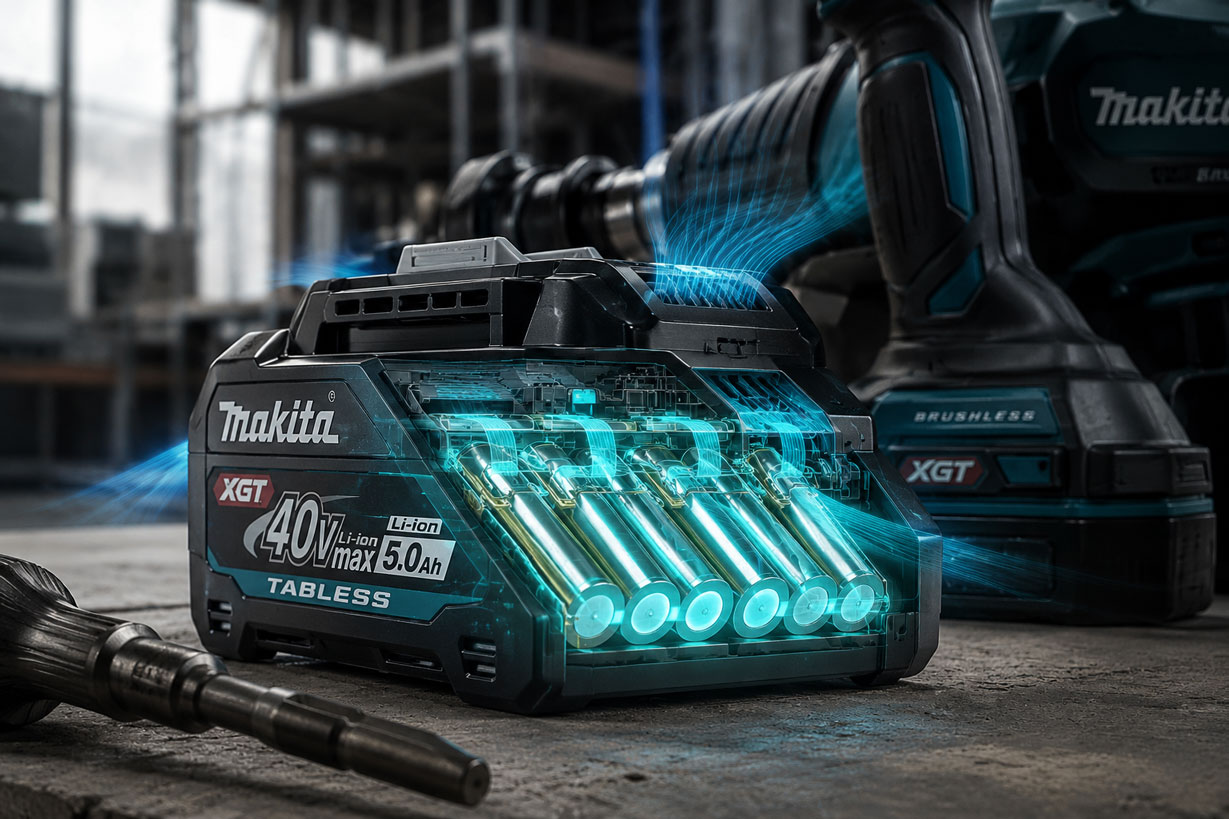
One area receiving significant attention is tabless battery technology, which is designed to improve current flow, reduce heat build-up, and support more stable performance during prolonged use.
What Is Tabless Battery Technology
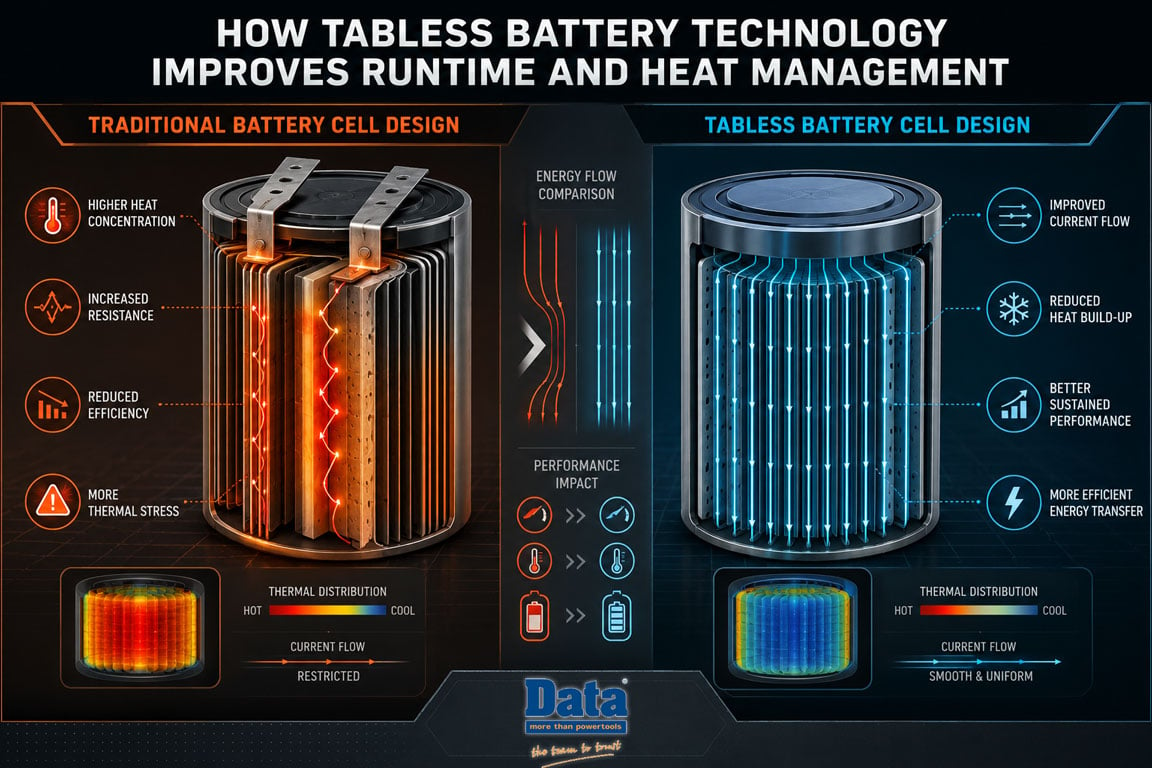
Traditional lithium-ion battery cells use small metal tabs inside the cell to transfer electrical current. These tabs act as connection points between the internal components and the external battery system. While effective, they can create areas where heat and electrical resistance become concentrated during heavy use.
Tabless battery cells are designed differently. Instead of relying on a small number of connection points, current is distributed more evenly throughout the cell structure. This allows energy to move more efficiently and reduces the concentration of heat within specific areas of the battery.
Although the engineering behind the technology is complex, the practical goal is straightforward. Better current flow and lower resistance help improve efficiency, thermal stability, and sustained output during demanding cordless applications.
Why Heat Management Matters in Cordless Power Tools
Heat has a major effect on cordless battery performance. As temperatures increase, batteries become less efficient, which can affect runtime, charging speed, and sustained power delivery.
High temperatures also place additional stress on battery cells over time. During demanding tasks, cordless tools generate significant thermal load, particularly when operating continuously under heavy pressure. If heat is not controlled effectively, performance can drop as protection systems reduce output to prevent damage.
This is why thermal management has become such an important focus in modern cordless tool development. Runtime is no longer determined purely by battery size. Managing heat efficiently is now equally important for maintaining stable performance.
How Tabless Battery Cells Reduce Heat Build-Up
One of the biggest advantages of tabless battery technology is the way it distributes electrical current more evenly throughout the cell. Traditional tabbed designs can create concentrated areas of resistance where heat builds up under load.
Tabless cells reduce this concentration by improving the flow of current across the battery structure. Lower resistance allows energy to transfer more efficiently, reducing unnecessary heat generation during operation.
This becomes particularly important when tools are used continuously for demanding work. Improved thermal distribution helps batteries maintain performance more consistently without overheating as quickly under heavy loads.
The Relationship Between Heat and Runtime
Heat and runtime are closely connected. As battery temperatures rise, efficiency drops and more energy is lost through heat rather than being converted into usable power.
Cooler operation allows batteries to maintain stable output for longer periods. This helps tools sustain performance during demanding applications rather than reducing power as temperatures increase.
Runtime is therefore influenced by several factors beyond battery capacity alone. Thermal stability, energy transfer efficiency, and resistance levels all contribute to how effectively a battery performs during extended use.
Why Modern High-Demand Tools Need Better Battery Technology
Cordless tools are now being used for far more demanding applications than previous generations were designed to handle. High-draw equipment such as grinders, demolition hammers, cut-off saws, and outdoor power equipment places enormous strain on battery systems.
Brushless motor technology has also increased power demands by enabling tools to deliver higher levels of output and torque more consistently. This creates additional pressure on batteries to maintain stable performance without overheating.
As cordless systems continue replacing corded and petrol-powered equipment across construction sites, battery technology is becoming increasingly important to overall workflow efficiency.
Potential Benefits for Tradespeople
Improved battery efficiency has practical benefits on site. Better thermal management can help reduce overheating interruptions and maintain more stable performance during continuous use.
Potential advantages include:
- Longer sustained output under heavy load
- Reduced downtime caused by overheating
- More consistent tool performance
- Improved efficiency during demanding applications
For tradespeople using cordless equipment throughout the day, these improvements can have a noticeable impact on productivity and workflow.
Faster Charging and Thermal Stability
Charging also generates heat, particularly within rapid charging systems designed to minimise downtime between uses. Excessive temperatures during charging can place additional stress on battery cells and reduce long-term efficiency.
Improved thermal stability helps batteries manage this process more effectively. Cooler operation allows charging systems to work more efficiently while reducing stress on internal components.
This becomes increasingly important as contractors rely more heavily on fast-turnaround cordless workflows across busy jobsites.
Battery Lifespan and Long-Term Durability
Heat is one of the biggest contributors to battery degradation over time. Repeated exposure to high temperatures increases wear on battery cells and can reduce long-term charging performance.
By lowering resistance and improving heat distribution, tabless designs may help reduce stress on internal components during both operation and charging. This could contribute to longer-lasting performance across repeated charging cycles.
Durability matters significantly for professional users, particularly on sites where batteries are used intensively every day.
How Makita Is Positioning Advanced Battery Technology
Competition between cordless platforms continues to increase as manufacturers focus heavily on runtime, charging speed, and thermal efficiency. Battery development is now one of the biggest areas of investment within the cordless tool industry.
Makita has continued expanding its cordless ecosystem while focusing heavily on battery platform evolution and performance efficiency. The development of advanced systems such as Makita batteries & chargers reflects the wider industry push toward higher-output cordless platforms capable of handling more demanding workloads.
Maintaining compatibility across cordless systems also remains important, particularly for tradespeople already invested in long-term battery ecosystems.
How Tabless Technology Compares to Previous Battery Generations
Traditional battery cells have limitations related to resistance and heat concentration under heavy loads. As cordless tools become more powerful, these limitations become more noticeable during continuous operation.
Tabless designs improve energy transfer efficiency by reducing bottlenecks within the cell structure. This can help batteries sustain output more consistently and reduce excessive heat build-up compared to earlier designs.
While the improvements may not completely transform every application overnight, they represent a significant step in the continued development of cordless battery performance.
Limitations and Real-World Considerations
Despite the advantages, runtime still depends heavily on tool type, workload, and environmental conditions. High-demand applications will continue generating substantial heat regardless of battery improvements.
Battery management systems also remain critical for protecting cells and regulating performance. Ambient temperatures, charging conditions, and overall tool efficiency all continue affecting how batteries perform on site.
Tabless technology improves efficiency and thermal management, but it does not eliminate all heat-related limitations entirely.
The Future of Cordless Battery Development
The demand for higher-output cordless equipment continues to grow across construction, engineering, and industrial sectors. As this happens, battery innovation is becoming just as important as tool development itself.
Manufacturers are likely to continue focusing on:
- Improved thermal efficiency
- Faster charging capabilities
- Higher sustained power output
- Better long-term battery durability
As cordless platforms become increasingly central to modern workflows, battery technology will continue shaping how future tools are designed and used.
Why Battery Innovation Matters More Than Ever
Tabless battery technology represents part of a much wider shift in cordless performance development. As modern tools place increasing pressure on battery systems, runtime and thermal management are becoming major priorities for professional users.
Improved energy transfer and reduced heat build-up help support more demanding cordless applications while maintaining stable performance under load. Although battery technology continues evolving, advancements in thermal efficiency are already playing a major role in shaping the next generation of cordless tools.
Battery innovation is no longer secondary to tool development. It is becoming one of the defining areas of progress within the cordless power tool industry.
FAQ's
Q1: What is a tabless battery cell?
A1: A tabless battery cell uses a different internal design that distributes electrical current more evenly throughout the cell, helping improve efficiency and reduce heat build-up.
Q2: How does tabless battery technology reduce heat?
A2: It reduces electrical resistance and spreads current flow more evenly, lowering concentrated heat generation during demanding use.
Q3: Does cooler battery operation improve runtime?
A3: Yes, batteries generally operate more efficiently at stable temperatures, which helps maintain consistent output and improves sustained runtime.
Q4: Are tabless batteries better for heavy-duty power tools?
A4: They are designed to handle high-demand applications more efficiently by improving thermal management and reducing overheating under load.
Q5: Will tabless battery technology become common in cordless tools?
A5: As cordless tools continue becoming more powerful, battery technologies focused on heat reduction and efficiency are likely to become increasingly common across the industry.