

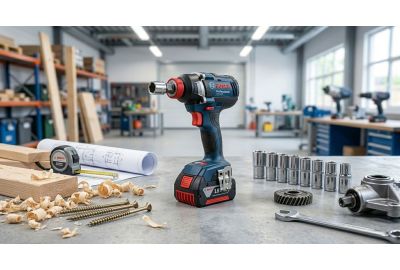
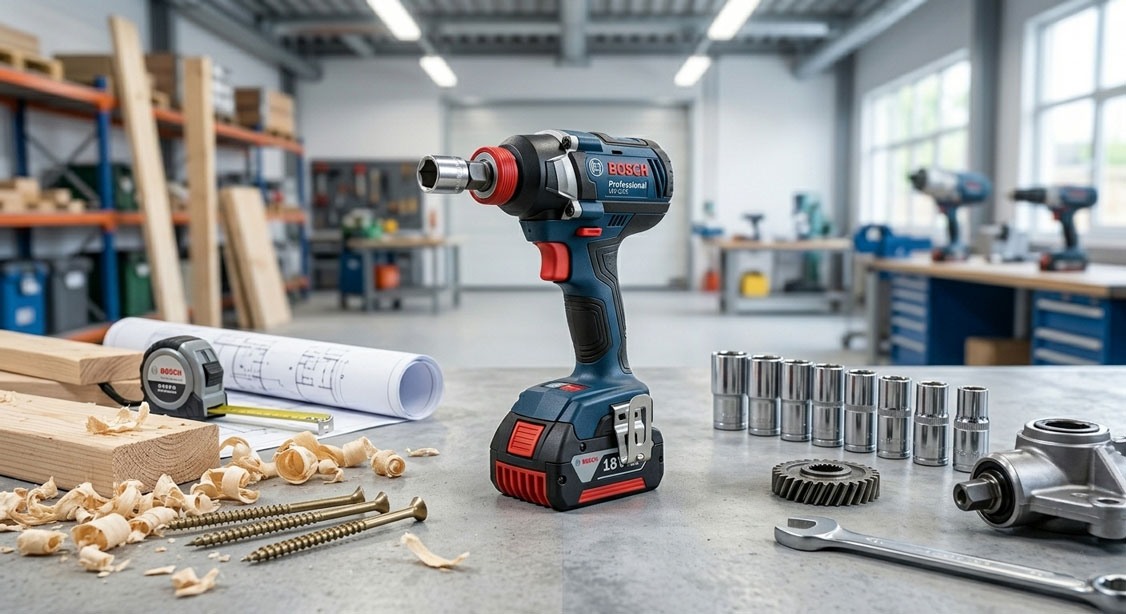
Fastening work puts steady demand on tools across both construction sites and workshops. Driving structural screws, fixing brackets, or working on mechanical components all require a balance of torque and control. When the tool is not suited to the job, the impact is immediate. Work slows down, fixings get damaged, and fatigue builds over the course of the day.
Bosch cordless impact drivers cover a wide range of fastening tasks without forcing one approach onto every job. Some models are built for straightforward site work, while others are better suited to mixed fastening or tighter automotive applications. The key is choosing a tool that matches the workload, the environment, and the level of control needed.
Why Impact Drivers Are Essential for Fastening Work
Impact drivers are designed to handle fastening tasks that push beyond what a standard drill driver can manage comfortably. Their internal mechanism delivers rotational force in controlled bursts, helping maintain grip between the bit and the fixing. This becomes important when driving longer screws, working with dense materials, or removing fixings that have tightened over time.
On site, impact drivers are used for timber fixing, structural screws, and general assembly. In workshops, they help with repeated fastening and removal of bolts or fixings where speed and access matter. The benefit is not just increased force. It is the ability to maintain consistency across multiple fixings without forcing the tool or the user.
Typical situations where impact drivers are used include:
- Driving long screws into timber
- Repetitive fixing across large areas
- Removing tight or seized fixings
- Working in awkward or confined positions
Key Problems Tradespeople Face with Poor Fastening Tools
Using the wrong fastening tool creates problems that build throughout the day. One of the most common is lack of control. A tool that delivers force too aggressively can strip screw heads or damage threads. A tool that lacks power slows progress and requires more pressure from the user, which increases fatigue and reduces accuracy.
Weight and balance also play a part. A tool that feels heavy or awkward becomes harder to control during repetitive tasks, especially when working overhead or in tight spaces. This leads to inconsistent results and more time spent correcting mistakes. In mixed work environments, switching between tools for screws and bolts can also disrupt workflow and reduce efficiency.
What Makes Bosch Cordless Impact Drivers Stand Out
Bosch cordless impact drivers are designed to balance power with usability. Many models remain compact enough for restricted access while still delivering enough torque for demanding fastening. This balance is more useful in real work than chasing maximum output that is rarely used consistently.
The Bosch 18V platform also simplifies day-to-day use. Batteries can be shared across tools, which reduces downtime and keeps the setup organised. For tradespeople working across site and workshop environments, this consistency makes planning easier. On higher-spec models, added control features allow the tool to adapt better to different materials and fastening types.
Across the range, the main advantages are:
- Compact designs for better access
- Consistent torque for repeated work
- Shared Bosch 18V battery platform
- Improved control on higher-spec models
Entry-Level and General Site Use Impact Drivers
For many construction and workshop tasks, a simple and dependable impact driver is the right choice. Not every job requires high torque or advanced settings. General fixing, repeated screwdriving, and day-to-day site work benefit more from a tool that stays easy to handle across long periods.
A lighter and more straightforward model can reduce fatigue, especially when working overhead or moving between multiple short tasks. It also suits apprentices or tradespeople who need a reliable second tool without adding unnecessary complexity to the kit.
Recommended product
Bosch GDR18V-160 18v DYNAMIC series Impact Driver Body Only
For general site use where consistent performance matters more than extra features, this model fits well. It is suited to repetitive fastening, timber fixing, and general construction tasks where ease of handling is important.
In practical use, it delivers enough torque for common fixings without feeling too aggressive. That helps maintain control and reduces the risk of overdriving screws. Its lighter build also makes it easier to use over long periods, which is valuable during repetitive work across a full shift.
Recommended product
Bosch GDX 18V-180 Impact Driver / Wrench Body Only
For users who regularly move between screws and bolts, having a tool that can handle both helps keep the workflow steady. This is useful on mixed site and workshop jobs where tasks change quickly.
This model combines a 1/4in hex and 1/2in square drive, allowing it to switch between screwdriving and light-duty bolting. It reduces the need to carry separate tools and makes it easier to move between different fastening tasks without interruption.
Mid-Range Impact Drivers for Balanced Power and Control
As fastening demands increase, a more capable tool becomes necessary. Mid-range impact drivers offer stronger torque while maintaining control, which is important for structural fixings and tougher materials. These models are suited to longer jobs where consistency and efficiency matter.
They provide a step up in performance without becoming difficult to manage. This makes them a good choice for tradespeople who need more output while still working across varied tasks.
Recommended product
Bosch GDR18V-200C 18V Impact Driver (Body Only) L-Boxx
When working with heavier fixings or denser materials, this model offers the extra output needed to keep the job moving. It suits site professionals who need more than entry-level performance but still want control during fastening.
The added control features help adjust the tool’s behaviour depending on the task. This improves consistency when moving between timber, brackets, and metal fixings. It allows the user to maintain accuracy without slowing down the pace of work.
Recommended product
Bosch GDX18V-200 18V Brushless Impact Driver / Wrench Body Only
For tradespeople working across both construction and workshop environments, a hybrid tool can simplify the setup. Carrying separate tools for screws and bolts is not always practical, especially when space is limited.
This model combines driver and wrench functionality with a brushless motor that supports longer runtime and durability. It works well for mixed fastening tasks and reduces the need to switch tools throughout the day. That makes it a strong option for users who need flexibility without increasing the size of their kit.
High Control Impact Drivers for Automotive Work
Automotive work places more emphasis on precision and control. Tight spaces, threaded components, and sensitive assemblies require a tool that delivers torque without damaging parts. A compact and well-balanced impact driver is often more useful than a larger, more powerful model.
Access is also a key factor. Engine bays and mechanical assemblies often limit how the tool can be positioned. A shorter and more manageable design helps improve reach and reduces the need to reposition constantly.
Recommended product
Bosch GDX 18CV 210C 18V 1/4in Hex 1/2in Anvil Impact Driver / Wrench Body Only
For automotive applications where control and flexibility are important, this model is a strong fit. It allows the user to switch between screws and bolts without changing tools, which suits workshop environments.
Its compact design helps when working in confined spaces, while the controlled power output reduces the risk of damaging threads or components. This makes it well suited to mechanical work where accuracy matters as much as speed.
Matching Tool Choice to Real Working Conditions
Choosing the right impact driver depends on the type of work rather than the highest specification. A compact model is better suited to tight spaces and repetitive fastening. A mid-range model provides the extra power needed for structural fixings and tougher materials. Hybrid tools make sense when the work includes both screws and bolts.
Battery planning also plays a role. Staying within the same platform allows batteries to be shared, which reduces downtime and keeps the workflow steady. Weight and balance should not be overlooked, as they affect how the tool feels during extended use.
A simple approach to selection is:
- Compact tools for access and control
- Mid-range tools for heavier fastening
- Hybrid tools for mixed applications
- Balanced weight for reduced fatigue
Practical Outcomes from Using the Right Impact Driver
Using the right impact driver improves both speed and consistency. Fastening tasks are completed more efficiently because the tool handles resistance without slowing down. Fixings are driven with better control, which reduces the risk of damage and rework.
Fatigue is also reduced when the tool matches the job. A well-balanced impact driver allows the user to work longer without strain, especially during repetitive tasks. Across different materials and fastening types, results remain more consistent. That consistency saves time and improves overall workflow on site and in the workshop.
FAQ's
Q1: What is the difference between an impact driver and an impact wrench?
A1: An impact driver is used for screws with hex bits, while an impact wrench is designed for higher torque applications using sockets for nuts and bolts.
Q2: How much torque do I need for construction work?
A2: Most construction tasks are handled by mid-range impact drivers, though heavier structural work may require higher torque.
Q3: Can I use one tool for both automotive and site work?
A3: Yes, hybrid models that support both hex and square drives can handle a mix of fastening tasks across different environments.
Q4: Are Bosch impact drivers compatible with all Bosch batteries?
A4: Bosch 18V tools are generally compatible within the same battery platform, allowing batteries to be shared.
Q5: Which impact driver is best for tight spaces?
A5: Compact models with shorter body lengths are better suited for tight spaces where access is limited.